Mountain Coasters Around the US: Where to Ride
🗺 View the 24 places in this post on a map
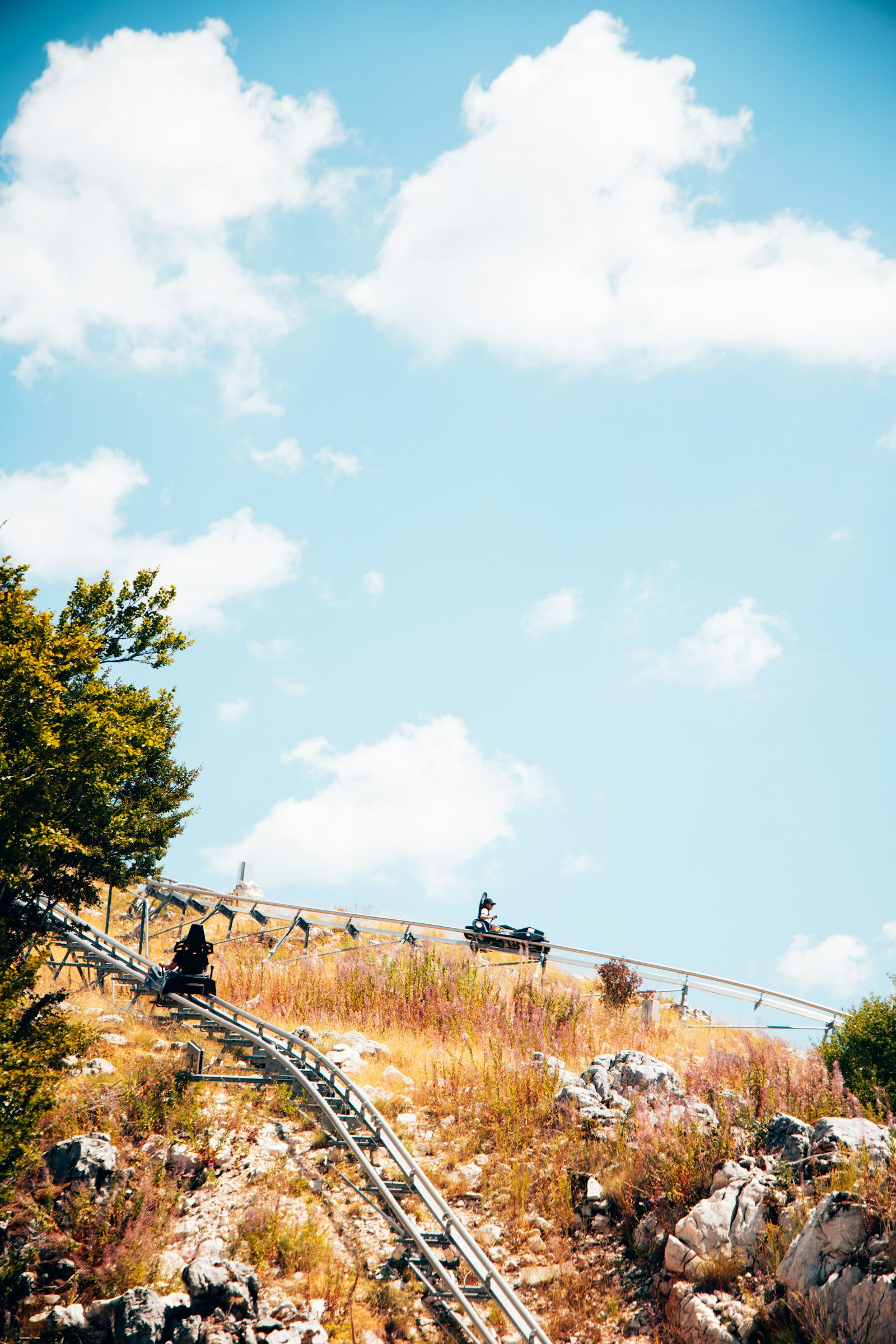
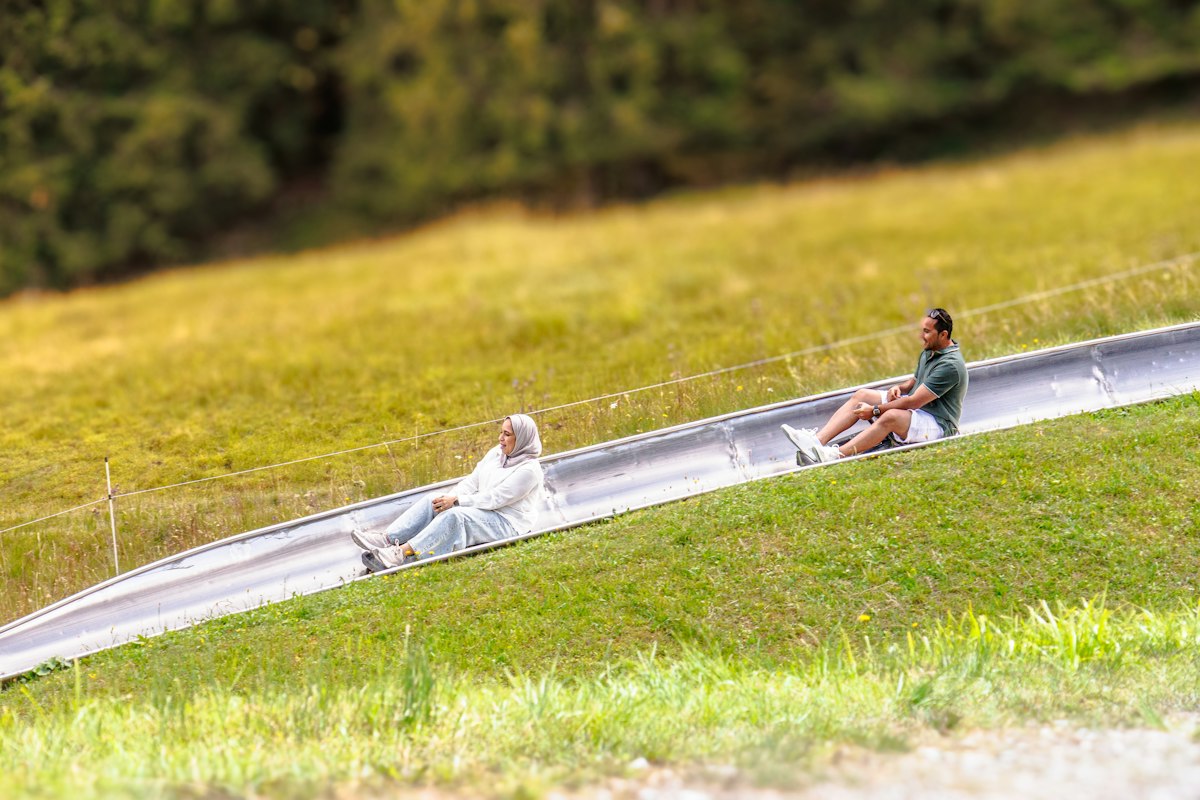
A mountain coaster is a sled locked onto a fixed steel rail bolted to a hillside, which you ride down under gravity with a brake lever in each hand. It is not an alpine slide — those are open troughs where a bad line sends you over the lip and onto the grass. On a coaster the cart cannot leave the rail, which is why operators run them in the rain, after dark, in the snow, and with a four-year-old in the front seat.
A tow cable hauls you up at walking pace, you crest the top, and then you choose your own ride: brakes off for 25 to 30 mph through the trees, or feathered the whole way down while you look at the view. The first one in the country opened in 2005, and there are now more than 30 spread across ski resorts, cave parks and tourist strips. Single rides typically run $15 to $25, and the whole thing takes 10 to 15 minutes including the lift.
Two numbers decide whether your group can ride. Drivers generally need to be 9 years old and 52 to 54 inches tall to go alone; younger kids ride tandem in front of an adult, usually from age 3 and 36 inches. Weight matters too — most carts cap a pair somewhere between 330 and 375 pounds, and several operators lower that limit when the track is wet.
Wet is the other thing to plan around. Rain rarely closes a coaster, but brakes bite harder on a damp rail and staff space the carts further apart, so a soggy afternoon means a mellower ride and a longer line. Go first thing in the morning or in the last hour before closing. Nearly every operator now sells timed tickets online, and in the Smokies and Colorado in July you genuinely want them.
Colorado started all of this. The Alpine Coaster at Glenwood Caverns Adventure Park in Glenwood Springs opened in 2005 as the first in the United States, and it still has the most dramatic setting of any of them: 3,400 feet of track carved into the shoulder of Iron Mountain, more than a thousand feet above the Colorado River, reached by a gondola that lifts you off the valley floor before you even buy a ticket. Ride it late in the day, when the canyon walls go orange.
If you are staying the night in Glenwood, skip the permit lottery at Hanging Lake and drive 30 minutes northwest to Rifle Falls State Park instead. Three waterfalls drop 70 feet side by side into a mossy limestone amphitheater, and a short trail leads into caves directly behind the water — a fraction of the effort and, on a weekday morning, a fraction of the people.
An hour and a half east, the Gold Runner Coaster at Breckenridge runs 2,500 feet of elevated track with two full 360-degree loops through the lodgepoles at the Peak 8 base, and the BreckConnect gondola that delivers you there from town is free.
Two more western rides are worth routing around. The Alpine Coaster at Park City Mountain in Utah drops through aspen glades above the Town Lift, 35 minutes from the Salt Lake City airport — the easiest one in the country to reach on a long layover.
In Wyoming, the Cowboy Coaster at Snow King Mountain is the sleeper. Snow King is Jackson's town hill, three blocks from the square rather than out at Teton Village, so you can ride it, walk to dinner, and never move the car. The track banks through pines with the Tetons filling the gap to the northwest, and because most visitors drive straight past town toward Grand Teton National Park, the line is short.
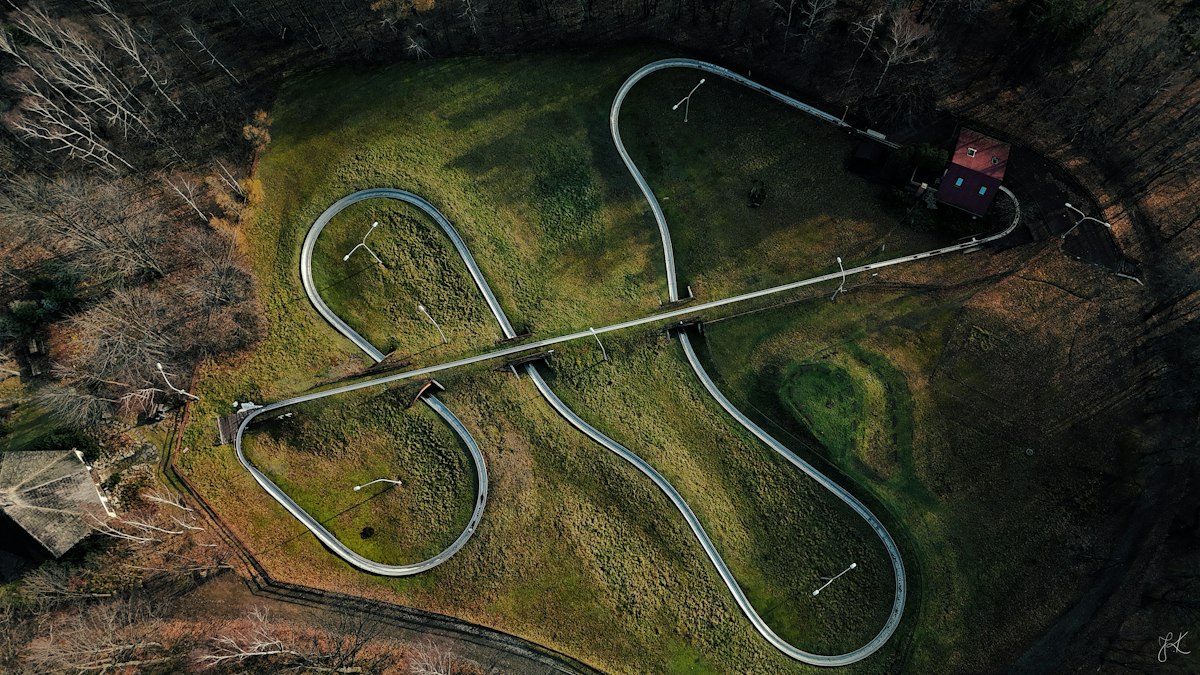
The densest cluster in America is in the Smokies, where Pigeon Forge and Gatlinburg have four coasters within 20 minutes of each other. The Smoky Mountain Alpine Coaster on Wears Valley Road is the one to ride if you only ride one: just over a mile of track, four switchbacks, more than a dozen turns, and speeds pushing 30 mph. It runs until 10 or 11 at night, and riding it in the dark is a completely different experience.
Up on the ridge above downtown Gatlinburg, Anakeesta runs two: the Rail Runner, a single-rail design that leans into its turns, and the steeper Hellbender, both reached by chondola from the Parkway. Down at street level, the Moonshine Mountain Coaster at 306 Parkway is the year-round, walk-up option for when the weather has ruined everything else.
The local move for the next morning: instead of crawling around the Cades Cove loop with everyone else, keep driving past the alpine coaster on Wears Valley Road to Metcalf Bottoms inside Great Smoky Mountains National Park — a broad, shallow stretch of the Little River with picnic tables under the hemlocks, a wading hole Sevier County families actually use, and a footbridge leading to the old Little Greenbrier schoolhouse. Bring water shoes; the cobbles are slick.
Further down the Blue Ridge, Wilderness Run Alpine Coaster in Banner Elk, North Carolina threads a wooded hillside on the Tynecastle side of Sugar Mountain, high enough that the air stays cool through August. Pair it with a morning at Elk Knob State Park, 25 minutes north near Todd: a steady switchbacking trail climbs to a 5,520-foot summit with views into Tennessee and Virginia, and draws almost none of the traffic that clogs Grandfather Mountain's swinging bridge down the road.
In north Georgia, the Georgia Mountain Coaster sits at the south end of Helen's Bavarian-themed main street — the most improbable setting on this list, and an easy stop on an Anna Ruby Falls day.
New England quietly holds the best concentration outside Tennessee, and its ski resorts run coasters straight through foliage season. The Beast Mountain Coaster at Killington is the headline: 4,800 feet of track with 360-degree corkscrews, late May into mid-October. Forty minutes south at Okemo, the Timber Ripper follows the natural contour of the mountain rather than a graded bench, so it feels faster than it measures. Time either to early October — our Vermont fall foliage guide tracks how the color moves down the state.
In New Hampshire, Cranmore Mountain Resort bundles its coaster with a giant swing and a zip ride on one two-hour ticket, five minutes from North Conway's main street. Massachusetts has two in the Berkshires: Jiminy Peak and the Thunderbolt at Berkshire East in Charlemont, a wind-powered hill above the Deerfield River that also runs the region's best whitewater. In western New York, the coaster at Holiday Valley operates year-round, including mid-winter between ski runs.
The mid-Atlantic covers the biggest population centers. Camelback Mountain Coaster in Tannersville, Pennsylvania is the Poconos standard and the busiest ride here on a summer Saturday. Mountain Creek in Vernon, New Jersey is the closest one to New York City, under 90 minutes from Midtown without traffic. Wisp Resort at Deep Creek Lake in western Maryland runs all four seasons, and Snowshoe Mountain in West Virginia adds one to a mountain-bike weekend already worth the drive.
Two more sit well outside anything resembling alpine terrain. The Rushmore Mountain Coaster at Rush Mountain Adventure Park in Keystone, South Dakota drops through ponderosa pine 10 minutes from Mount Rushmore and comes packaged with a cave tour — an easy afternoon inside a Black Hills itinerary. And The Branson Coaster runs right off 76 Country Boulevard in the Missouri Ozarks, putting a real gravity ride within walking distance of a show ticket; our Branson family guide covers the rest of that strip.
A few things are worth knowing if you are planning around these. Late September and early October are the best weeks nearly everywhere: the lines have collapsed, the leaves are turning, and the rails are dry. Winter riding is underrated at the resorts that stay open — Holiday Valley, Wisp and Moonshine all run in snow.
Buy the multi-ride pack. A single run is over in two or three minutes and the second one is always better, because you know where the corners are and stop touching the brakes. Put the heavier rider in the driver's seat if you want speed; weight is the only variable you actually control. And do not stack two coasters into one day expecting them to feel different, because mostly they do not. Spread them across a road trip instead, one per region, and let the mountain each one is bolted to be the reason you went.
- #mountain coasters
- #alpine coaster
- #family travel
- #outdoor adventure
- #United States
- #ski resorts in summer
About the author
Kristian Ranstrom
I built Get Busy Exploring because I kept losing track of where I'd been. I chase lists — fourteeners, highpoints, Munros — and I'm just as happy getting lost in a city on foot. I write up the trips here: routes, itineraries, and what I'd do differently.