European Christmas Markets 2026: Best Cities and Dates
🗺 View the 21 places in this post on a map
European Christmas markets are simple on paper: wooden stalls, hot spiced wine, a big tree, a medieval square. In practice the famous ones draw millions of visitors into a few city blocks, and the difference between a great evening and a slow shuffle through a crowd comes down to which market you pick and when you show up. This guide covers the markets worth traveling for in 2026, with this season's dates, plus the smaller market in each city where locals actually meet after work. Most of them open in the next two weeks.
Germany: the originals. The Nuremberg Christkindlesmarkt is the template every other market copies. It runs November 27 to December 24 on the Hauptmarkt, daily 10 am to 9 pm, and opens with the Christkind reciting a prologue from the balcony of the Frauenkirche at 5:30 pm on the first Friday. Eat Drei im Weggla (three finger-size Nuremberg sausages in a roll), buy Lebkuchen, and look for the Zwetschgenmännle, little figures made of prunes. When the square gets tight, walk ten minutes to the Handwerkerhof, a craftsmen's courtyard tucked inside the city wall by the main station, where you can sit down with the same sausages.
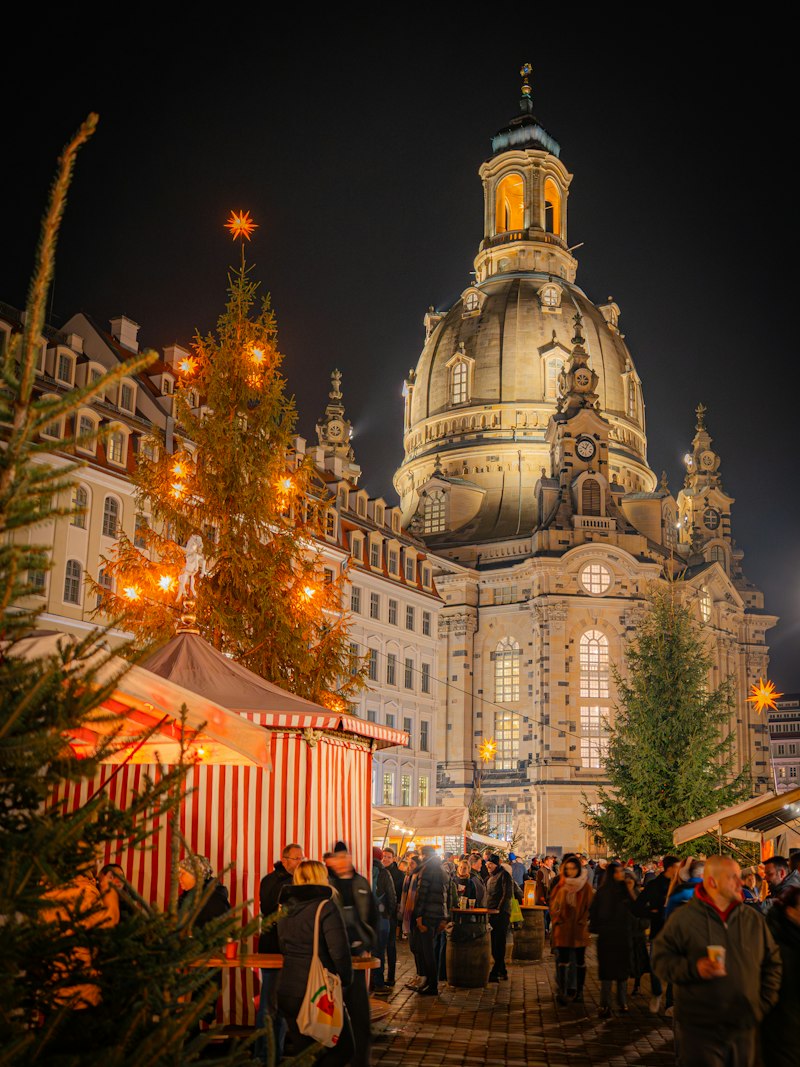
Dresden's Striezelmarkt dates to 1434, which makes it Germany's oldest, and this year's 592nd edition is listed for November 25 to December 24 on the Altmarkt. It's the home of Stollen and of the giant wooden Christmas pyramid from the nearby Ore Mountains. The better market is three minutes away: the Stallhof medieval Christmas market, set in the old royal jousting yard, has no electric lights, only torches and fires, plus blacksmiths, wooden bathtubs, and mead. It runs November 25 to December 23, 11 am to 9:30 pm, with a 5 euro entry fee on Advent weekends that keeps it breathable. In between sits the market on the Neumarkt, under the dome of the Frauenkirche.
Cologne and the southwest. Cologne starts early. The Cathedral Christmas market on Roncalliplatz runs November 16 to December 23 beneath the twin spires, and Heinzels Wintermärchen fills the Alter Markt and Heumarkt from November 23 with an ice rink that stays open into January. Both are packed by dusk. The one Cologne residents go to is the Stadtgarten Christmas market in the Belgian Quarter, open November 13 to December 23: about sixty stalls under old trees, vendors that change every week so it's never the same market twice, and mulled wine made by an organic winery rather than poured from a tank.
Near Stuttgart, the Esslingen Medieval Market and Christmas Market (listed for November 24 to December 22) spreads through a half-timbered old town that survived the war intact. Half of it is a regular Christmas market and half is a medieval fair with fire jugglers, archery, and craftsmen in costume, and it's a 15-minute S-Bahn ride from Stuttgart's main station. Entry is free. In the Black Forest, the Ravenna Gorge Christmas market sets up under a floodlit stone railway viaduct, Thursday to Sunday from November 26 to December 20. It's the most photographed small market in Germany, and tickets are timed and sold online only, with no box office. The 2026 slots are already sold out apart from the official resale, so check that first or put it on next year's list.
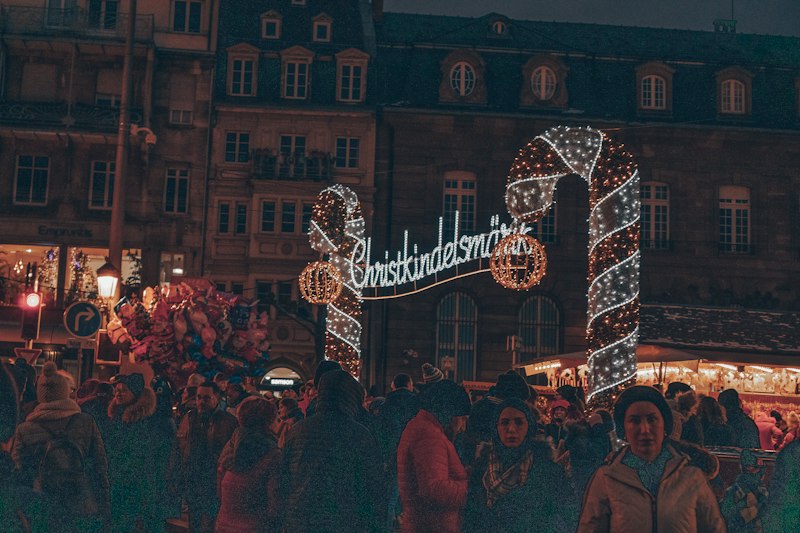
Alsace: Strasbourg and Colmar. Strasbourg has held its Christkindelsmärik since 1570 and calls itself the Capital of Christmas. From November 27 to December 24 the markets spread over a dozen squares on the Grande Île: the historic one on Place Broglie, the stalls around the cathedral, and the towering tree on Place Kléber. Skip the cathedral crush on weekends and head for the OFF market on Place Grimmeissen in Petite France, which is run by local fair-trade and secondhand groups and has room to stand, music, and better food.
Half an hour south by regional train, Colmar runs six small markets from November 23 to December 29 among canals and painted timber houses, and it works better as an overnight than a day trip, since the tour buses leave by dinner. If you have a car or a bike, go four miles farther to Eguisheim, a wine village built in concentric rings, whose market (November 27 to December 30) fits in two tiny squares and comes with Riesling tastings at the family cellars along the Grand'Rue.
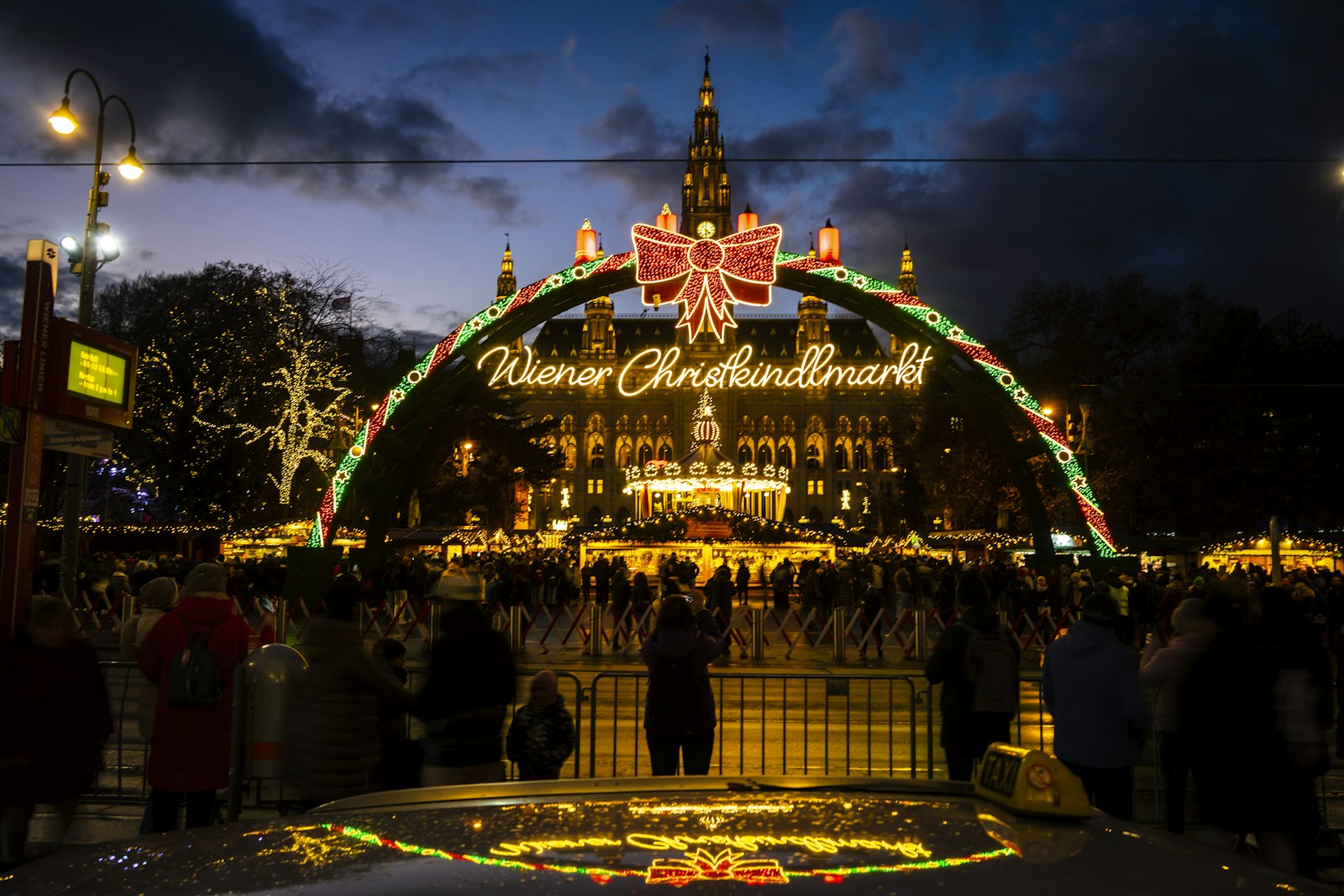
Vienna, Prague, and Budapest. Vienna's Christkindlmarkt on Rathausplatz opens November 13 and runs to December 26, daily 10 am to 10 pm, with an ice-skating trail that winds through the park and stays open until January 6. It's the grandest setting of any market in Europe and also the most commercial. For the Viennese version, walk fifteen minutes to the Spittelberg Christmas market (November 13 to December 23, from 2 pm on weekdays and 11 am on weekends), where the stalls squeeze into the narrow Biedermeier lanes behind the MuseumsQuartier and sell ceramics, jewelry, and woodwork made by the people behind the counter.
Prague's Old Town Square market runs November 28 to January 6 under the Týn Church spires, which makes it one of the few big markets still open after Christmas. In Budapest, Advent Basilica fills the square in front of St. Stephen's Basilica from November 13 to January 1, with light projections on the church front after dark; eat kürtőskalács, the chimney cake baked over coals, and lángos, fried dough with sour cream and cheese. The older market on Vörösmarty Square is five minutes away and stronger on Hungarian crafts. And if Poland is on your route, Kraków's market on the Rynek Główny is one of the best values on the continent; our Kraków guide covers the city around it.
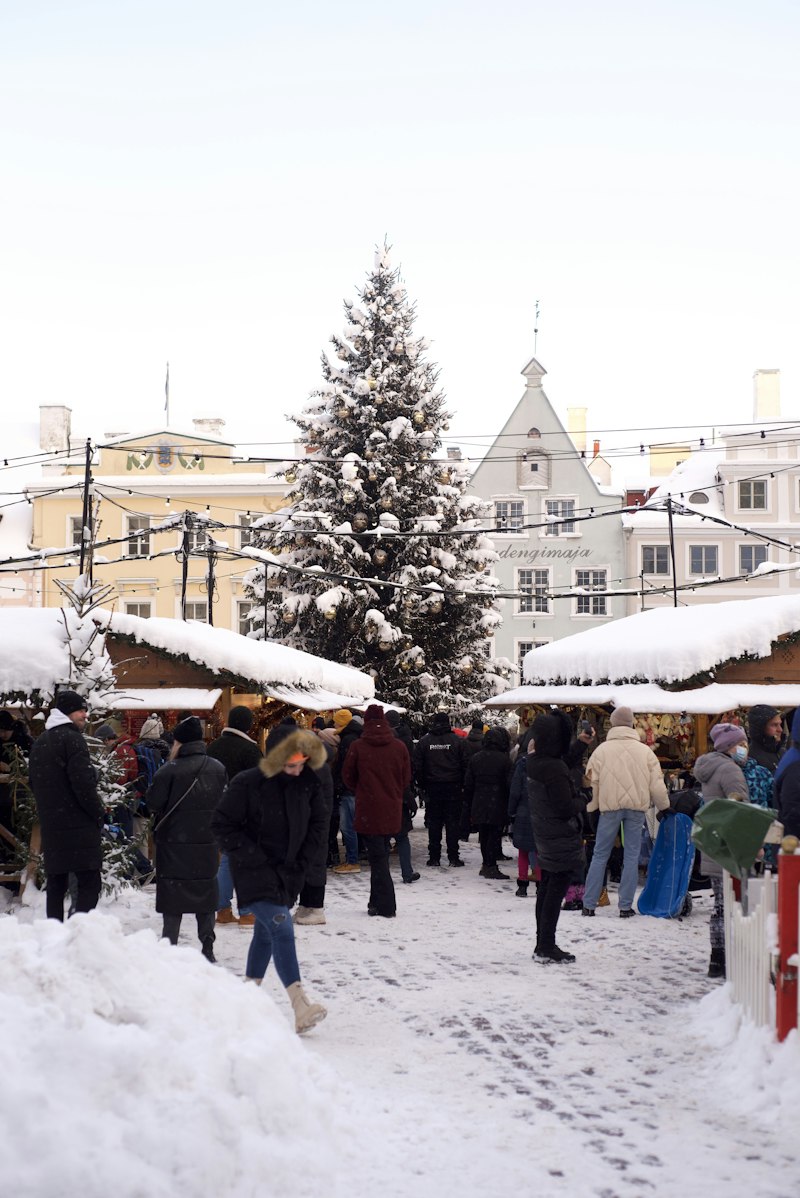
Tallinn: the snowy one. Most Christmas market cities are rainy in December. Tallinn has the best odds of real snow, and its market on Town Hall Square is small enough to see in an hour: a ring of huts around a tall spruce, in a square that claims to have put up Europe's first public Christmas tree in 1441. It runs November 20 to January 6. Order verivorst (blood sausage with sauerkraut and lingonberry) and a cup of glögi, then walk the medieval lanes of the Old Town, which are at their best under snow and almost empty by nine.
How to plan a Christmas market trip. Go on a weekday and arrive before 4 pm. Every market on this list is pleasant at lunch and jammed from Friday evening through Sunday. The first week of December is the sweet spot: everything is open, and the pre-Christmas rush hasn't peaked.
Watch the calendar at both ends. Many German markets close or open late on Totensonntag, the Sunday of remembrance (November 22 this year); the Cologne Cathedral market is shut all day. Most German and Alsatian markets end by early afternoon on December 24 and do not reopen, so for a trip between Christmas and New Year, pick Prague, Budapest, Tallinn, or Colmar.
Link the cities by train. Two routes work well in five to seven days: Cologne, Strasbourg, and Colmar along the Rhine, or Nuremberg, Dresden, Prague, Vienna, and Budapest through central Europe, where no leg is much over four hours. Book long-distance tickets early on Deutsche Bahn or ÖBB for the cheapest saver fares, and book hotels now, because rooms in Strasbourg, Colmar, and Nuremberg fill first.
Bring cash in small notes, since plenty of stalls still don't take cards. Your first mug of Glühwein includes a deposit of a few euros; hand the mug back for a refund or keep it as the cheapest souvenir in Europe. And dress for standing still, not walking: warm boots matter more than anything else you pack.

About the author
Kristian Ranstrom
I built Get Busy Exploring because I kept losing track of where I'd been. I chase lists — fourteeners, highpoints, Munros — and I'm just as happy getting lost in a city on foot. I write up the trips here: routes, itineraries, and what I'd do differently.