Kraków, City of History: Old Town, Wawel & Beyond
🗺 View the 14 places in this post on a map
Kraków wears a thousand years on its sleeve. Poland's royal capital until 1596, it came through the Second World War physically intact — one of the only major Polish cities that did — which means the medieval street plan, the Gothic towers, and the Renaissance courtyards you walk today are the real thing, not reconstructions. It was on UNESCO's very first World Heritage list in 1978, and it earns the billing: this is a city where you can eat a market-square pretzel above a 13th-century cellar, kayak past a royal castle, descend a hundred meters into a chandeliered salt cathedral, and stand at the site of history's darkest chapter — all inside four days. May, June, and September are the sweet months: warm enough for the river, cool enough for the cobbles.
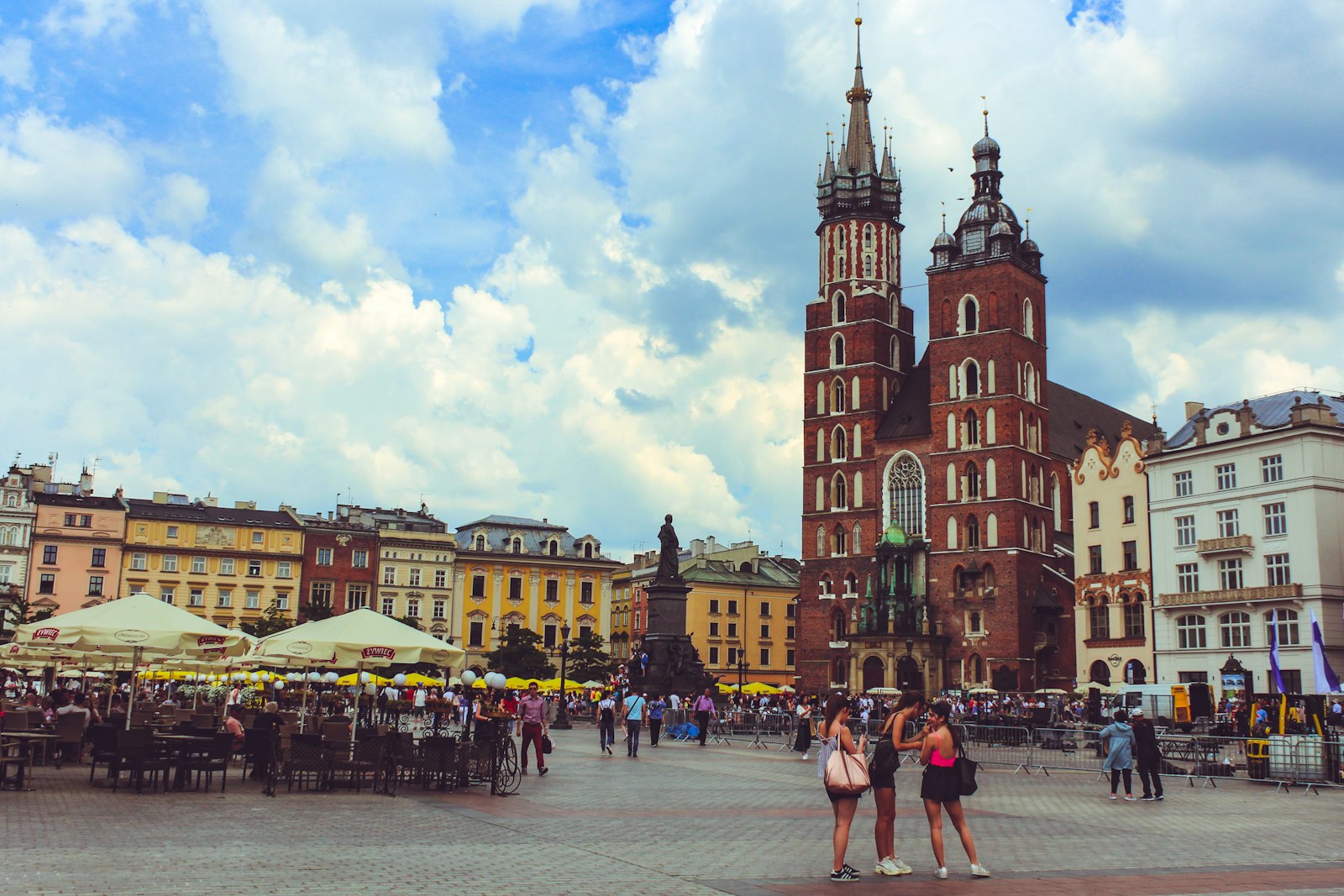
Start on the Rynek Główny, Europe's largest medieval square. Two hundred meters on a side and ringed by townhouses, it's been Kraków's living room since 1257. In the middle stands the Cloth Hall (Sukiennice), a Renaissance trading arcade whose stalls have been selling something or other for 700 years — today it's amber, lace, and carved chess sets, and the browsing is half the fun. On the square's east corner, St. Mary's Basilica hides an interior of star-spangled blue and Veit Stoss's monumental carved altarpiece; step outside at the top of any hour for the hejnał, the trumpet call played live from the taller tower that cuts off mid-note — commemorating, legend says, a 13th-century trumpeter silenced by a Tatar arrow mid-warning. Buy an obwarzanek (the ring-shaped street pretzel sold from blue carts, Kraków's official snack) and just walk. When lunch calls, do it the local way at a bar mleczny — a subsidized 'milk bar' canteen from the communist era. Bar Mleczny Pod Temidą on Grodzka is the handy Old Town one; Milkbar Tomasza on Świętego Tomasza is the slightly polished version where the żurek (sour rye soup) converts skeptics at single-digit prices.
Wawel is where Poland kept its crown. The limestone hill above the river holds the Wawel Royal Castle and cathedral in one walled complex — coronation church of Polish kings, Renaissance arcaded courtyard, the Sigismund Bell, and beneath the ramparts a bronze dragon statue that genuinely breathes fire every few minutes, honoring the legend of the beast said to have lived in the cave below. Tickets are by timed entry and the state rooms sell out by mid-morning in summer; book online and go early, then walk down to the riverside boulevards below the hill.
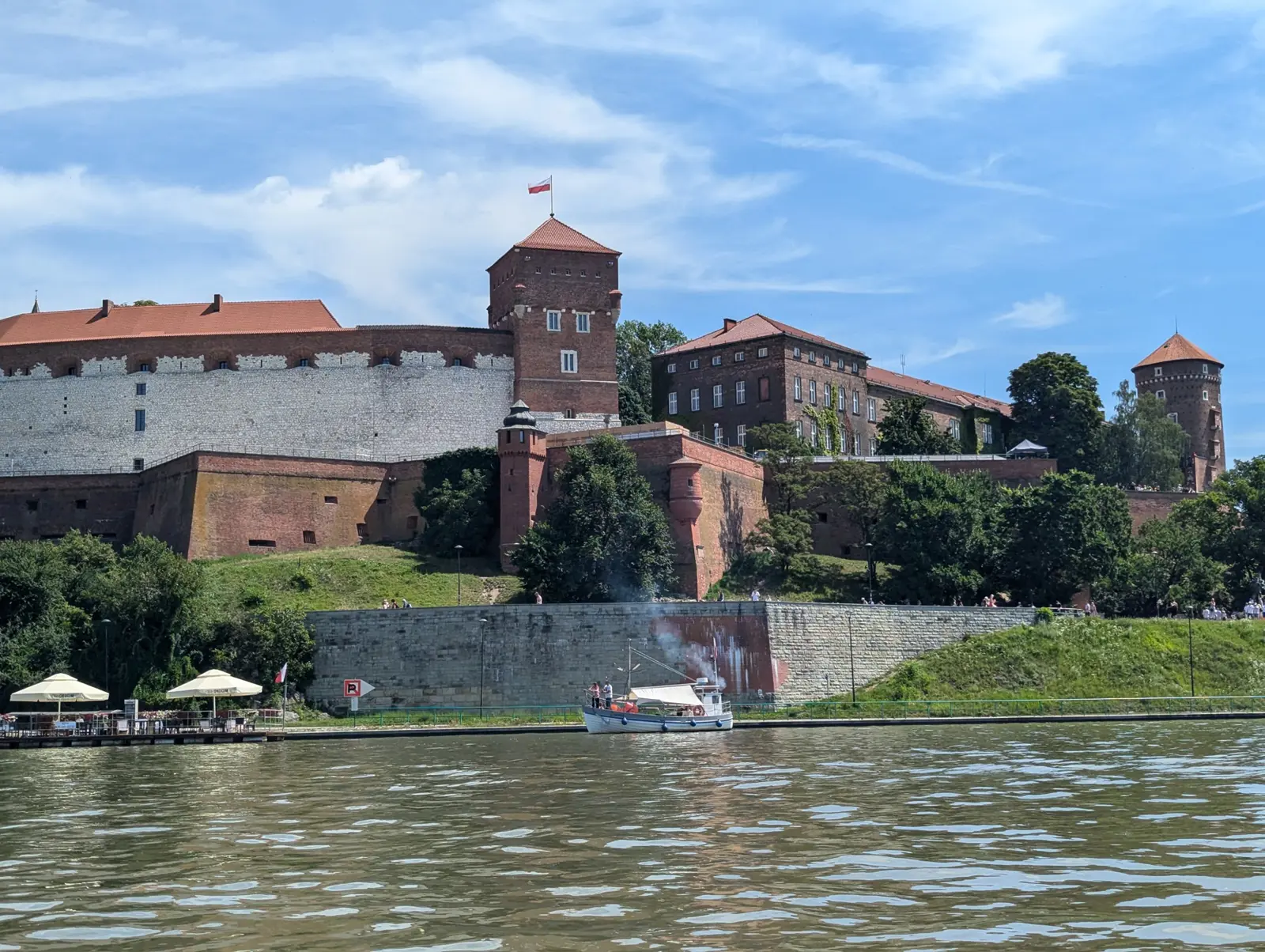
See the castle the way invaders did: from the water. Several outfitters run guided kayak trips on the Vistula, and the classic route is the one to take — launching upstream near the fortified 11th-century Benedictine abbey at Tyniec, where the river winds through the wooded limestone gorges of a landscape park before delivering you, two easy hours later, straight past Wawel's ramparts into the city center. It's beginner-friendly flat water, trips run roughly May through September from about 75 złoty, and no photo from the boulevards matches the moment the castle rises over your bow. Book a morning slot; afternoons get breezy.
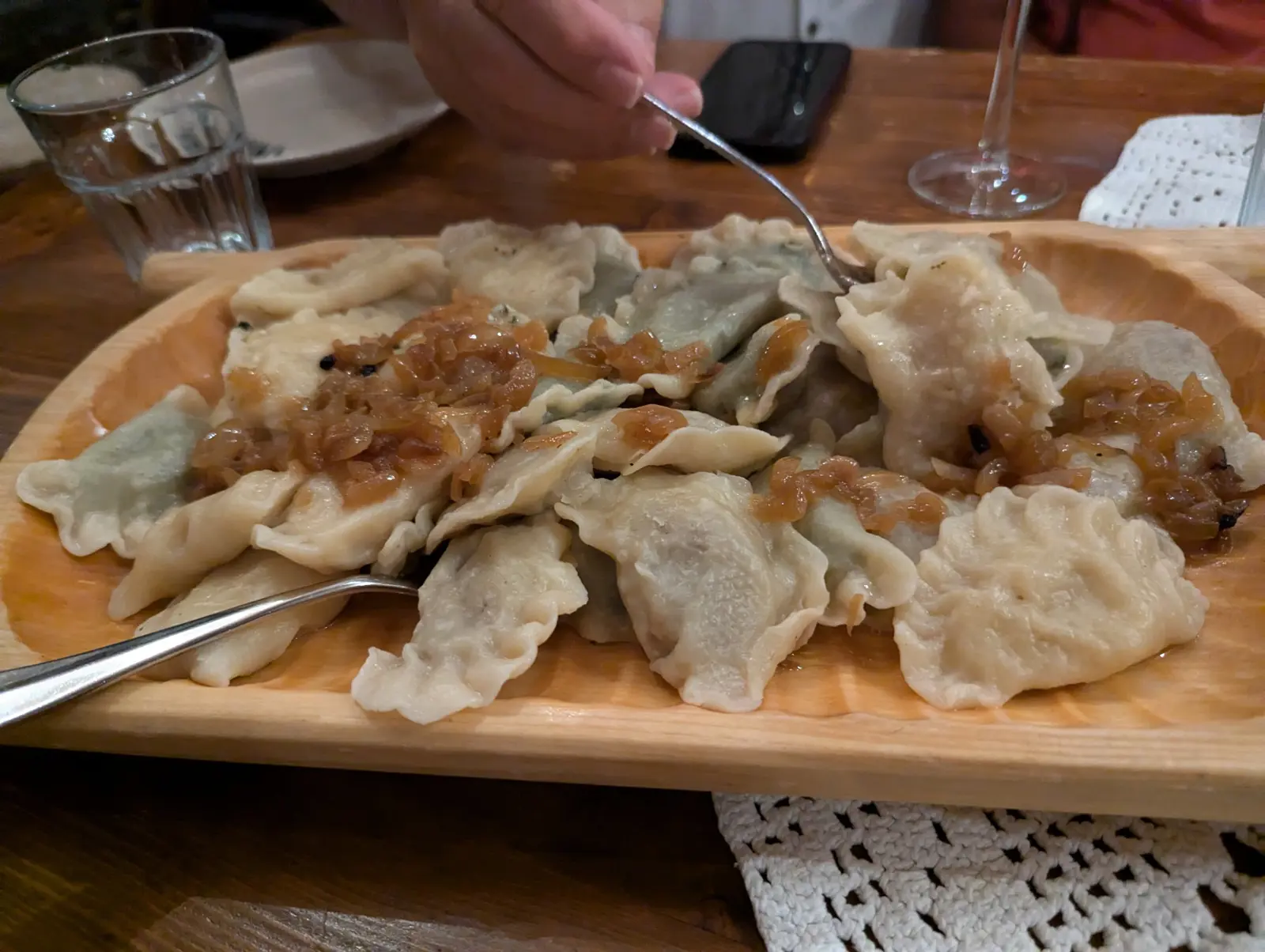
Give Kazimierz your evenings. The old Jewish quarter, a separate town until the 19th century, holds seven historic synagogues and a century of layered memory — and it has grown into Kraków's best neighborhood for simply wandering: vintage shops, candlelit cellar bars, and street food royalty. At the round Okrąglak market hall on Plac Nowy, the hatch to find is Endzior, which has been layering zapiekanki — half-baguettes piled with mushrooms, cheese, and a dozen optional toppings — for hungry locals until 2am. For the sit-down classic, order pierogi: ruskie (potato and cheese) with fried onions is the benchmark, and the doughy comparison tour between Kazimierz's pierogarnias is a legitimate itinerary item.
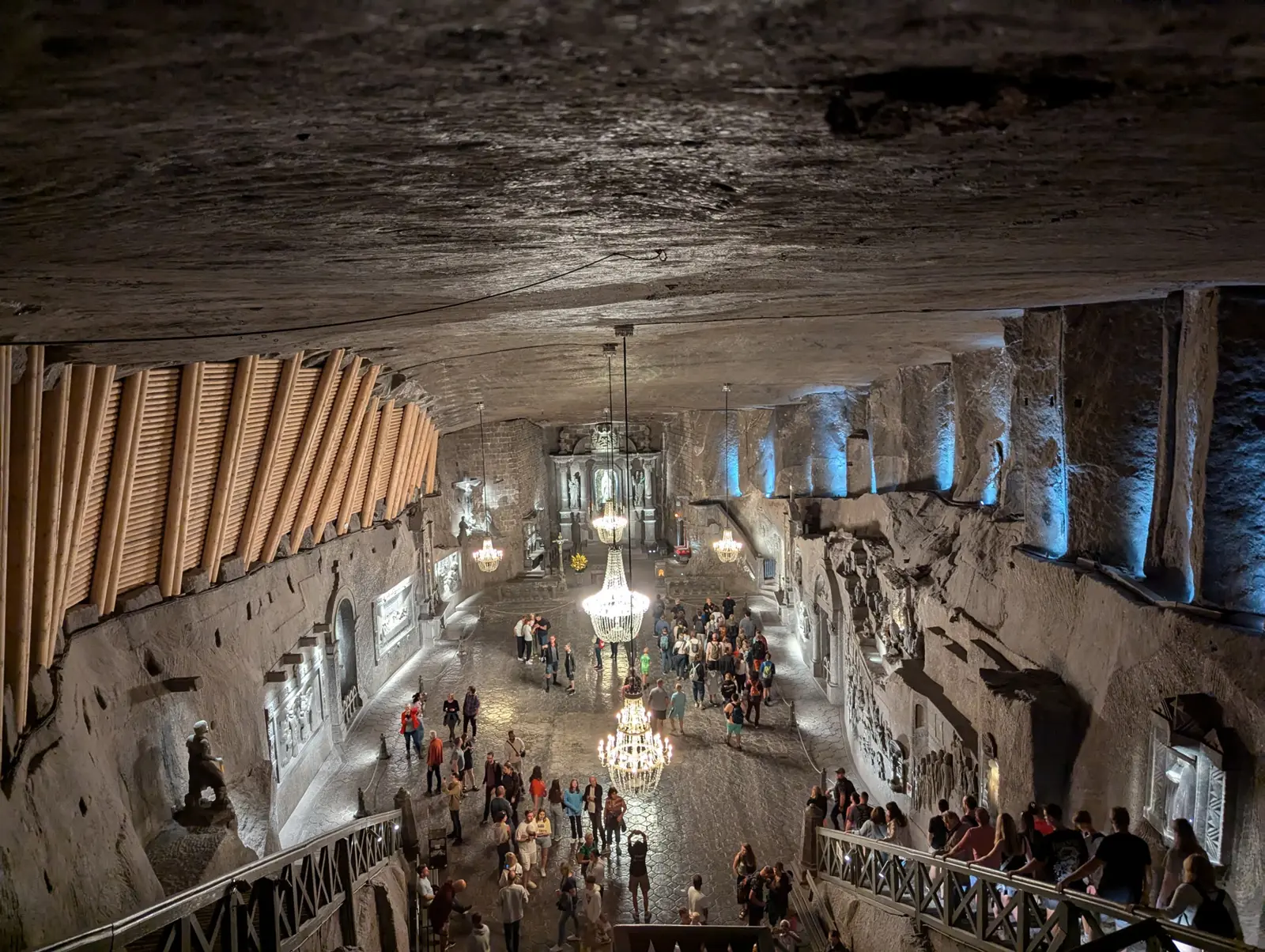
Go underground at Wieliczka. Twenty minutes southeast of the city, the Wieliczka Salt Mine has been worked continuously since the 13th century, and the guided Tourist Route walks you down some 800 steps to a depth of 135 meters through chambers, brine lakes, and sculptures miners carved from the living salt over centuries. The showstopper is St. Kinga's Chapel — a full underground church 54 meters long, its chandeliers, altars, and relief carvings all salt. It's a UNESCO site (also class of 1978), tours run about three hours, the temperature is a constant 17–18°C, and summer slots genuinely sell out — book online days ahead.
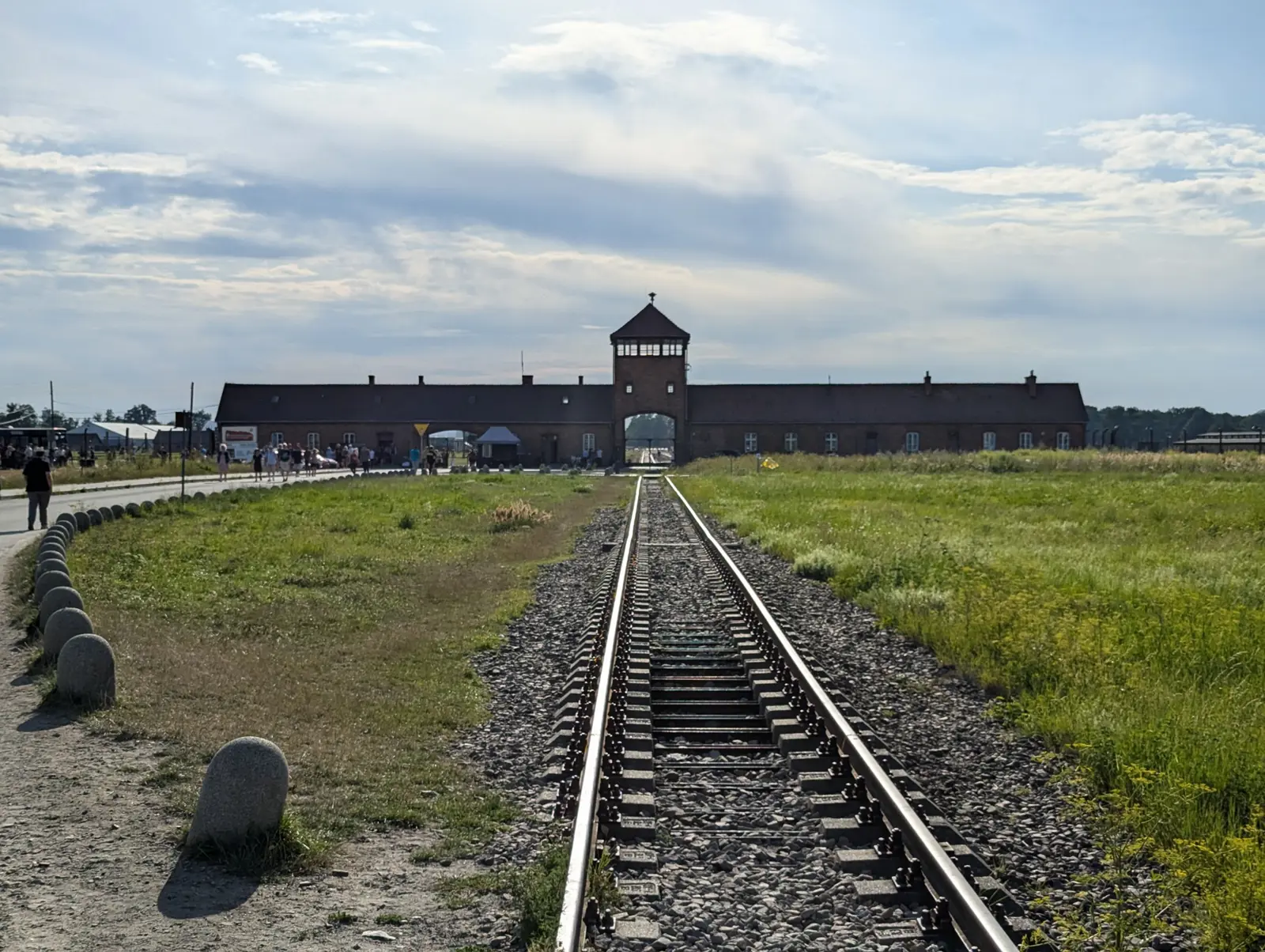
Auschwitz-Birkenau is not sightseeing — go anyway. The Auschwitz-Birkenau Memorial and Museum, about 70 minutes west of Kraków in Oświęcim, preserves the largest German Nazi concentration and extermination camp, where more than a million people — most of them Jews — were murdered. Entry is free but requires a reserved timeslot from the official site (visit.auschwitz.org), and the guided educator-led tours are worth taking; plan on four hours across the two sites plus travel, don't combine it with anything else that day, and note the museum advises against visits by children under 14. Back in Kraków, Schindler's Factory Museum on Lipowa Street completes the history: inside Oskar Schindler's actual enamelware factory, its permanent exhibition walks through occupied Kraków 1939–1945, the ghetto across the river in Podgórze, and the lives inside it. Book that one online too — it's deservedly one of the most visited museums in Poland.
Practical notes: three full days covers the city, four adds both day trips without rushing. Kraków is compact and walkable, trams cover the rest, and the currency is the złoty — cards work everywhere but milk bars appreciate cash. For the local sunset, skip the crowded Old Town towers and hike or take the 100/101 bus up to the Kościuszko Mound west of the center: a 34-meter memorial hill raised by hand in the 1820s, with the whole city, the river's bend, and on clear days the Tatra Mountains laid out from the top. It's where Krakovians take visiting friends — which is exactly the test a viewpoint should pass.
About the author
Kristian Ranstrom
I built Get Busy Exploring because I kept losing track of where I'd been. I chase lists — fourteeners, highpoints, Munros — and I'm just as happy getting lost in a city on foot. I write up the trips here: routes, itineraries, and what I'd do differently.