Corn Palace to Wall Drug: South Dakota's I-90 Road Trip
🗺 View the 14 places in this post on a map
Two buildings bracket the long middle of South Dakota. At the east end, in Mitchell, stands a basketball arena with onion domes whose outside walls are redecorated every year in murals made of corn. At the west end, in Wall, a small-town drugstore that started handing out free ice water in 1936 has grown into a block-long emporium that feeds up to 20,000 people on a summer day. Between them lie 222 miles of Interstate 90 (Mitchell is exit 332, Wall is exit 110), which is about three hours of driving if you stop for nothing. Don't do that. This stretch holds a 50-foot steel sculpture above the Missouri River, a Cold War missile you can stare down at through glass, and the best free museums on the northern plains. Give it one long day, or two with a night in Chamberlain or Murdo, and drive it between late May and September, when everything seasonal is open. You gain an hour along the way: the Central/Mountain time line crosses I-90 just west of Murdo.
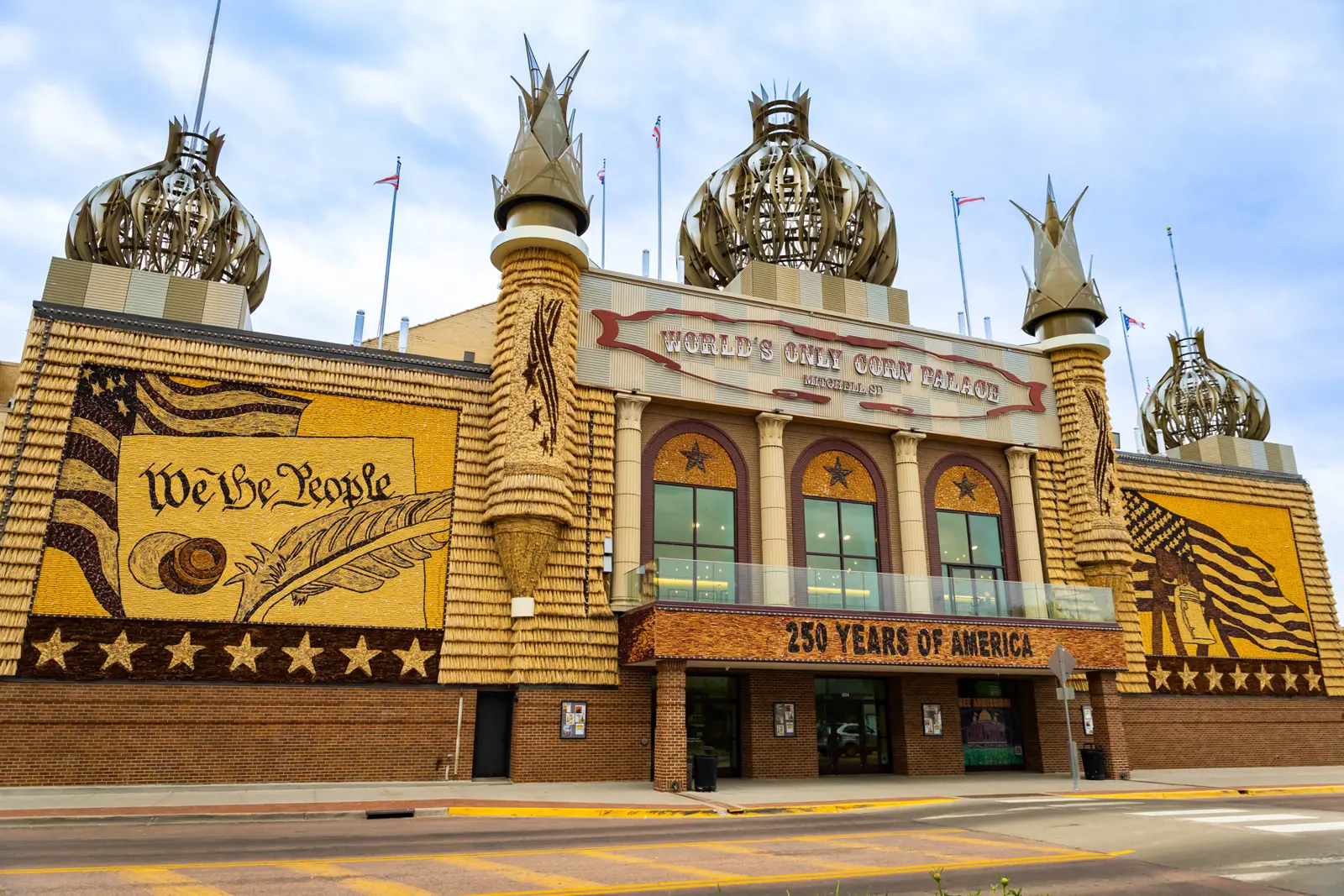
Start at the Corn Palace. Mitchell built its first one in 1892 to prove that Dakota soil could grow something; the current building dates to 1921, and its domes and minarets went on in 1937. The murals are the point. Each year's theme is drawn up by students at Dakota Wesleyan University, then filled in like a giant paint-by-number with ears of naturally colored corn, sawn in half lengthwise and nailed to the walls, and trimmed with bundles of rye and sour dock. The 2026 theme, "250 Years of America," covers nine panels, the first of them a tribute to the Constitution titled "We the People." Admission and parking are free. Hours run 8 a.m. to 9 p.m. daily from Memorial Day to Labor Day and 8 to 5 the rest of the year (closed Sundays from November through April), and free guided tours run in summer. Go inside: the walls of the arena carry more corn murals, and displays explain how the whole thing is done. Thirty minutes covers it. The murals look their sharpest in fall and winter, just after the new ones go up, and birds spend the following months eating the artwork.
Mitchell deserves another hour or two. On the north side of town, the Mitchell Prehistoric Indian Village is the stop most Corn Palace visitors never hear about, and it is the better one. A farming village stood on this bluff above Lake Mitchell about 1,000 years ago, and the Archeodome, a building raised directly over the dig, lets you walk above the excavation floor where archaeologists and students are still working. It is the only active archaeological site in South Dakota open to the public, and the collection runs to more than four million artifacts. For lunch, skip the chains at the interchange for Zesto, a locally owned walk-up that has been serving footlong hot dogs, soft serve, and rotating sherbet flavors since the 1950s. It is open March through October and has a drive-thru window.
Pull off at the Missouri River for Dignity of Earth and Sky. Seventy miles west of Mitchell the prairie drops away and the river fills the windshield. On the bluff at the rest area between exits 263 and 265, sculptor Dale Lamphere's 50-foot stainless steel statue of a Native woman holds a star quilt behind her, its blue diamonds turning in the wind. It is free, open around the clock, and lit after dark; the same stop has a Lewis and Clark information center and the best view of the river on the whole drive. Then go into Chamberlain itself for the Akta Lakota Museum on the St. Joseph's Indian School campus. Admission is free every day (Monday to Saturday 8 to 6, Sunday 9 to 5), and its galleries of Lakota art, clothing, and history give the statue on the hill its context. Most drivers photograph Dignity and leave. The museum is where you learn something.
West of the river, the attractions get stranger. In Murdo (exit 192), the Pioneer Auto Show spreads more than 275 classic cars and 60 antique tractors through a rambling complex of sheds and storefronts; adult admission is $14, and car people lose half a day here. Twenty-two miles on, at exit 170, 1880 Town is a full frontier main street assembled from authentic buildings hauled in from around the state, with props from Dances with Wolves, a museum to rodeo champion Casey Tibbs, costume rentals, and a 1950s diner in a train car. It is open May 1 through October 31 at $14 for adults, but the saloon, costumes, and diner only operate from late May to early September. If you only have time for one of the two, families should pick 1880 Town.
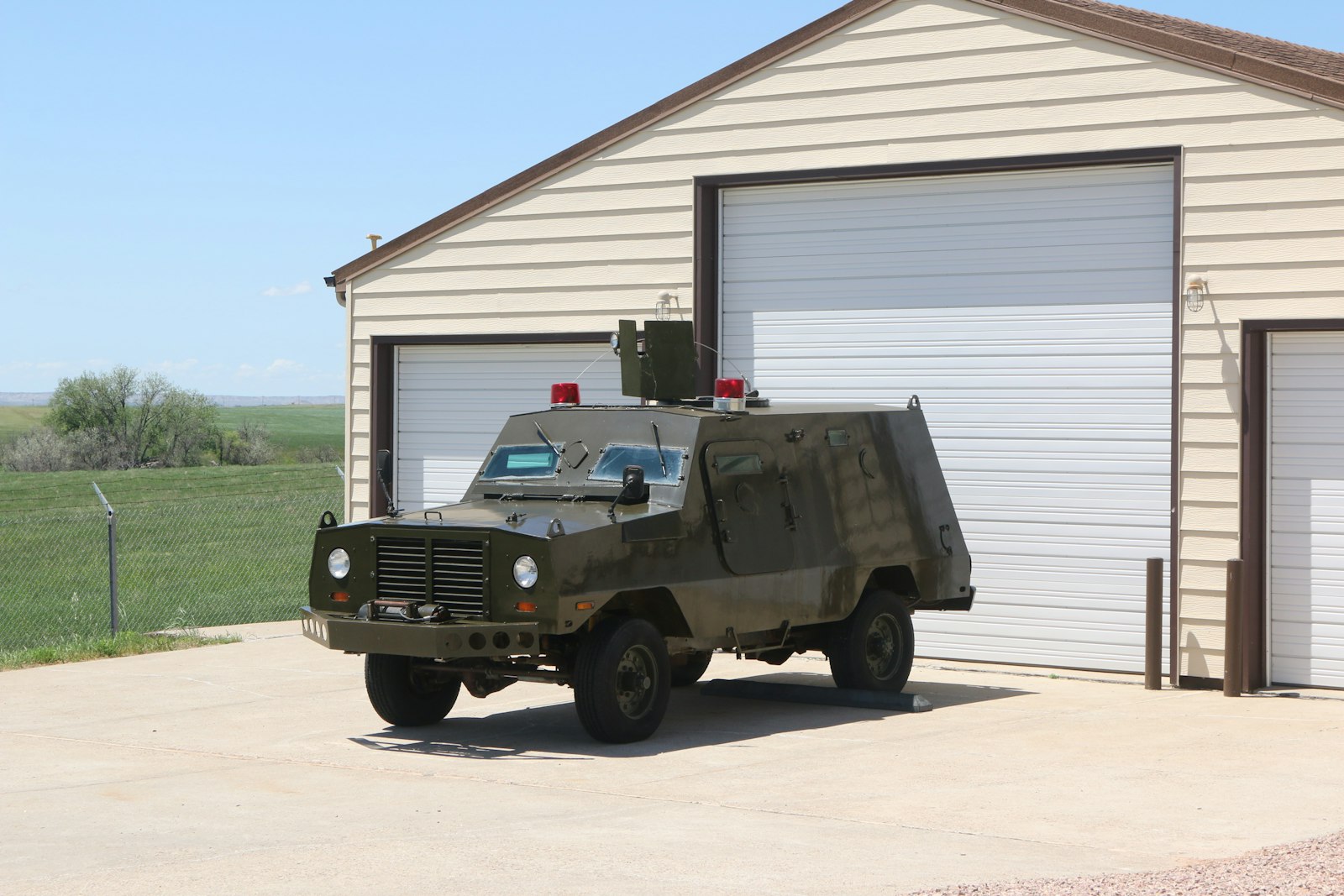
The most sobering stop on I-90 is Minuteman Missile National Historic Site. For three decades the grassland around here hid 150 nuclear missiles, and the park preserves three pieces of that system along 15 miles of interstate. The visitor center at exit 131 is free, with a film and exhibits on the Cold War. The part to plan for is the Delta-01 launch control facility at exit 127, where a ranger takes six people at a time down to the underground capsule in which two officers waited for an order that never came. Tours open on Recreation.gov 30 days ahead and fill fast, so book the day they are released. No reservation? The quiet alternative is the Delta-09 silo at exit 116: a self-guided site where you look down through a glass cover at a Minuteman II in its launch tube, usually with nobody else around.
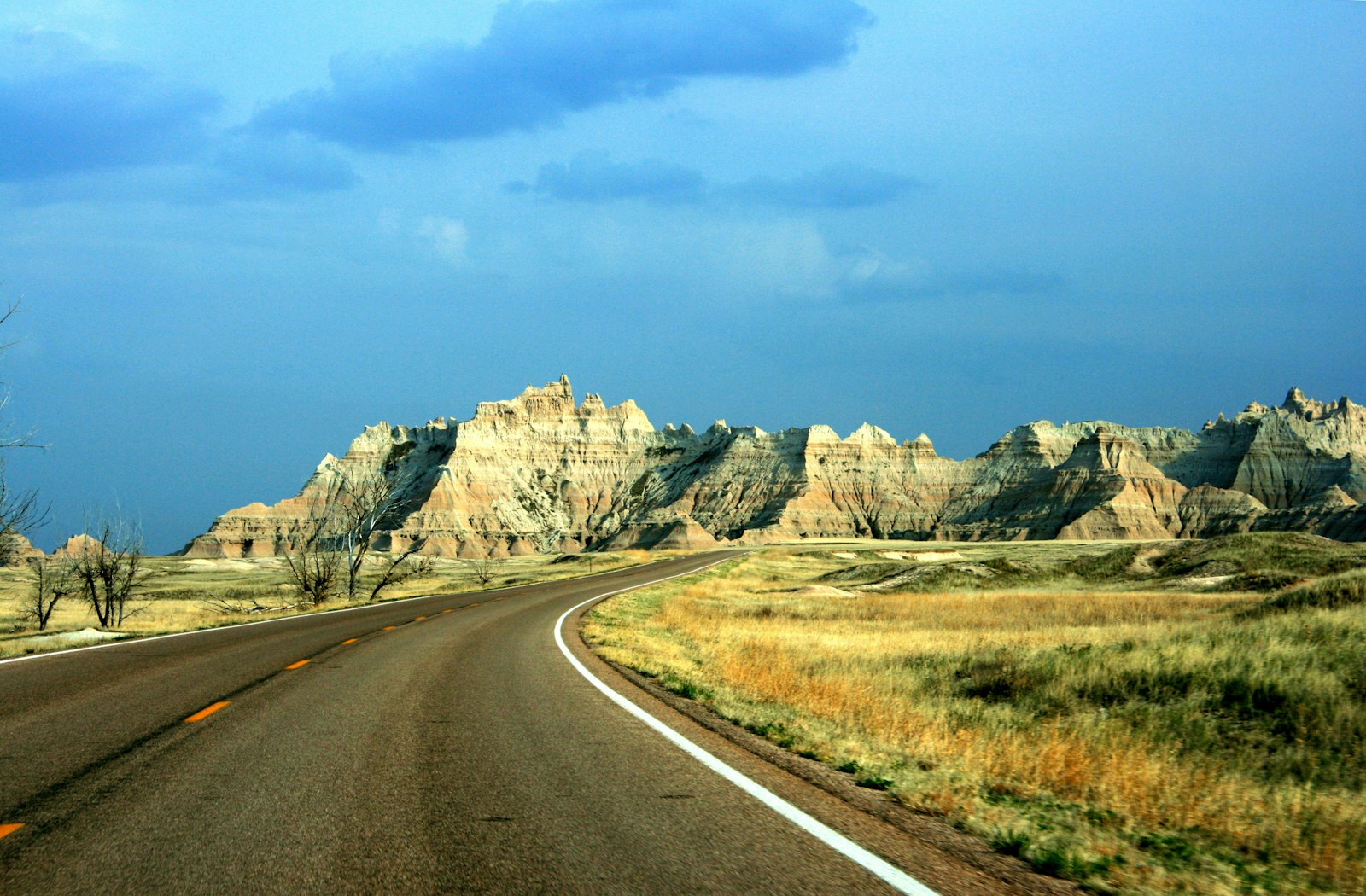
Take the scenic way from exit 131 to Wall. The Badlands Loop Road (SD 240) leaves the interstate at the same exit as the Minuteman visitor center, winds for about 39 miles through Badlands National Park, and comes out in Wall. It adds an hour or two and a per-vehicle entrance fee, and it is worth both. Just before the park gate, the Badlands Ranch Store sells bags of peanuts for feeding the prairie dog town out back, which sits under a giant concrete prairie dog. Inside the park, stop at the overlooks as they come, and time the last one, Pinnacles Overlook, for the hour before sunset, when the ridges turn pink and bighorn sheep work the slopes below the railing. Wall is eight miles north.
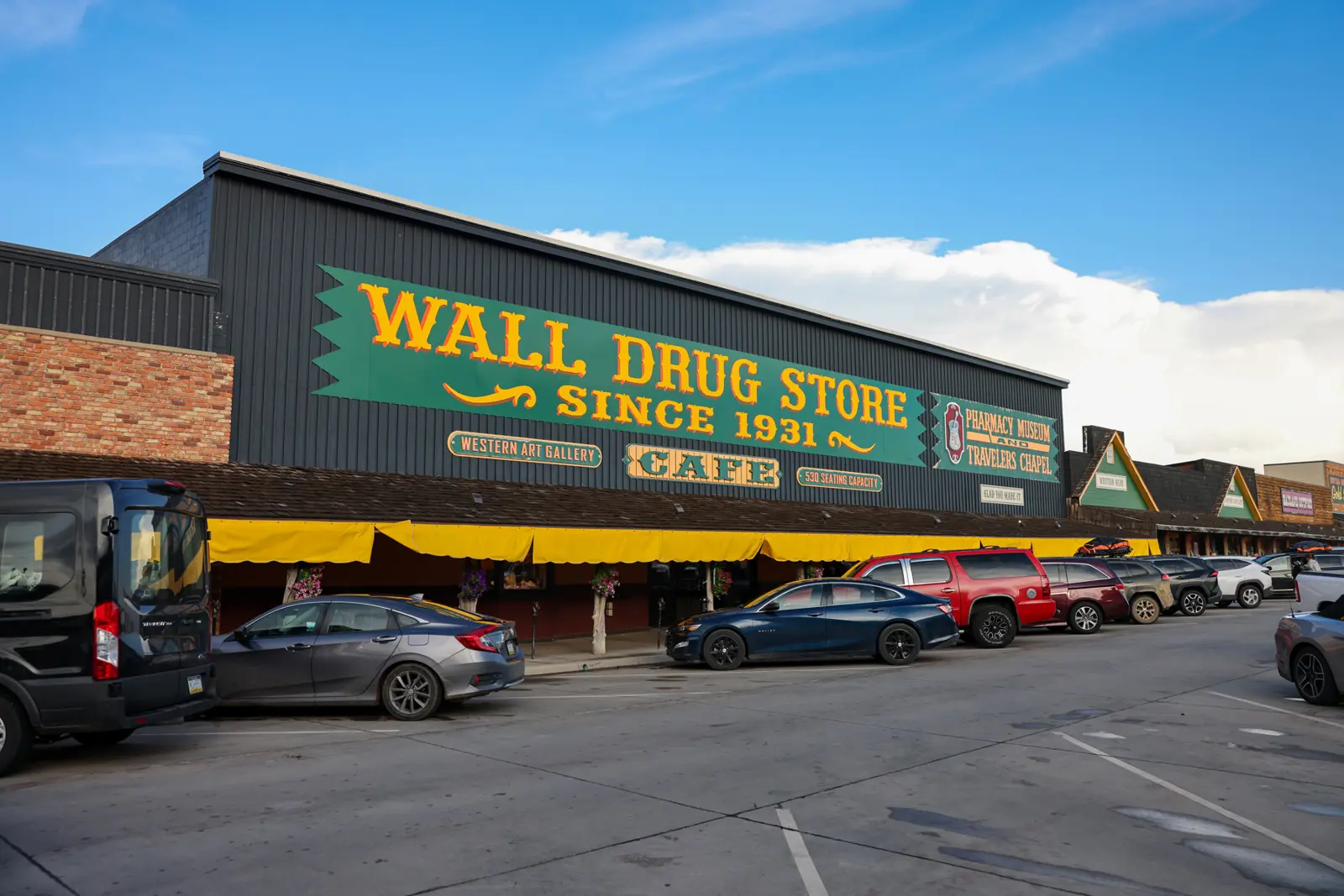
Then give in to Wall Drug. You will have been reading its signs for 200 miles. Ted and Dorothy Hustead bought the only drugstore in Wall, population 326, in December 1931 and nearly went broke. In July 1936 Dorothy suggested putting signs on the highway offering free ice water to hot travelers, and the cars have not stopped since: more than two million visitors a year now come through a town of about 800 people. The ice water is still free and the coffee is still five cents. Eat in the Western Art Gallery Restaurant, which seats more than 500 under some 300 original oil paintings (N.C. Wyeth and Harvey Dunn among them), and order the hot beef sandwich with mashed potatoes and gravy or a buffalo burger, then a homemade donut. Out in the Backyard, kids can ride the giant jackalope, run through the jumping water jets, pan for gems, and wait for the animatronic T. rex to roar, and a quieter room holds more than 1,400 historical photographs of South Dakota. The main store opens at 8 a.m. daily; arrive before 10 or after 4 in July and August to dodge the tour buses.
Before you leave Wall, walk two blocks south of the drugstore to the National Grasslands Visitor Center, the Forest Service's free museum of the prairie you have just crossed. Inside (weekdays, 8 to 4:30) there are exhibits and a short film on the black-footed ferret, one of the rarest mammals in North America, which was reintroduced nearby. The outdoor Fossil Wall, finished in 2025, shows the Badlands rock layers with replica fossils set in place, and it can be seen at any hour. It takes twenty minutes, and it is the one place in town that is never crowded.
A one-day plan: Corn Palace at 8 a.m. and the Prehistoric Indian Village by 9; Dignity and the Akta Lakota Museum late morning, with lunch in Chamberlain; 1880 Town in the early afternoon; the Minuteman visitor center and the Badlands Loop from about 4 p.m. Mountain time; Wall Drug for dinner and a donut. With two days, overnight in Murdo, add the Pioneer Auto Show and a reserved Delta-01 tour, and give the Badlands a full morning. From Wall, Rapid City and the Black Hills are 55 miles farther west.
About the author
Kristian Ranstrom
I built Get Busy Exploring because I kept losing track of where I'd been. I chase lists — fourteeners, highpoints, Munros — and I'm just as happy getting lost in a city on foot. I write up the trips here: routes, itineraries, and what I'd do differently.