Ghost Towns You Can Actually Visit: 20 Across the US
🗺 View the 30 places in this post on a map
Most "ghost town" lists are padded with places you can't actually see: private land behind a locked gate, a historical marker beside an empty field, or a Wild West theme park built in 1960. This one is different. Every town below has real buildings standing, is legally open to the public, and is somewhere we'd happily send a friend with a weekend and a full tank of gas. We've grouped them by region, noted the gravel miles and seasonal closures that catch people out, and for the famous ones we've added the quieter ghost town down the road that most visitors never hear about. A few words on etiquette before you go: these places survive because nobody takes souvenirs. Leave the bottles and square nails where they lie, stay out of posted buildings, and treat the cemeteries as the working cemeteries they often still are.
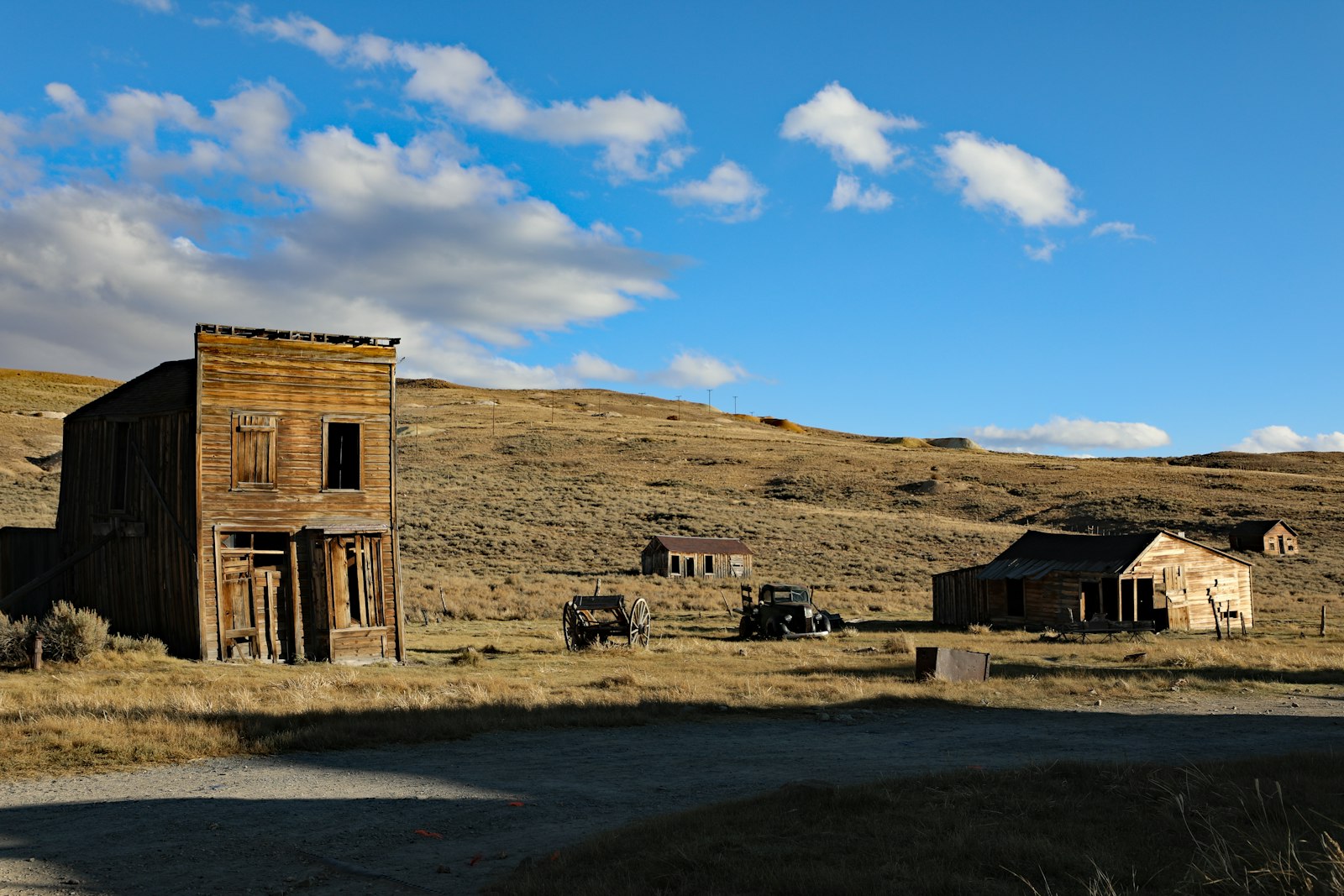
California and Nevada. Bodie State Historic Park is the benchmark every other ghost town is measured against. A gold town of 10,000 in 1880 that sits at 8,375 feet in the hills east of the Sierra, it is kept in a state of "arrested decay": the roofs are patched but nothing is restored, so the saloon still has bottles on the bar and the schoolhouse still has lessons on the board. Around a hundred buildings survive. Take State Route 270 east from US 395 south of Bridgeport; the last three miles are washboard gravel, and from the first big snow until spring the park is reachable only on skis, snowshoes, or a snowmobile. Hours are 9 to 6 in summer and 9 to 4 in winter, admission is a few dollars per adult, and the kiosk prefers cash. Allow three hours, more if the stamp mill tour is running. On the way back, locals eat at the Whoa Nellie Deli, which is improbably inside the Tioga Gas Mart in Lee Vining and serves fish tacos and buffalo meatloaf with a view of Mono Lake; it closes with Tioga Pass for the winter. Calico Ghost Town near Barstow is the opposite of Bodie: Walter Knott, of Knott's Berry Farm, bought and rebuilt it in the 1950s, so only about a third of it is original. It is still a fun stop with kids between Los Angeles and Las Vegas, as long as you know what you're looking at.
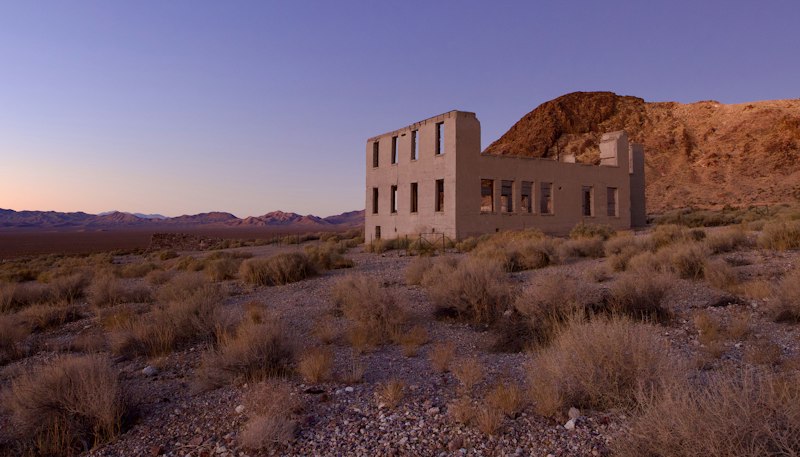
Across the Nevada line, Rhyolite is the great free one. Four miles west of Beatty on the road into Death Valley, it boomed and busted between 1905 and 1916 and left behind the roofless three-story shell of the Cook Bank, a train depot, a jail, and a house built from some 50,000 beer and medicine bottles. There is no gate and no fee; go at sunrise, when the Amargosa Desert turns violet behind the ruins. The Goldwell Open Air Museum at the edge of town adds a surreal twist with its life-size plaster ghosts posed as the Last Supper. For the quiet alternative, drive three hours north to Berlin-Ichthyosaur State Park, where an 1890s silver camp with its stamp mill and cabins intact shares a hillside with the fossilized skeletons of 50-foot marine reptiles. It is open year-round, charges a few dollars per vehicle, takes cash only, and you may have it to yourself; the nearest gas is in Gabbs. Closer to Las Vegas, the Techatticup Mine at Nelson is a privately owned camp in Eldorado Canyon, 45 minutes from the Strip, where Eldorado Canyon Mine Tours takes you underground and the yard full of rusted trucks is a photographer's favorite.
Montana and Wyoming. Bannack State Park, 25 miles west of Dillon, was Montana's first territorial capital and is its best-preserved ghost town, with more than 50 log and frame buildings along a single Main Street, including the brick Hotel Meade and a Masonic lodge over the schoolhouse. It is open daily from 8 a.m. to sunset for a small per-vehicle fee, and you can walk into nearly every building. Bannack Days, on the third weekend of July, fills the street with re-enactors; the October Ghost Walks sell out and need reservations. The lesser-known rival is Garnet Ghost Town, 40 miles east of Missoula and up nine miles of gravel, where the three-story J.K. Wells Hotel and a few dozen other buildings sit in a forested bowl. The visitor center runs May through September, and from January through April the road closes to cars and Garnet becomes a snowmobile and ski destination where you can rent a cabin and have the whole town to yourself overnight. Virginia City, in Alder Gulch south of Bozeman, is a living ghost town with a boardwalk of 1860s storefronts and a short train ride out to the even sleepier Nevada City; the businesses mostly run Memorial Day to late September. Across the border, South Pass City State Historic Site in Wyoming's Wind River country preserves 17 original structures from an 1867 gold rush and is where Esther Hobart Morris became the country's first woman justice of the peace. It is open mid-May through September, and the Carissa Mine tour is worth the extra half hour.
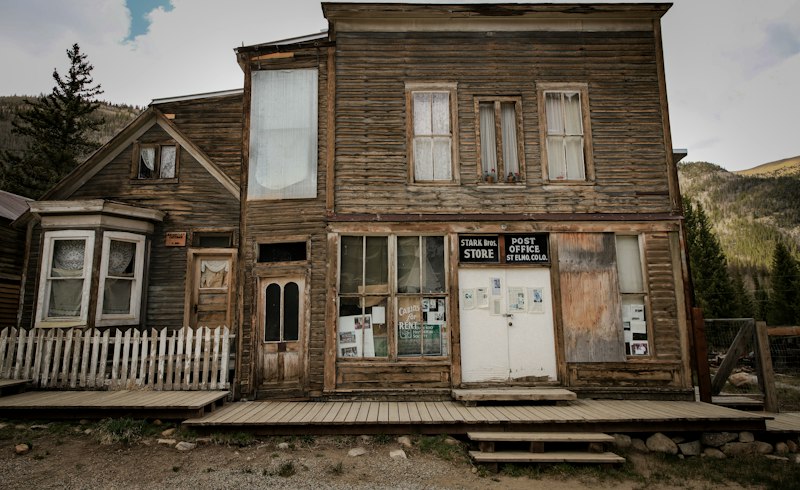
Colorado. St. Elmo is the state's favorite, and for good reason: a complete 1880s main street of unpainted false fronts at 9,961 feet, 20 miles southwest of Buena Vista up County Road 162 from Nathrop. The general store opens in summer, the chipmunks eat sunflower seeds out of your hand, and the road continues past town toward the Alpine Tunnel for anyone with a high-clearance vehicle. Most buildings are private, so look from the street. Near Aspen, the obvious stop is Independence beside Highway 82 just below Independence Pass, but the better one is Ashcroft, 11 miles up Castle Creek Road: more buildings, fewer people, free entry, docents from the Aspen Historical Society in summer, and a snowshoe destination in winter when the highway over the pass is closed. For high drama, Animas Forks sits at 11,200 feet on the Alpine Loop 12 miles northeast of Silverton. The county road is passable in a careful SUV in summer and the Duncan House, with its famous bay window, has been stabilized so you can go inside.
Utah, Arizona, and New Mexico. Ten minutes from Zion's south entrance, Grafton is the ghost town in the bicycle scene from Butch Cassidy and the Sundance Kid: an 1886 adobe schoolhouse, two restored homes, and a cemetery on a dirt road outside Rockville, free and almost never busy even when Springdale is overrun. Forty-five minutes west, just off I-15 at Leeds, the Silver Reef Museum occupies the 1877 Wells Fargo office of the only town in America that ever mined silver out of sandstone; the foundations spread across the hillside behind it. In Arizona, Jerome is the famous one, a copper town of 15,000 that dwindled to a few dozen holdouts and has climbed back to about 450 artists and innkeepers clinging to Cleopatra Hill above the Verde Valley. The state park in the Douglas Mansion tells the mining story; the ghost-town feeling is strongest a mile up Perkinsville Road at Gold King Mine & Ghost Town, a gloriously cluttered acreage of old trucks, a working sawmill, and a petting zoo. Skip the rebuilt Goldfield near Apache Junction and drive 12 miles southwest of Wickenburg to Vulture City instead, where the assay office, blacksmith shop, and hanging tree of Arizona's richest gold mine have been carefully stabilized; it runs self-guided visits most days and guided tours on weekends in the cooler months. West of Tombstone's gunfight re-enactments, Fairbank Historic Townsite on Highway 82 was the railroad stop that served the silver town, and today it is free, shaded by cottonwoods along the San Pedro River, with a schoolhouse museum open Friday to Sunday and a flat 1.25-mile trail to the ruins of the Grand Central Mill. Over the New Mexico line, Shakespeare, just south of Lordsburg, is privately owned and visited by guided tour only, at 10, noon, and 3 when a guide is on hand; call ahead. The Stratford Hotel dining room, where a young Billy the Kid supposedly washed dishes, is the highlight.
Texas and the East. Terlingua, the quicksilver town at the west door of Big Bend, is the ghost town that grew a nightlife. The Chisos Mining Company's stone ruins and the tilted crosses of the cemetery are still there, but so is the porch of the Terlingua Trading Company, where locals drink beer and watch the sun drop behind the Chisos Mountains, and the Starlight Theatre next door, a 1930s movie house turned into the best restaurant for 80 miles. Come on November 2 for the Day of the Dead cemetery vigil or the first weekend of November for the chili cook-offs, and book lodging months ahead for either. The eastern half of the country has ghost towns too, they are just made of brick. Thurmond, in New River Gorge National Park, West Virginia, was a coal boomtown with no road, only the railroad; today it has five residents, a restored depot that serves as a visitor center from Memorial Day through Labor Day, a coaling tower, and a main street that is literally the active CSX track. Amtrak's Cardinal still stops on request. Drive in on the narrow seven-mile road from Glen Jean, and leave the trailer behind. Old Cahawba, 14 miles southwest of Selma, was Alabama's first state capital in 1819 before floods and the Civil War emptied it; the archaeological park has brick columns in the woods, a surviving church, and historic cemeteries, for a couple of dollars admission. Batsto Village in New Jersey's Pine Barrens kept a bog-iron furnace and glassworks running from 1766, and 33 buildings including the ironmaster's mansion stand in Wharton State Forest. And on Michigan's Upper Peninsula, Fayette Historic State Park preserves about 20 buildings of an 1867 iron-smelting company town on Snail Shell Harbor, with white limestone cliffs behind the furnace stacks. It is one of the most beautiful ghost-town settings in the country and gets a fraction of the visitors of anything out west; the townsite is open mid-May through mid-October with a Michigan Recreation Passport.
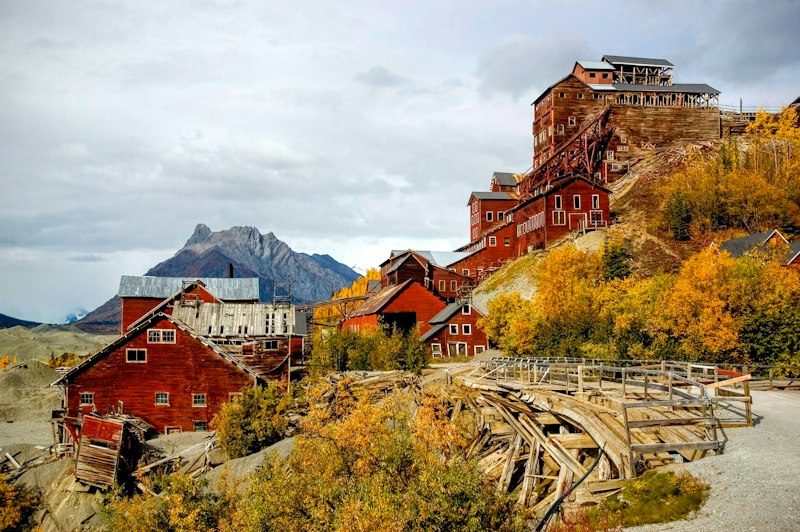
Alaska, and how to plan. The biggest ghost town in the country is Kennecott, deep in Wrangell-St. Elias National Park. The copper company walked away in 1938 and left a 14-story red timber concentration mill, a hospital, a company store, and dozens of cottages on a moraine above the Kennicott Glacier. Getting there is the adventure: 60 miles of the gravel McCarthy Road from Chitina, a footbridge across the river, and a shuttle for the last five miles. St. Elias Alpine Guides holds the only permit to take visitors inside the mill, on a two-hour tour that climbs through all 14 floors with a hard hat. Stay at the Kennicott Glacier Lodge, whose porch faces the glacier and the mill at once; the season runs late May to mid-September. Wherever you go, the planning rules are the same. Spring and fall are best in the deserts, summer in the high country, and the first weeks after snowmelt in Colorado and Montana are when the roads reopen and the crowds haven't arrived. Carry cash for fee boxes, more water than seems reasonable, and a full-size spare if the last miles are gravel. Check the managing agency's page the week you go, because a mine tour that runs daily in July may not run at all in October.
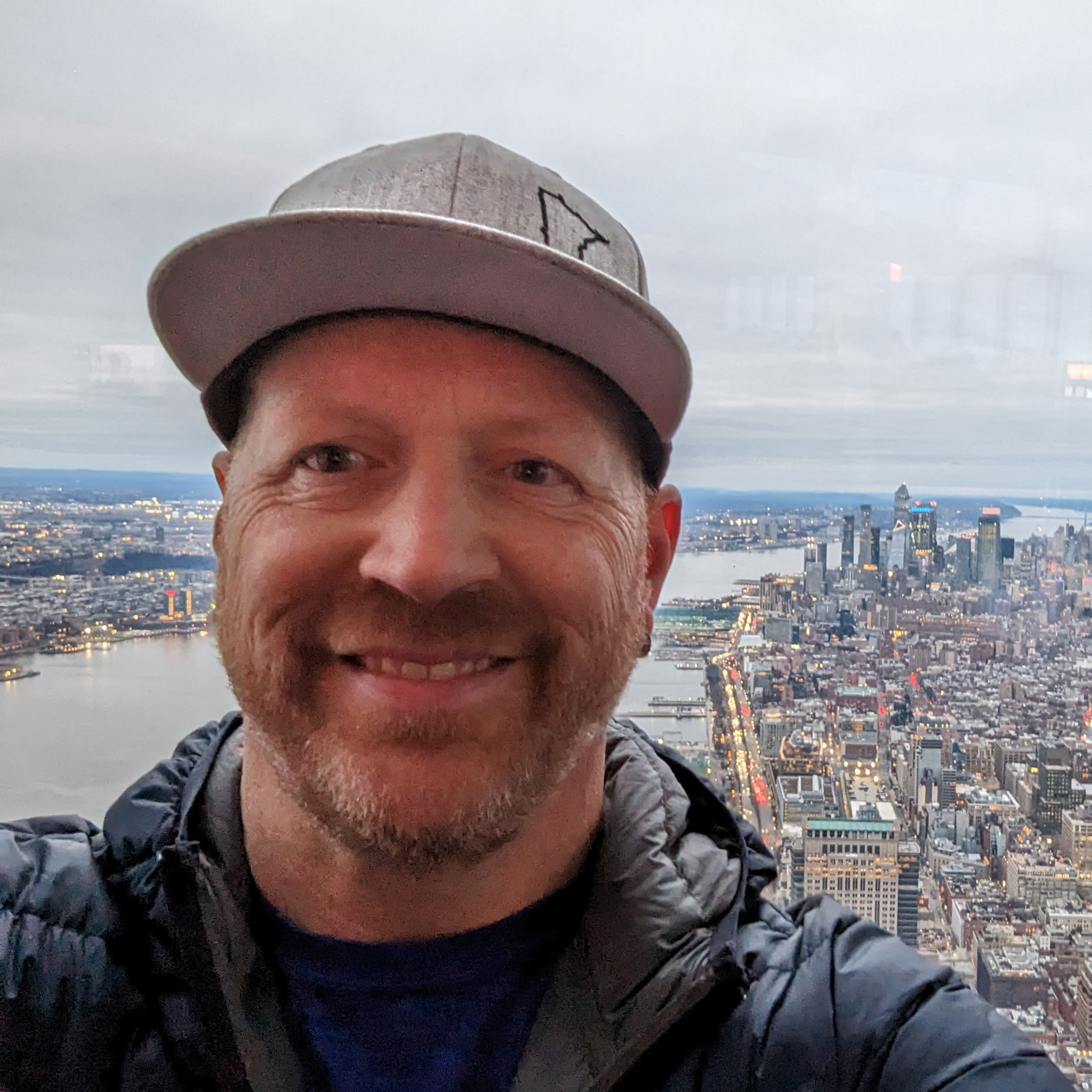
About the author
Kristian Ranstrom
I built Get Busy Exploring because I kept losing track of where I'd been. I chase lists — fourteeners, highpoints, Munros — and I'm just as happy getting lost in a city on foot. I write up the trips here: routes, itineraries, and what I'd do differently.