Crater of Diamonds State Park: How to Dig for Real Diamonds
🗺 View the 7 places in this post on a map
There is exactly one place on Earth where anyone with a bucket and $15 can dig for diamonds in their original volcanic source and keep whatever they find. Crater of Diamonds State Park sits just outside Murfreesboro, a town of about 1,500 people in the southwest Arkansas foothills of the Ouachita Mountains. It's roughly 2 hours from Little Rock, 4 from Dallas, and 80 minutes from Hot Springs. Visitors find somewhere between 400 and 800 diamonds a year, and more than 37,000 have come out of the ground since the park opened in 1972. Most are smaller than a match head, about a quarter carat. But in early October 2026, longtime regular Jack Pearadin announced a 6.03-carat yellow stone he calls the "American Dream," the biggest find of the year so far. That's the pull of this place: the next one could be yours.
What you're actually digging in. About 100 million years ago a gas-rich volcanic eruption punched up through the rock here and carried diamonds with it from deep in the mantle. The crater eroded flat, and today its surface is a 37-acre field the park plows regularly to turn up fresh ground. Farmer John Huddleston found the first two diamonds on his land in 1906, which set off a short-lived diamond rush and decades of failed commercial mines. Visitors have done better. The 40.23-carat Uncle Sam, found in 1924, is still the largest diamond ever unearthed in the United States, and in 2015 a visitor found the 8.52-carat Esperanza. Before you head out, stop at the visitor center. It displays real rough diamonds and the Strawn-Wagner, a stone found here in 1990 and cut into what the American Gem Society calls the most perfect diamond its lab ever graded.
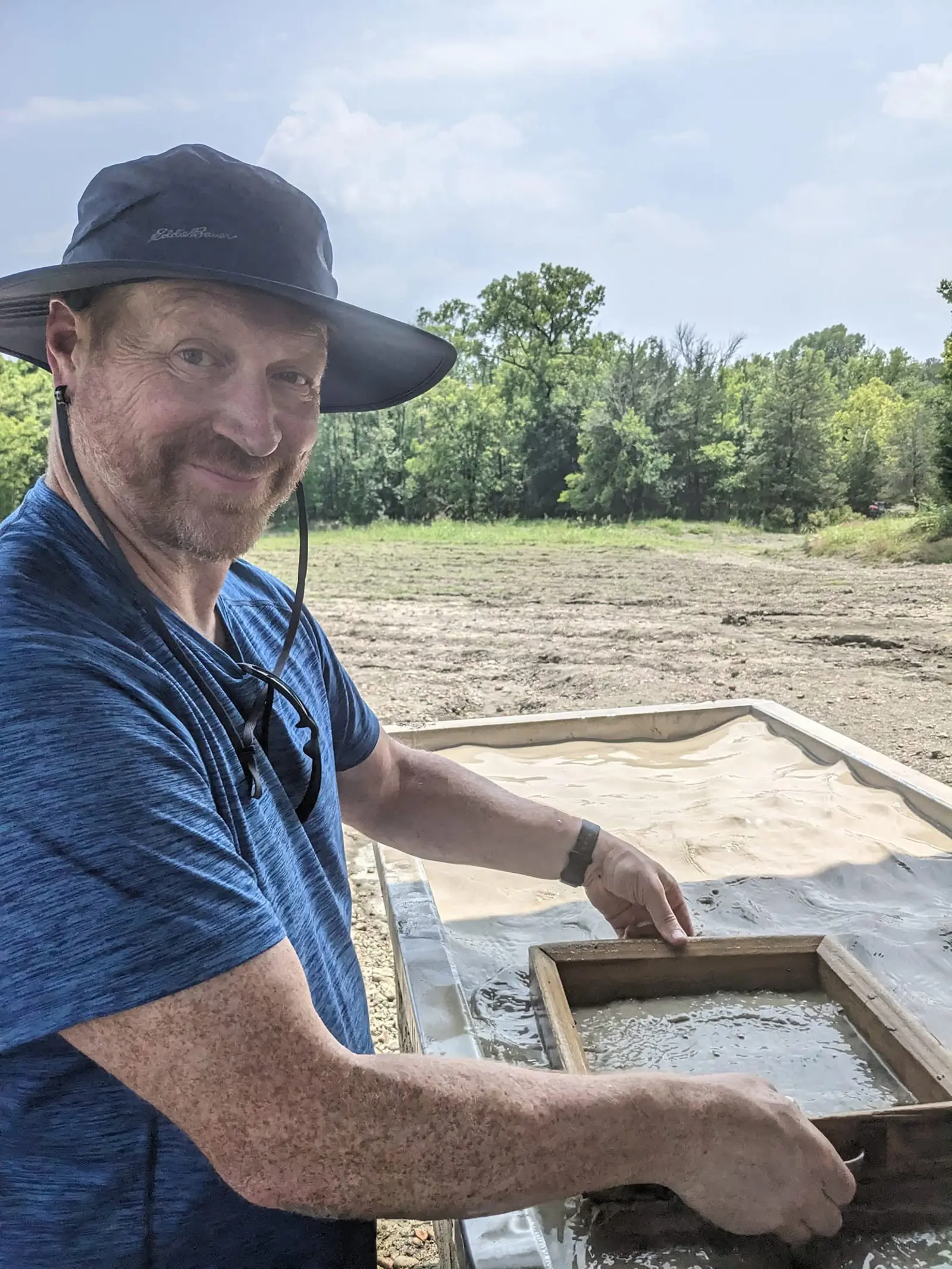
Fees, gear, and how to search. Admission to the search field is $15 for ages 13 and up, $7 for kids 6 to 12, and free for 5 and under. Gates open at 8 a.m.; check the park's hours before you go, since closing times shift with the season. You can bring your own shovel, buckets, and screens (no motorized tools or ladders), or rent them on site. A basic kit costs $15 plus a refundable deposit, and a box screen is $5. Before you dig, catch the free 15-minute Diamond Mining 101 talk in the Diamond Discovery Center, offered most mornings at 10 a.m. and again at 1:30 p.m. On select fall mornings, the 8:30 a.m. Daybreak Diamond Tour walks you through the field with an interpreter who points out where recent finds came from. Park staff will identify anything you bring them for free, and they register every diamond with the finder's name.
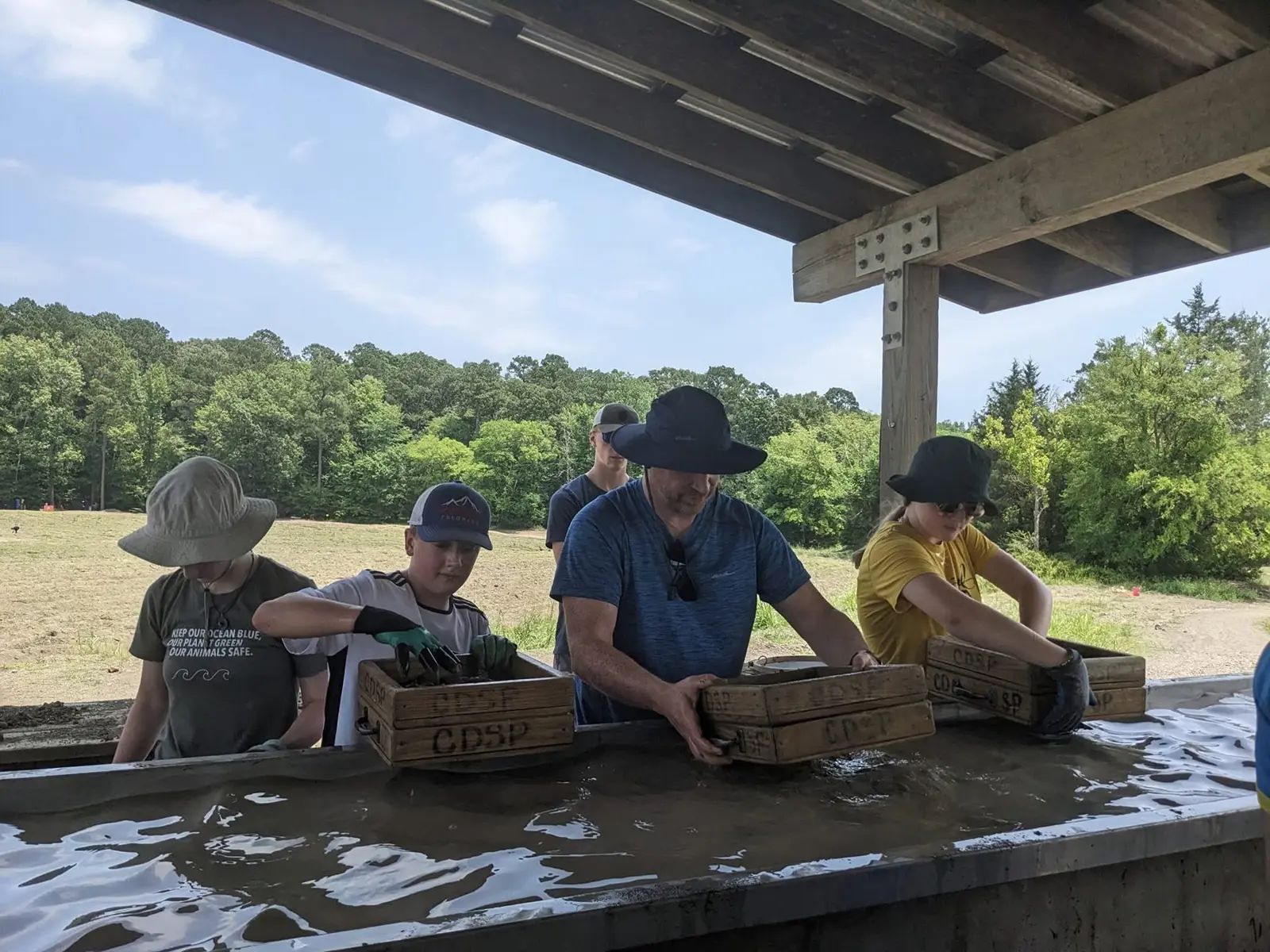
There are three ways to search, and regulars use all of them. Surface searching costs nothing but patience: walk the furrows slowly with the sun at your back and look for a small, smooth, oily-looking pebble. Diamonds here are rounded and glassy, not faceted, and they don't stick to dirt. Dry sifting works on dusty days: shake loose topsoil through a fine screen and check what's left. Wet sifting is the most work and has the best odds. You dig gravel from the low spots, wash it at the covered pavilions through a stack of screens, then flip the final screen onto a table. Diamonds are dense, so they settle to the center of the pile. The best day to come is a sunny one right after heavy rain, when water has washed the lighter soil away and stones sit on the surface catching light. Spring brings the most rain and some of the best surface finds; October is cooler and quieter; summer is hot, muddy, and crowded.

When you need a break from the dirt. Two short trails start inside the park. The Little Missouri River Trail is a flat 1.2-mile loop from the campground to the river, half of it paved and wheelchair-accessible. The Prospector Trail circles the search field for 1.2 graveled miles past rock outcrops rare in this part of the state. From Memorial Day to Labor Day, the park's Diamond Springs Water Park is where kids recover from a morning of shoveling. For lunch, skip the drive-thrus and go into town to Hawkins Variety Store on the Murfreesboro courthouse square. It's a 1909 corner building with a soda fountain that's been running since 1943, and locals stop in for malts, sandwiches, and baked goods you won't find at a chain.
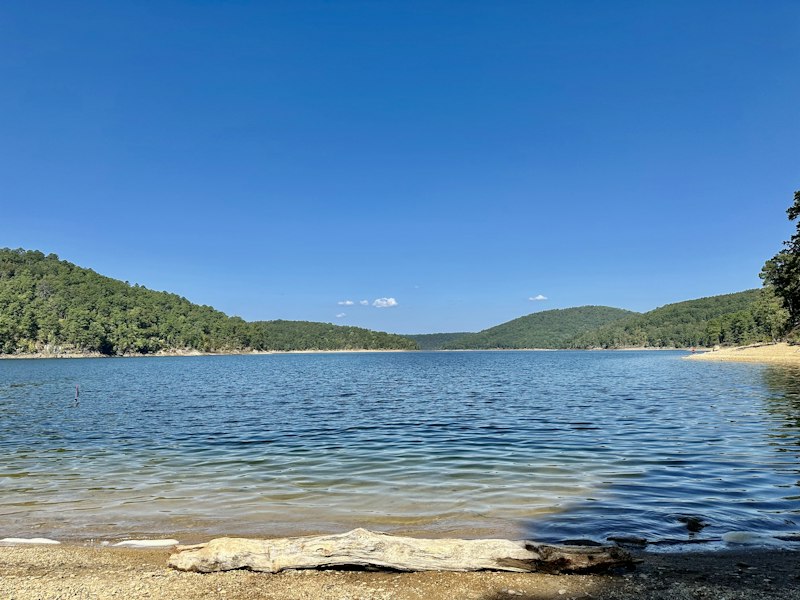
Where to stay. The park's own campground has 47 full-hookup sites plus walk-in tent sites, so you can be first in line when the gates open. Book early for spring weekends. For a roof over your head, drive 6 miles north to Lake Greeson. This 7,000-acre Army Corps of Engineers lake has clear water, wooded shores, and almost no development. Swaha Lodge & Marina has been renting cabins, condos, and treehouses near the Narrows Dam since 1968. It rents boats by the hour, its Dam Grill runs from Memorial Day into October, and the cold tailwater below the dam is a trout stream. Farther up the lake, Daisy State Park has 100 campsites, yurts, and kayak rentals on the quieter north shore.
A waterfall most visitors miss. About 75 minutes north, deep in the Ouachita National Forest, Little Missouri Falls is the same river that flows past the diamond field, upstream where it drops in a series of stairstep ledges through a narrow gorge. Take Highway 369 north from Langley, then follow the signed gravel Forest Service roads. A short walk crosses a bridge to the overlook, and on summer afternoons people wade in the pools below. Go in late winter or spring, when the water runs highest. It's a picnic-only area with no camping, and you'll have no cell signal for most of the drive, so download your map before you leave Murfreesboro.
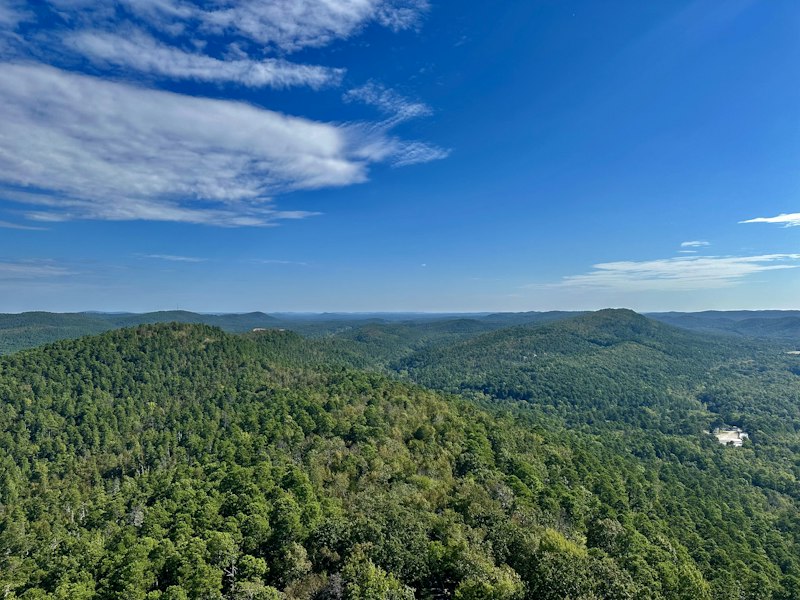
How long to stay, and how to round out the trip. One full day in the field is the minimum, and two is better, because the first day is mostly learning to read the gravel. The most efficient plan is a weekend: dig Saturday, check the forecast, and if rain falls overnight, walk the surface again Sunday morning before heading out. On the way home, spend a night in Hot Springs. Hot Springs National Park has a row of historic bathhouses downtown, and the elevator at Hot Springs Mountain Tower lifts you 216 feet above the ridgetop for a 140-mile view across the Ouachitas. You're unlikely to drive home with a 6-carat stone, but you will leave with a bag of jasper, quartz, and agate, mud on everything, and a strong urge to come back after the next big rain.
- #Crater of Diamonds State Park
- #Arkansas
- #Murfreesboro
- #diamond hunting
- #Ouachita Mountains
- #family road trips

About the author
Kristian Ranstrom
I built Get Busy Exploring because I kept losing track of where I'd been. I chase lists — fourteeners, highpoints, Munros — and I'm just as happy getting lost in a city on foot. I write up the trips here: routes, itineraries, and what I'd do differently.