Nashville Beyond Broadway: Music, Museums, Nature & Food
🗺 View the 31 places in this post on a map
Lower Broadway is Nashville's front porch: four blocks of honky-tonks with a band on every floor, no cover charge, and a bachelorette party on every pedal tavern. It is genuinely fun, and you should give it one night, not every night. Music City earned the name in studios and listening rooms that sit miles from the neon, and the city around them has free museums, a state park with old-growth forest inside the city limits, and a food culture that runs a lot deeper than a plate of hot chicken. This guide is built for three or four days: one evening on the strip, then the rest of the trip out where the locals actually go. Spring and fall are the seasons to come. June brings CMA Fest and hotel prices to match, and July and August are humid enough to make the hikes below a dawn-only proposition.
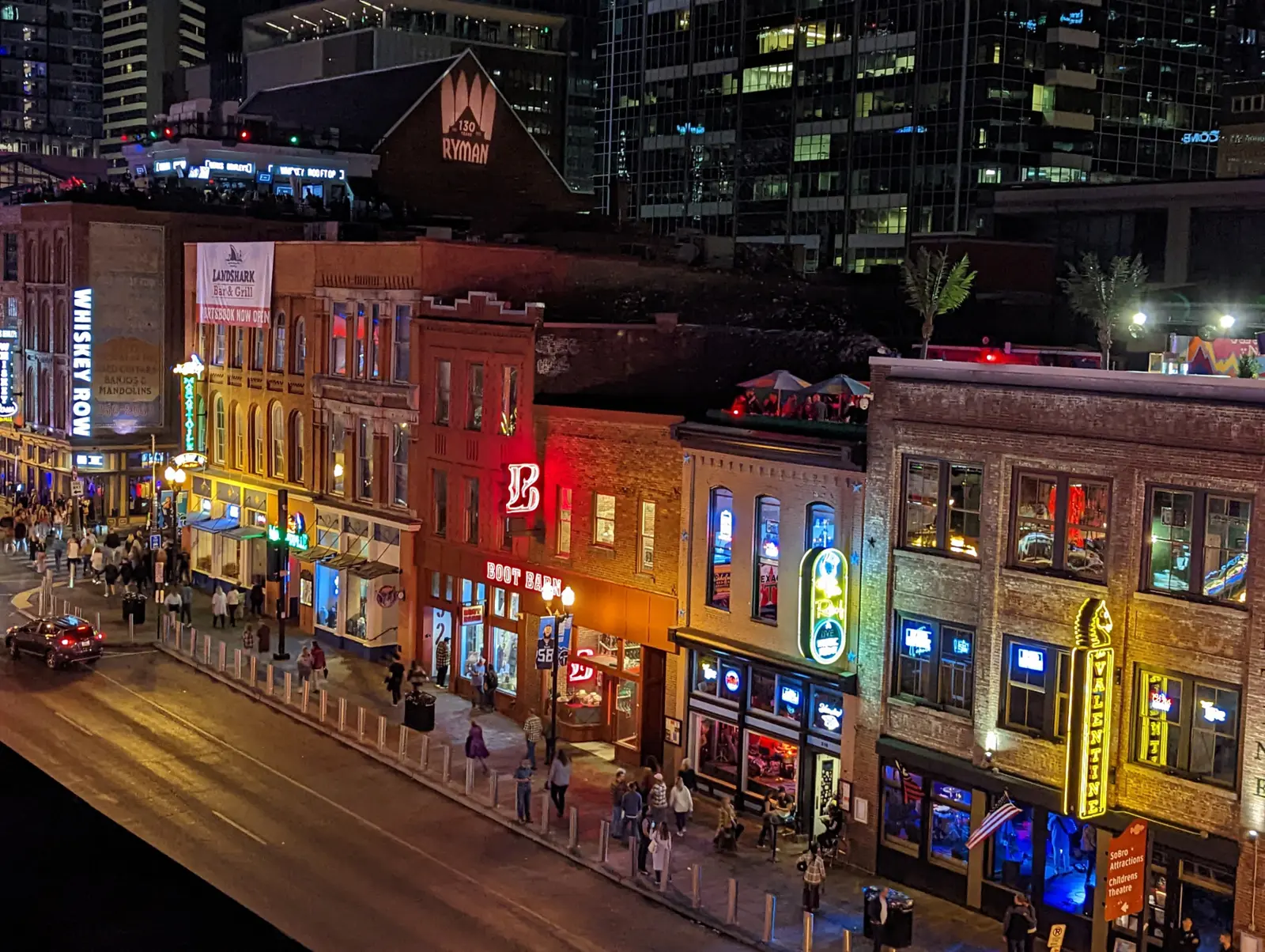
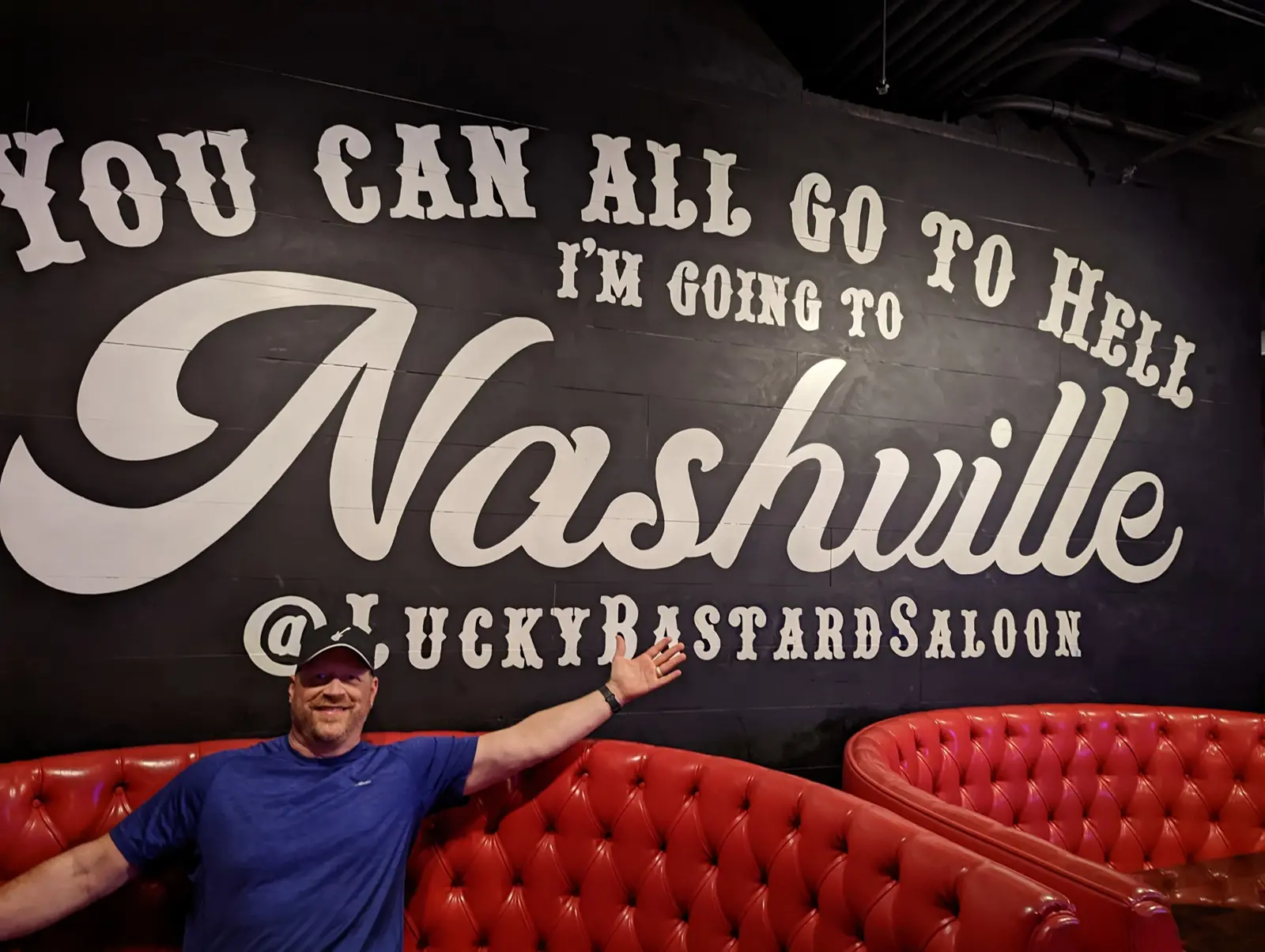
Do the strip right, and early. Robert's Western World books traditional country and Western swing instead of cover bands, and its Recession Special (a fried bologna sandwich, chips, a MoonPie, and a PBR) is still the cheapest dinner downtown. Tootsie's Orchid Lounge is the purple bar where Opry performers once slipped out the Ryman's back door between sets, and its back stairs still open onto the alley behind the auditorium. For a rooftop, Lucky Bastard Saloon at 408 Broadway has a deck over the street, a hot chicken kitchen, and a wall-sized mural quoting Hank Williams Jr.: "You can all go to hell, I'm going to Nashville." Get to Broadway by 6 pm on a weeknight and you will hear three bands before the crowds arrive. Then leave the strip to the parties and see the rest of the city.
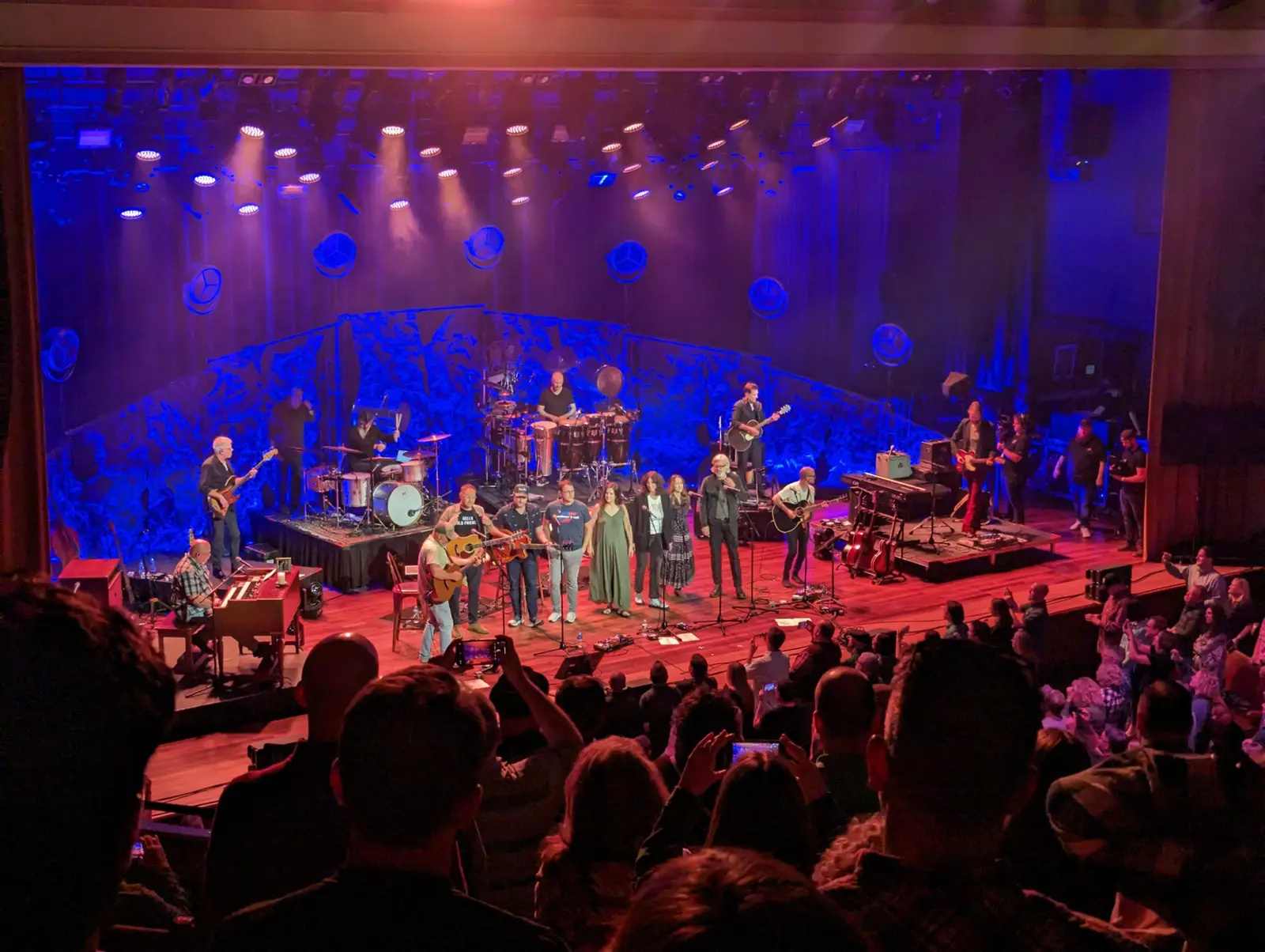
The music that matters happens off Broadway. Start at the Ryman Auditorium, a red-brick 1892 tabernacle two blocks north of the neon and the Grand Ole Opry's home from 1943 to 1974. The daytime tour is fine, but the building only makes sense with a show in it, and almost any night's bill is worth a ticket. The Opry itself now broadcasts from the Grand Ole Opry House out by Opryland, still a live radio show several nights a week with a dozen acts rotating through fifteen-minute slots. The backstage tour is the one add-on that earns its price. Book the Bluebird Cafe: ninety seats in a Green Hills strip mall, writers playing in the round, and a silence rule that is actually enforced. Reservations open online a week ahead and sell out in minutes, so set an alarm. If you miss it, the Station Inn in the Gulch has run bluegrass seven nights a week since 1974 in a cinder-block room with folding chairs and no reservations, so arrive when the doors open. Finish the music thread at RCA Studio B on Music Row, where Elvis Presley cut more than 200 songs and the guide lets you sit in the room with the lights dimmed the way he wanted them.
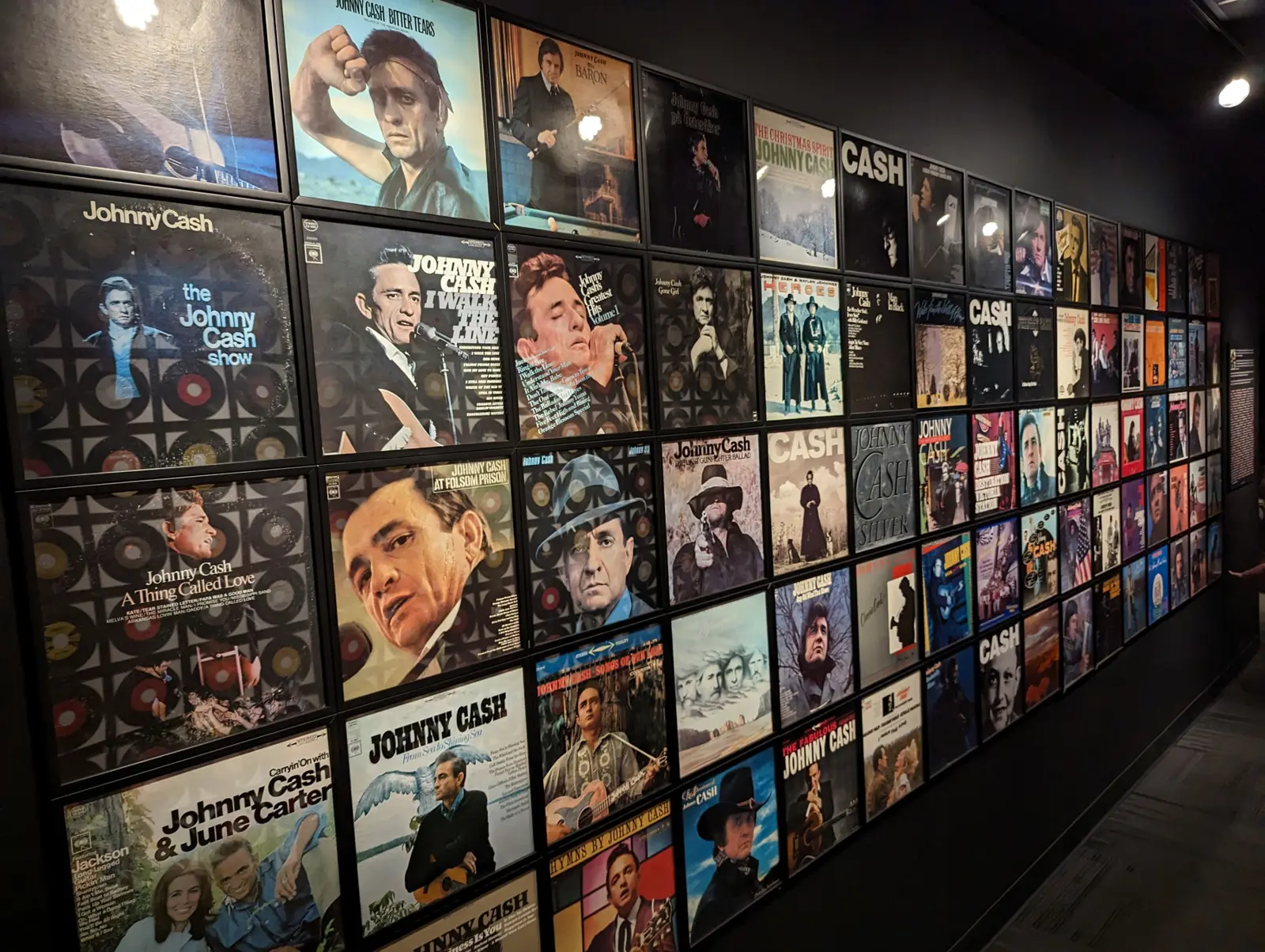
Museums: two you expect, and a few you don't. The Country Music Hall of Fame and Museum is the essential one, and its tickets bundle the Studio B shuttle. Give it two hours and add the Hatch Show Print tour in the same building, a letterpress shop that has printed concert posters since 1879. Across the street, the Johnny Cash Museum is small and dense, and the wall of every album cover he released stops people in their tracks. A block west, the National Museum of African American Music tells the half of the Nashville story that Broadway skips, from gospel and the Fisk Jubilee Singers to Jefferson Street's R&B clubs. The Musicians Hall of Fame inside the Municipal Auditorium honors session players rather than stars. Two of the best museums are free. The Tennessee State Museum at the foot of Bicentennial Mall covers everything from Mississippian mound builders to the 1960 lunch counter sit-ins, and the Frist Art Museum rotates world-class touring exhibitions through a 1934 Art Deco post office on Broadway. The local favorite that no first-timer's list includes is the Lane Motor Museum on Murfreesboro Pike, a former bakery filled with European microcars, a propeller-driven car, a three-wheeled Dymaxion replica, and amphibious oddities, most of them still running. It is closed midweek, so check the calendar.
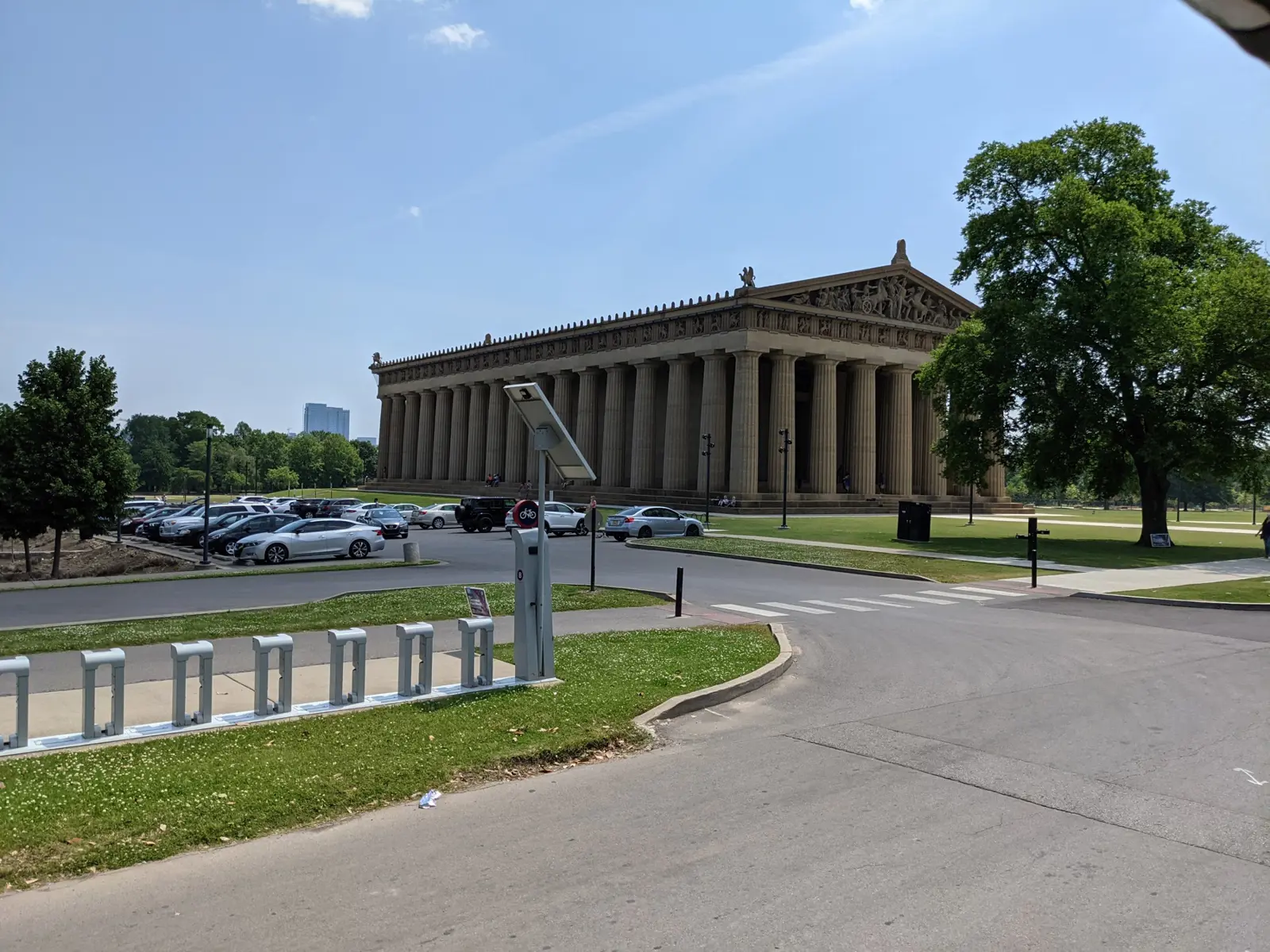
Centennial Park and the Parthenon. Nashville built a full-scale replica of the Parthenon for the 1897 Tennessee Centennial Exposition, liked it enough to rebuild it in concrete in the 1920s, and in 1990 added a 42-foot gilded statue of Athena inside, the largest indoor sculpture in the country. The park around it is where West End residents run, picnic, and watch free summer concerts. Lunch is a five-minute walk at Elliston Place Soda Shop, a 1939 diner that closed in 2020, then reopened next door with the original booths, jukebox selectors, and a meat-and-three menu. Order the chocolate shake and whatever the vegetable of the day is.
Nature inside the city limits. Radnor Lake State Park is twenty minutes south of downtown and feels like a different state. Nearly eight miles of trail circle a reservoir where deer graze at the water's edge, owls and herons nest, and the Ganier Ridge trail climbs 200 feet through old hardwoods. No dogs, bikes, or jogging on the trails, which is why it stays quiet. Gates open at 6 am, and the first hour is the best hour. West of the city, the Allée steps at the end of Belle Meade Boulevard are the local ritual: a 1930s limestone stairway climbing through cedars to a view back down the boulevard, with the car-free 5.8-mile Main Drive loop beyond it. Next door, Cheekwood Estate and Gardens fills 55 acres around the 1929 mansion of the Maxwell House coffee family with seasonal gardens and an outdoor sculpture trail. Closer in, walk across the John Seigenthaler Pedestrian Bridge from downtown and follow the Cumberland River greenway out to the Shelby Bottoms wetlands, 960 acres of bottomland trails where East Nashville walks its dogs.
Eat like you live here. Hot chicken is the dish, and the family that invented it still fries it at Prince's Hot Chicken on Nolensville Pike, where the medium is hotter than most places' hot. Bolton's Famous Hot Chicken & Fish on Main Street in East Nashville is the other original, a cinder-block shack that does hot catfish as well as chicken. Hattie B's Midtown is the tourist line, but the chicken is honest and the pimento mac is worth it. Then there is the meat-and-three, a cafeteria line of one protein and three sides. Arnold's Country Kitchen in the Gulch is the standard-bearer, weekday lunch only, with roast beef on Mondays and fried chicken on Fridays that the whole city plans around. Out on Highway 100 near the start of the Natchez Trace Parkway, the Loveless Cafe has served the same biscuits and preserves since 1951 and pairs naturally with a morning at the Allée steps. Downtown, the Nashville Farmers' Market beside the State Museum has farm sheds outside, a food hall inside, and the easiest good lunch in the city.
Two neighborhoods worth an afternoon. 12South is a walkable half mile of boutiques, coffee, and murals ending at Sevier Park, where the shaded lawn makes it the best evening picnic in town. East Nashville, across the river, is where the musicians live. Walk the Five Points blocks, eat at Bolton's, and drive north to Grimey's, a record store in a converted church on Trinity Lane that hosts free in-store shows most weeks. If you only have three days: spend the first on the Country Music Hall of Fame, Studio B, and a Ryman show; the second on Radnor Lake at dawn, the Parthenon, the Frist, and the Bluebird or Station Inn at night; and the third on the Allée steps and Loveless Cafe in the morning, the Lane Motor Museum after lunch, and Broadway as the finale. You will leave having seen why people move here, not just where they party.
About the author
Kristian Ranstrom
I built Get Busy Exploring because I kept losing track of where I'd been. I chase lists — fourteeners, highpoints, Munros — and I'm just as happy getting lost in a city on foot. I write up the trips here: routes, itineraries, and what I'd do differently.