Black Hills, South Dakota: The Complete Visitor's Guide
🗺 View the 37 places in this post on a map
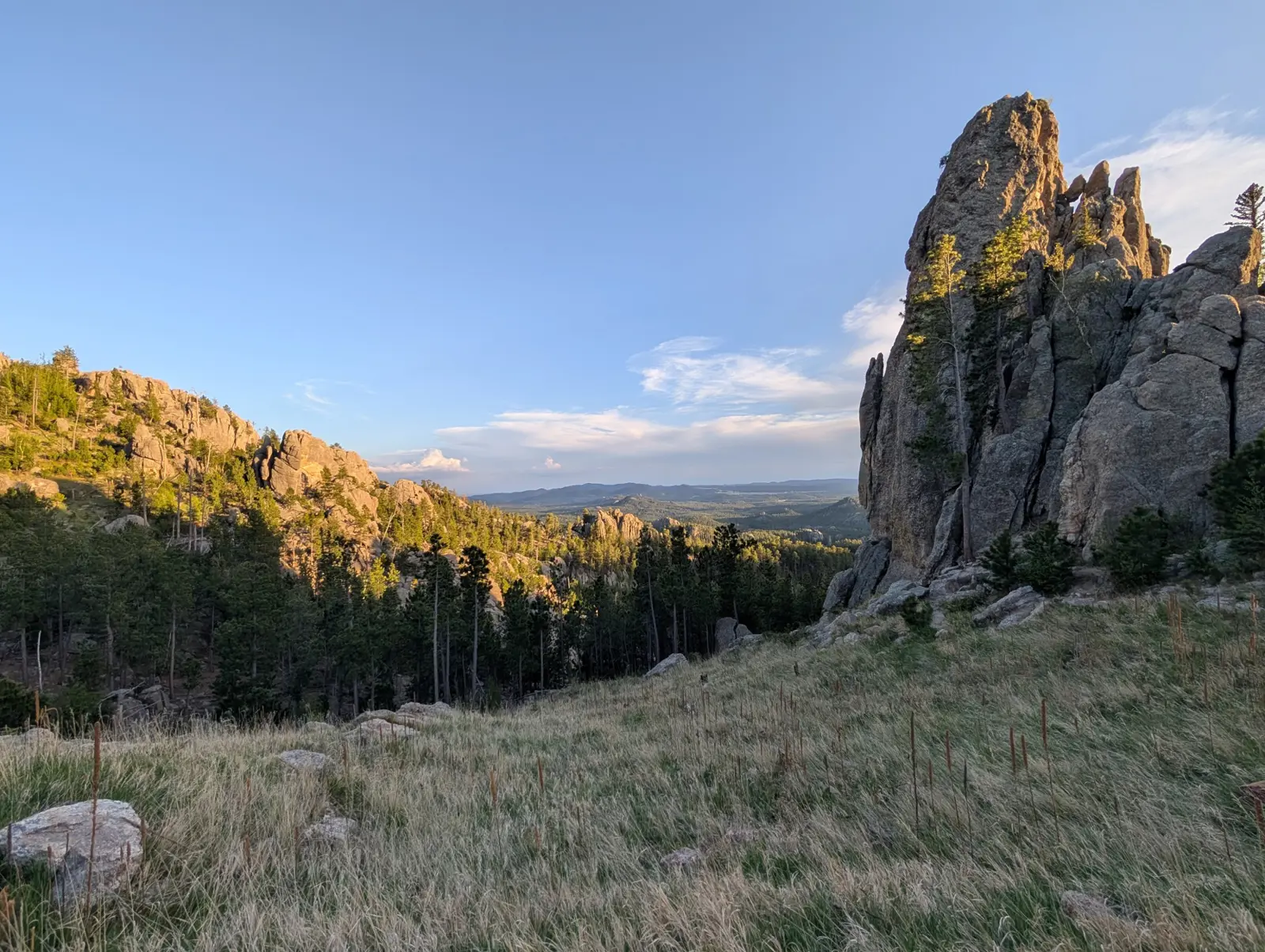
The Black Hills rise out of the western South Dakota prairie like a dark island — 5,000 square miles of ponderosa pine, pink granite, and a density of attractions that no other corner of the northern plains comes close to. Within an hour's drive of each other you get a national memorial carved into a mountain, two of the longest caves on Earth, a 1,400-head bison herd, a working steam railroad, a 109-mile rail trail, natural hot springs, and a roadside-attraction culture so committed that a drugstore 50 miles east has been advertising free ice water since 1936. Plan four or five days minimum, base yourself in Custer or Hill City (both sit in the middle of everything), and come between late May and late September — the scenic byways close with the first snow, and most of the small-town attractions run seasonally. One caveat: the Sturgis Motorcycle Rally fills every bed in the Hills for the first full week of August, so book far ahead or pick a different week.
Mount Rushmore is better than you expect. Admission is free (parking is $10 per vehicle, valid all year), and the trick is to skip the flag-lined avenue photo and keep walking: the Presidential Trail, a 0.6-mile boardwalk with 422 steps, loops directly beneath the faces, where you can look straight up Washington's nose and see the drill marks left by the 400 workers who carved it between 1927 and 1941. The faces point southeast, so morning light is best; from late May through September 30 the amphitheater hosts an evening lighting ceremony with a ranger talk that ends in a genuinely moving flag-lowering with veterans in the audience. The Sculptor's Studio, with Gutzon Borglum's 1:12 plaster model, explains why Jefferson had to be blasted off and re-carved on Washington's other side. Three miles downhill, Keystone is the memorial's unashamedly touristy gateway: Big Thunder Gold Mine (walk into an 1890s hard-rock mine, pan for gold), Rushmore Tramway Adventures (chairlift, alpine slide, ziplines), fudge shops, and enough old-time photo studios to outfit a posse.
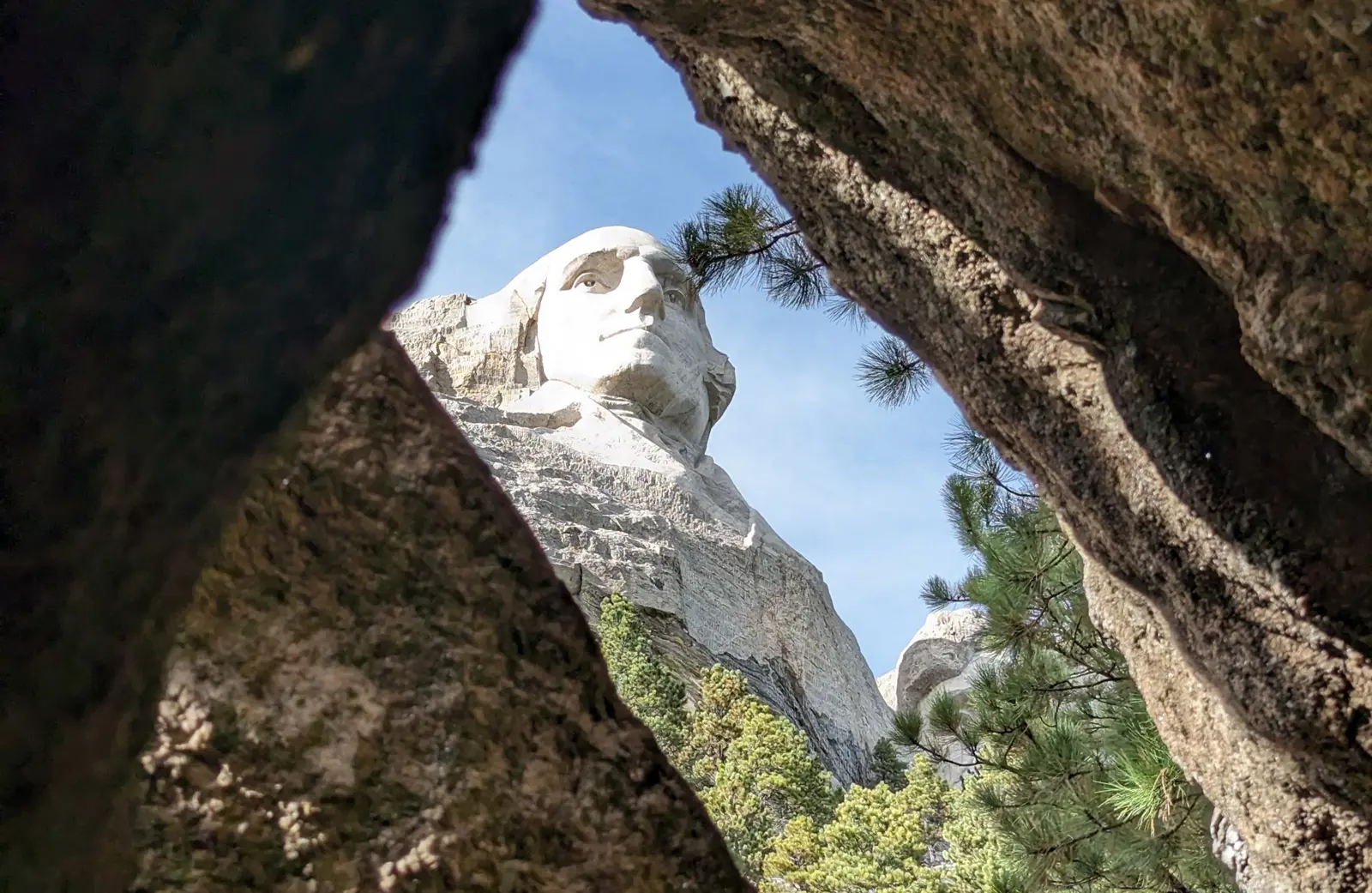
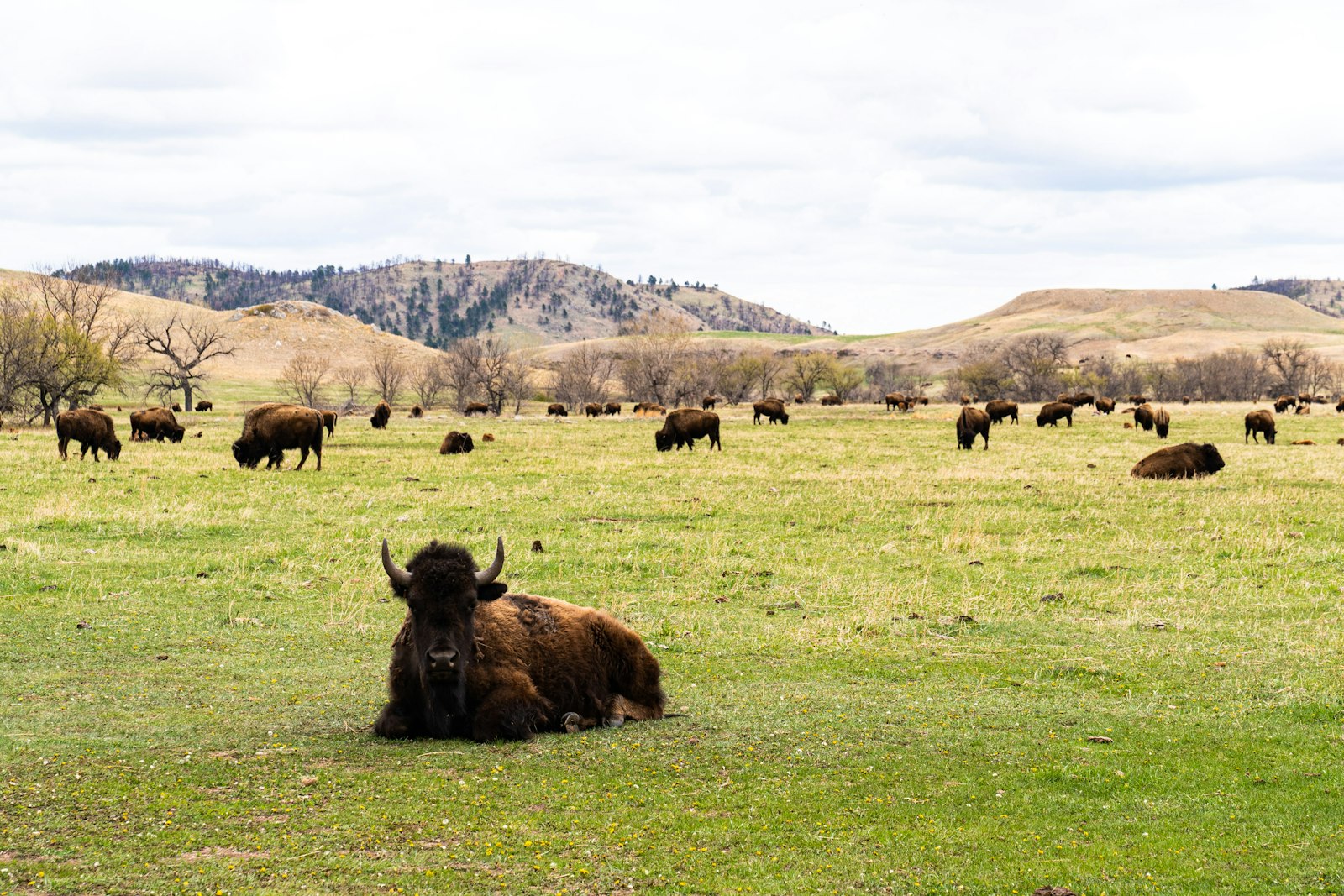
Iron Mountain Road (US 16A) is the drive the memorial was designed for. Senator Peter Norbeck laid out this 17-mile road in the 1930s with 314 curves, 14 switchbacks, three granite tunnels, and the famous pigtail bridges — wooden spiral bridges that loop the road over itself to gain elevation without blasting the hillside. Drive it south-to-north, from Custer State Park toward Keystone, and each of the three tunnels frames Mount Rushmore dead center in its opening — deliberate, and worth pulling over for (the tunnels are one lane, so honk before entering). Stop at Norbeck Overlook for the big view over the Hills. Budget an hour, more if you get stuck behind a bison, which is entirely possible because the south end drops you into Custer State Park — 71,000 acres and, for many visitors, the best part of the trip. The 18-mile Wildlife Loop delivers the bison herd, pronghorn, elk, prairie dog towns, and the park's "begging burros," descendants of pack animals that will stick their heads through your window. Go at dawn or the last two hours of light. The park needs a vehicle pass, sold at the entrance stations, and if you're here the last Friday of September you can watch the annual Buffalo Roundup, when cowboys drive the entire herd into corrals in front of 20,000 spectators.
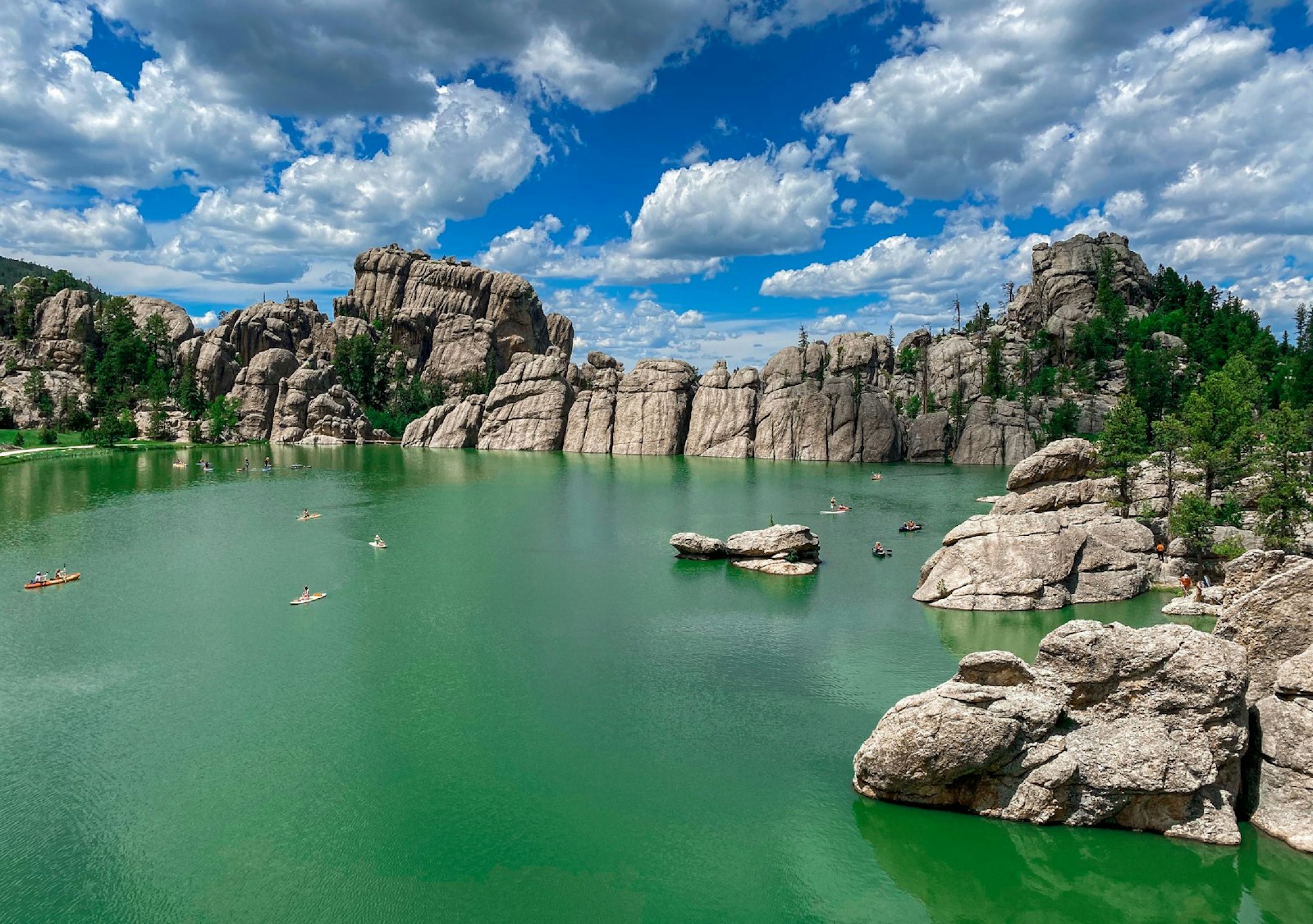
Needles Highway (SD 87) is the other Norbeck masterpiece, and the reason you should have a car small enough to fit through an 8-foot-4-inch-wide tunnel. The 14 miles between the Custer State Park east side and Sylvan Lake climb through a forest of granite "needles" — eroded spires and fins that Norbeck scouted on foot and horseback and that the engineers told him were impossible to road. The payoff is the Needles Eye Tunnel at the top, squeezed between spires so tightly that RVs and trailers are banned, followed by the Cathedral Spires overlook. Two hikes start from the pullouts near the summit: the Cathedral Spires Trail (1.5 miles each way into the spires) and, our pick, Little Devils Tower — a 3-mile round trip with a short scramble at the end to a summit that looks across at Black Elk Peak, the highest point east of the Rockies, with a fraction of that trail's crowds. The road closes with the first snow and doesn't reopen until April, so check conditions in shoulder season. It ends at Sylvan Lake, a small dammed lake ringed with granite boulders that is the swimming, paddling, and picnic spot of the Hills; the 1.1-mile shoreline loop squeezes through a rock crevice and is doable with toddlers.
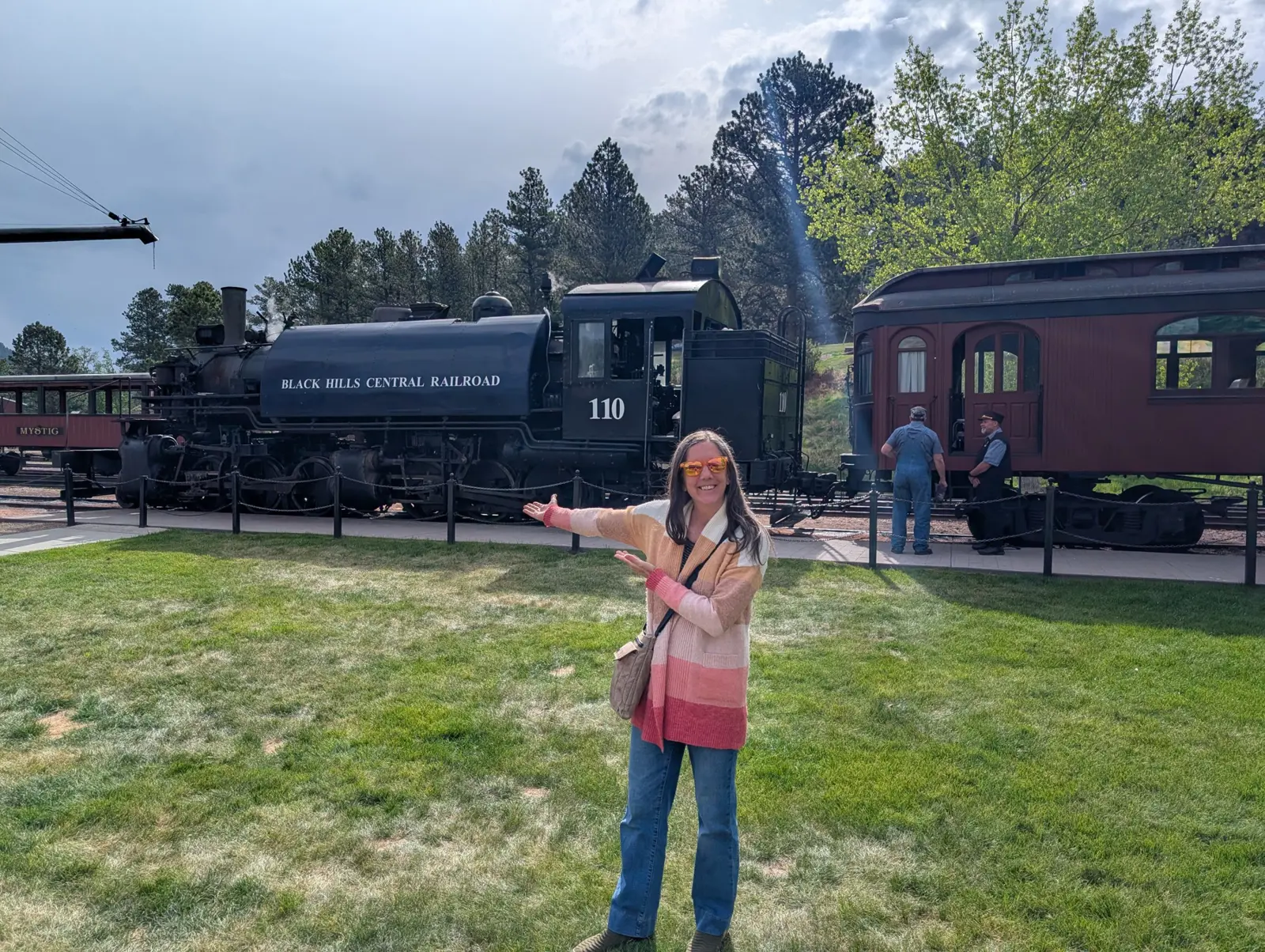
Ride the 1880 Train. The Black Hills Central Railroad runs vintage steam locomotives over 10 miles of original 1880s mining line between Hill City and Keystone, roughly an hour each way through pine canyons, past old mine workings, and up grades steep enough that the engine works audibly for it. Trains run daily from early May through mid-October (the 2026 season opened May 9), with round trips from either depot; book the morning departure from Hill City, spend the layover in Keystone, and ride back. Evening specials include the adults-only Wine Express, an Old West Shootout run on summer Sundays, and a December Holiday Express. Sit on the left side heading toward Keystone for the best views, and expect cinders — steam is authentic.
Hill City and Custer are the towns to base in, and each has a local institution that beats anything on the tourist strip. In Hill City, the Alpine Inn — a Victorian-era hotel turned German restaurant — has served essentially the same dinner since the 1980s: a bacon-wrapped filet, a baked potato, and a salad, at a price that still feels like a typo, with a lunch menu of schnitzel and spaetzle. There are no reservations, so join the line before it opens. Also in town: the Black Hills Institute Museum (the fossil lab that excavated the famous T. rex "Stan," with its own dinosaur skeletons on display), Prairie Berry Winery for a rhubarb-wine tasting on the patio, and the Mickelson Trail running straight through Main Street. Down the road in Custer, Black Hills Burger & Pizza Co. — the relaunch of the much-loved Burger & Bun, in the same Mt. Rushmore Road building — still grinds its beef daily and bakes its own buns, now alongside hand-tossed pizza, and still has the wait to prove it; put your name in, then walk two blocks for a slice of bumbleberry at the Purple Pie Place, a violet-painted landmark that has been feeding pie to Custer State Park visitors since the 1980s. Custer is also the closest town to the Crazy Horse Memorial, five miles north, where the world's largest mountain carving has been in progress since 1948; the 87-foot face is finished, the horse is roughed out, and the Indian Museum of North America downstairs is excellent.
Bike the Mickelson Trail. The George S. Mickelson Trail follows the old Burlington Northern rail line 109 miles from Deadwood to Edgemont, on crushed limestone with grades that never exceed 4 percent, across more than 100 converted railroad bridges and through four rock tunnels. A pass costs $3 a day or $15 for the year (kids under 12 are free). Hill City sits near the halfway point, and two outfitters there — Bicycles & Boats on Newton Avenue and Mickelson Trail Adventures — rent bikes and run one-way shuttles that drop you up-trail so you ride back at your own pace. The classic day is to be shuttled to the trail's high point at Dumont and coast 20-odd miles north through the tunnels and the old mining camps to Deadwood, where a Main Street of restored 1870s saloons, casinos, and the graves of Wild Bill Hickok and Calamity Jane await. Families can simply ride out from Hill City toward Custer past the Crazy Horse turnoff and turn around when legs give out.
Go underground, then soak. Two of the longest cave systems on the planet lie under the southern Hills. Jewel Cave National Monument, 13 miles west of Custer, has more than 220 miles of surveyed passage lined with calcite crystals; the Scenic Tour (80 minutes, 734 stairs) is the one to take, and summer tickets sell out on recreation.gov, so reserve weeks ahead. Wind Cave National Park, south of Custer State Park, is famous for boxwork — honeycomb calcite fins found almost nowhere else — and its new elevators reopened cave tours in 2025 after a year-long rebuild; arrive early for tickets, and drive the park's surface roads too, because it protects one of the last intact mixed-grass prairies, with its own bison herd and elk. Twenty minutes further south, the old resort town of Hot Springs has been selling warm water since the 1890s. Evans Plunge (1890) is the family option: a 87-degree spring-fed pool with slides and a pebble bottom. The grown-up option is Moccasin Springs Natural Mineral Spa, the restored 1890 Minnekahta bathhouse, with a series of unchlorinated outdoor pools from 80 to 105 degrees, a sauna, and a bar, open May through December. Next door, the Mammoth Site is an active dig where more than 60 Columbian and woolly mammoths sank into a sinkhole 140,000 years ago and are being excavated in place under a roof. The locals' secret is eight miles south of town: Cascade Falls, where a spring-fed creek that runs at 67 degrees year-round tumbles over travertine ledges into a clear, free swimming hole managed by the Forest Service. On a 95-degree July afternoon it beats every water park in the state.
Bear Country USA and the roadside attractions. The Black Hills perfected the American roadside attraction and never stopped building them. Bear Country USA, on US 16 south of Rapid City, is a three-mile drive-through park where black bears (the largest privately owned collection in the world), wolves, elk, and mountain lions wander up to your bumper, followed by a walk-through "Babyland" of cubs. Across the highway, Reptile Gardens has the world's largest reptile collection and a Sky Dome of free-flying birds, and next door to Bear Country the House of Scandinavia has been selling Norwegian sweaters, Viking kitsch, and lefse griddles from a highway-side shop since 1984 — an odd, delightful stop. In Rapid City, Dinosaur Park is a set of 1936 WPA concrete dinosaurs on a ridge above downtown — free, with the best skyline view in town — and the Chapel in the Hills is a full-size replica of Norway's Borgund stave church tucked in a pine draw. Between Rapid City and Keystone, the Cosmos Mystery Area has been tilting tourists off balance since 1952, and Keystone's Rush Mountain Adventure Park stacks a cave tour, a mountain coaster, and ziplines on one hillside. Then there is Wall Drug, 50 miles east on I-90, whose free ice water signs stretch across the northern plains: 5-cent coffee, a giant jackalope, an animatronic T. rex, and a cowboy-boot shop the size of a hangar — combine it with the Badlands Loop for a full day out of the Hills. If you have one more day, drive north through Spearfish Canyon to Roughlock Falls and the mining town of Lead, or west to Devils Tower, 90 minutes away in Wyoming.
A five-day plan:
Day one: Mount Rushmore in the morning, Keystone lunch, Iron Mountain Road south into Custer State Park, Wildlife Loop at dusk, dinner at the State Game Lodge.
Day two: Needles Highway early, Little Devils Tower hike, Sylvan Lake swim, Alpine Inn dinner in Hill City.
Day three: 1880 Train, Crazy Horse, then Custer for burgers and pie at Burger & Pizza Co. and the Purple Pie Place.
Day four: Jewel Cave or Wind Cave, Hot Springs, Cascade Falls, an evening soak at Moccasin Springs.
Day five: Mickelson Trail shuttle ride, or Bear Country and the Rapid City attractions on the way to the airport.
Logistics. Fly into Rapid City Regional (RAP); summer days run hot with reliable afternoon thunderstorms, nights are cool at 5,000 feet, and lodging inside Custer State Park — Sylvan Lake Lodge, State Game Lodge, and the Blue Bell and Legion Lake cabins — books out the winter before, so decide early.