Yellowstone: Slow Down for an Otherworldly Park
🗺 View the 13 places in this post on a map
Yellowstone is not really a park; it's the caldera of a live supervolcano wearing a park costume. Half of Earth's geysers hiss inside it. Rivers run hot, mud growls, pools glow in colors that belong on other planets, and two-ton animals wander the road shoulders like they own the place — because they do. The mistake almost everyone makes is treating it as a checklist to speed-run: Old Faithful, photo, next. Yellowstone punishes that approach with parking lots and rewards its opposite. Give it three or four days, drive it slowly, and build waiting into the plan — for geysers, for wildlife, for the crowd to leave a boardwalk to you. Late May–early June and September are the gentle seasons; July and August work too if you do your sightseeing before 9am and after 4pm, which is when the park is at its best anyway.
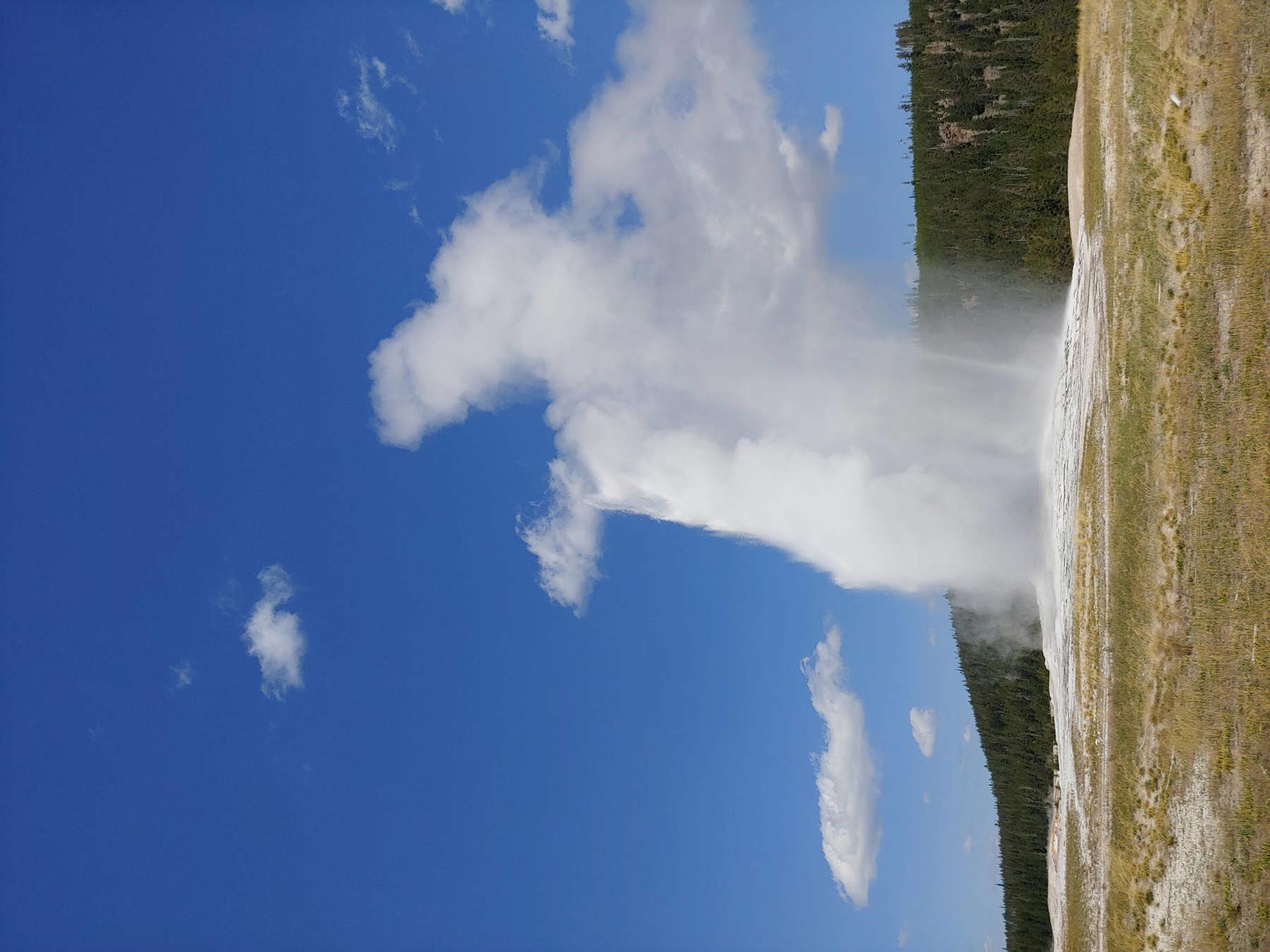
Old Faithful is the appetizer, not the meal. Yes, see it — eruptions come roughly every 90 minutes (predictions are posted in the visitor center and app), and the reliability that made it famous in 1870 still holds. But when the crowd disperses, don't follow it to the parking lot. The Upper Geyser Basin behind Old Faithful holds the densest concentration of geysers on the planet, laced with boardwalks almost nobody walks. Check the predicted window for Grand Geyser — the tallest predictable geyser in the world — and go sit on the benches with the geyser-watchers and their lawn chairs. You might wait an hour. Then the ground shakes off a 60-meter column of water for ten straight minutes, and the wait becomes the point. Before you leave, step into the 1904 Old Faithful Inn, the largest log building on Earth, and crane your neck up seven stories of lodgepole lobby.
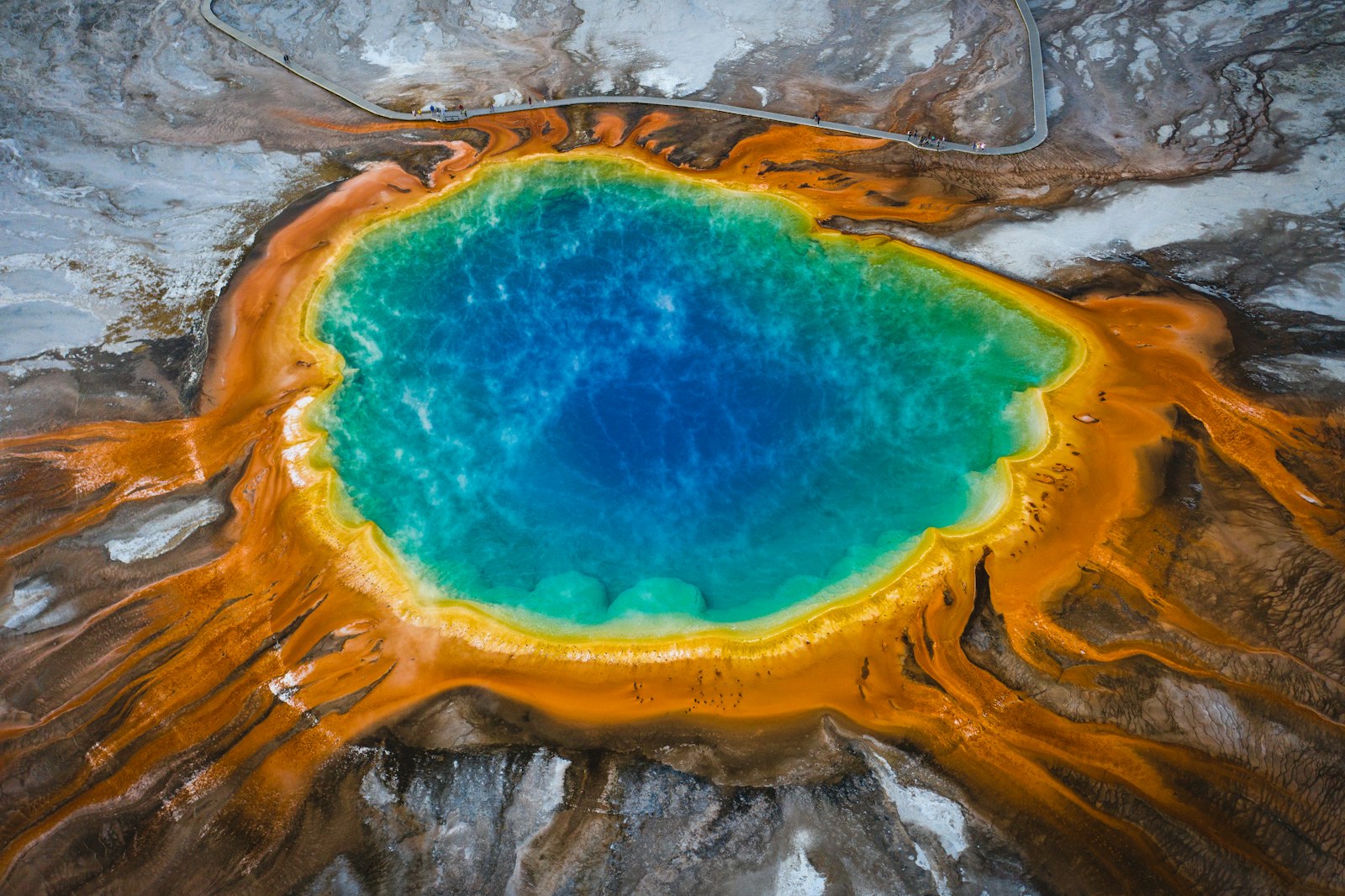
Midway Geyser Basin is where the planet stops pretending. Grand Prismatic Spring — bigger than a football field, hotter than a bath can be, and ringed in bacterial mats that shade from ultramarine through green to rust — is the single most alien sight in the park. From the boardwalk you get steam and fragments of color; for the full rainbow-eye view, drive five minutes south to the Fairy Falls Trailhead and walk the easy 1.6 km up to the Grand Prismatic Overlook. Time it for mid-afternoon, when the steam thins and the colors saturate. And don't rush past the basin's smaller pools on the way — each one is its own perfect, improbable jewel.
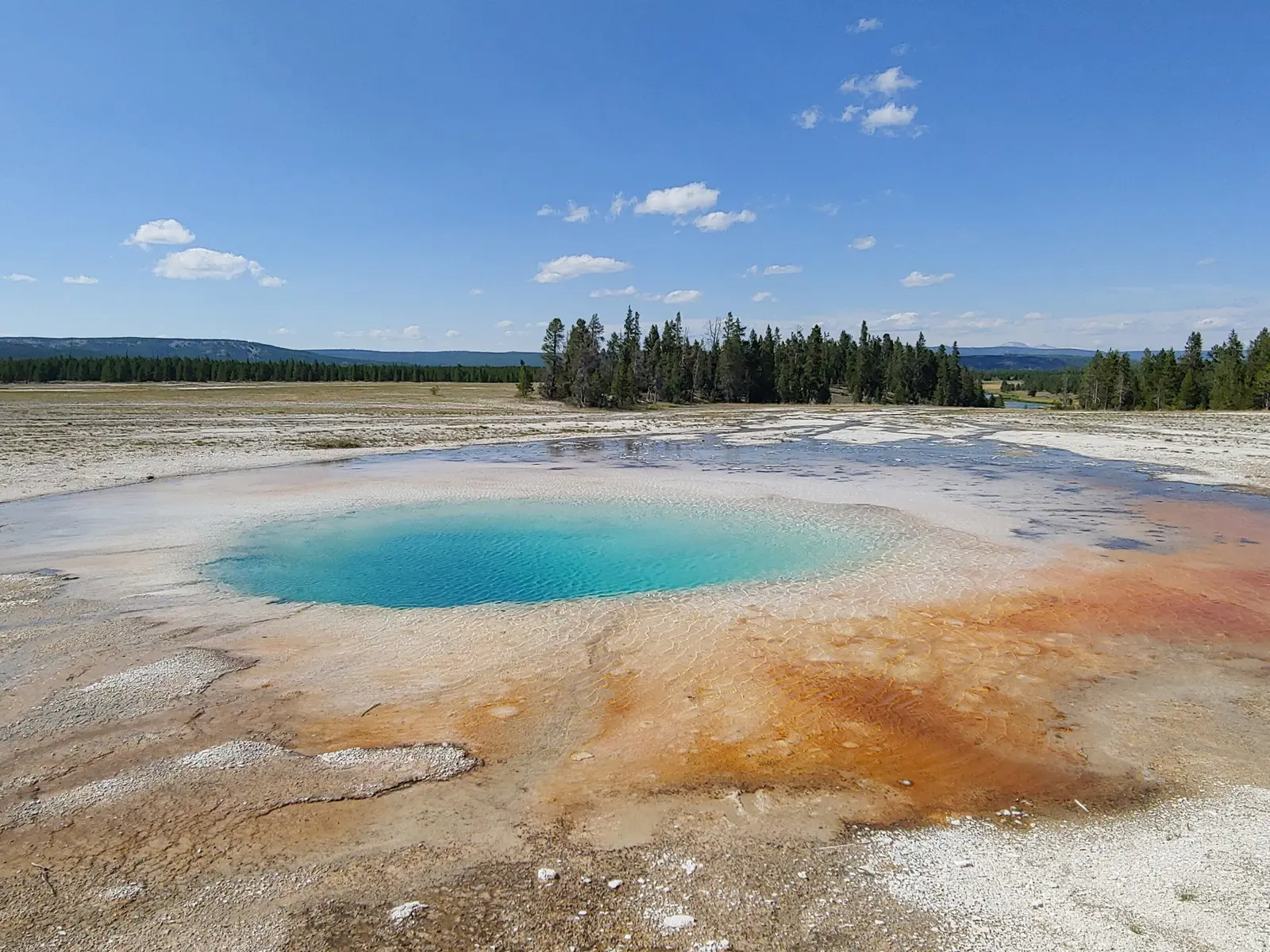
For a geyser with almost no audience, take Firehole Lake Drive. This three-mile one-way loop off the Grand Loop Road passes Great Fountain Geyser, the only predicted geyser in the Lower Basin — a terraced pool that erupts in bursts up to 60 meters, once or twice within a posted multi-hour window. Bring a book, a snack, and low expectations about punctuality. When it goes off with a dozen people watching instead of a thousand, you'll understand what Yellowstone felt like fifty years ago.
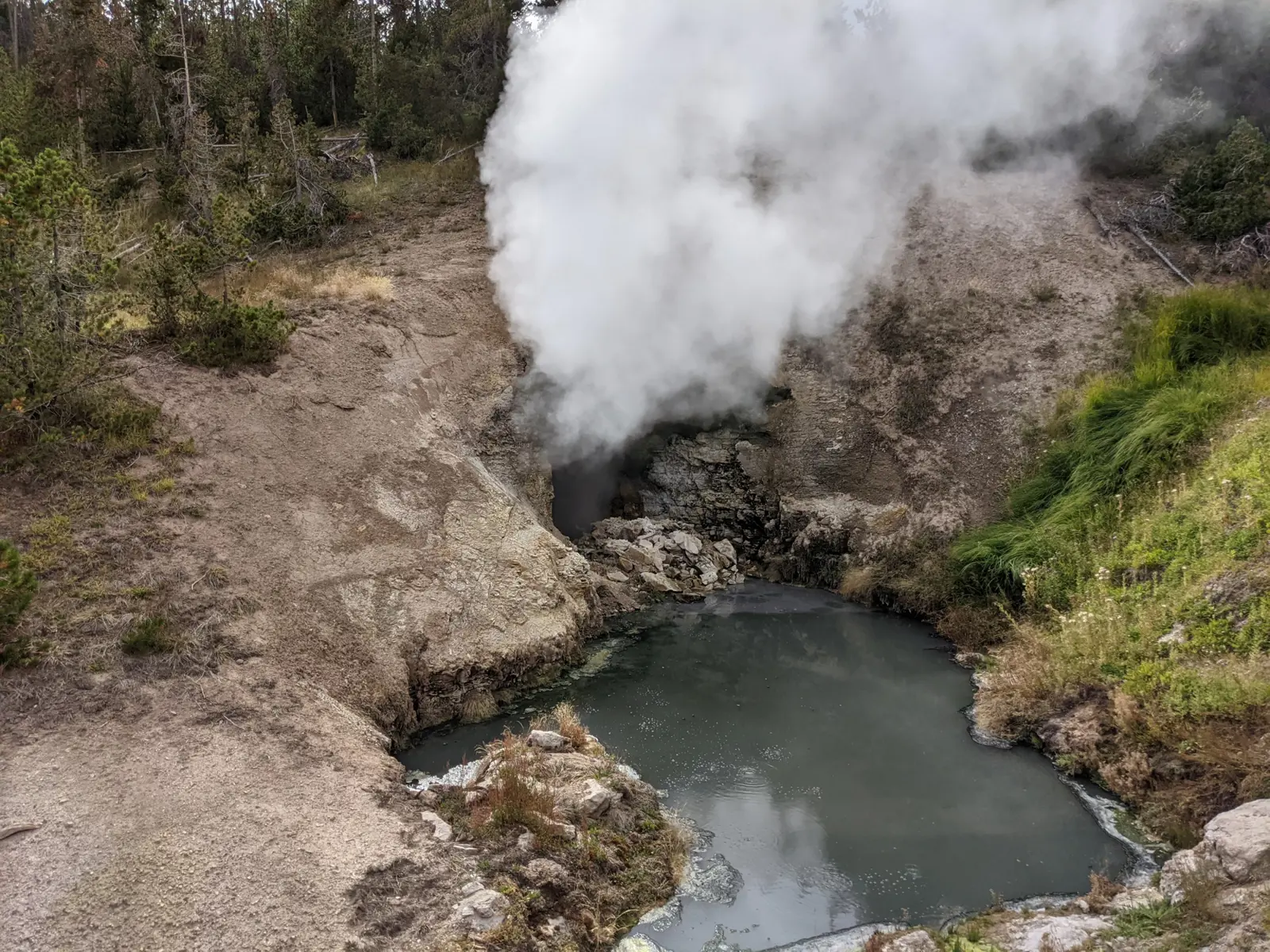
Then drive east and listen to the earth complain. The Mud Volcano area on the park's east side trades pretty colors for sound and menace: bubbling gray cauldrons, sulfur on the wind, and Dragon's Mouth Spring, a steaming cave that belches and booms like something large is turning over in its sleep just inside the hill. It's a short boardwalk — take it slowly and let the soundtrack work on you. Immediately north, the road opens into Hayden Valley, the park's great wildlife stage: bison herds hundreds strong, elk in the river bends, sometimes a grizzly working the far tree line. The move here is the opposite of driving through — pull into an overlook at dawn or dusk, shut off the engine, raise the binoculars, and wait.
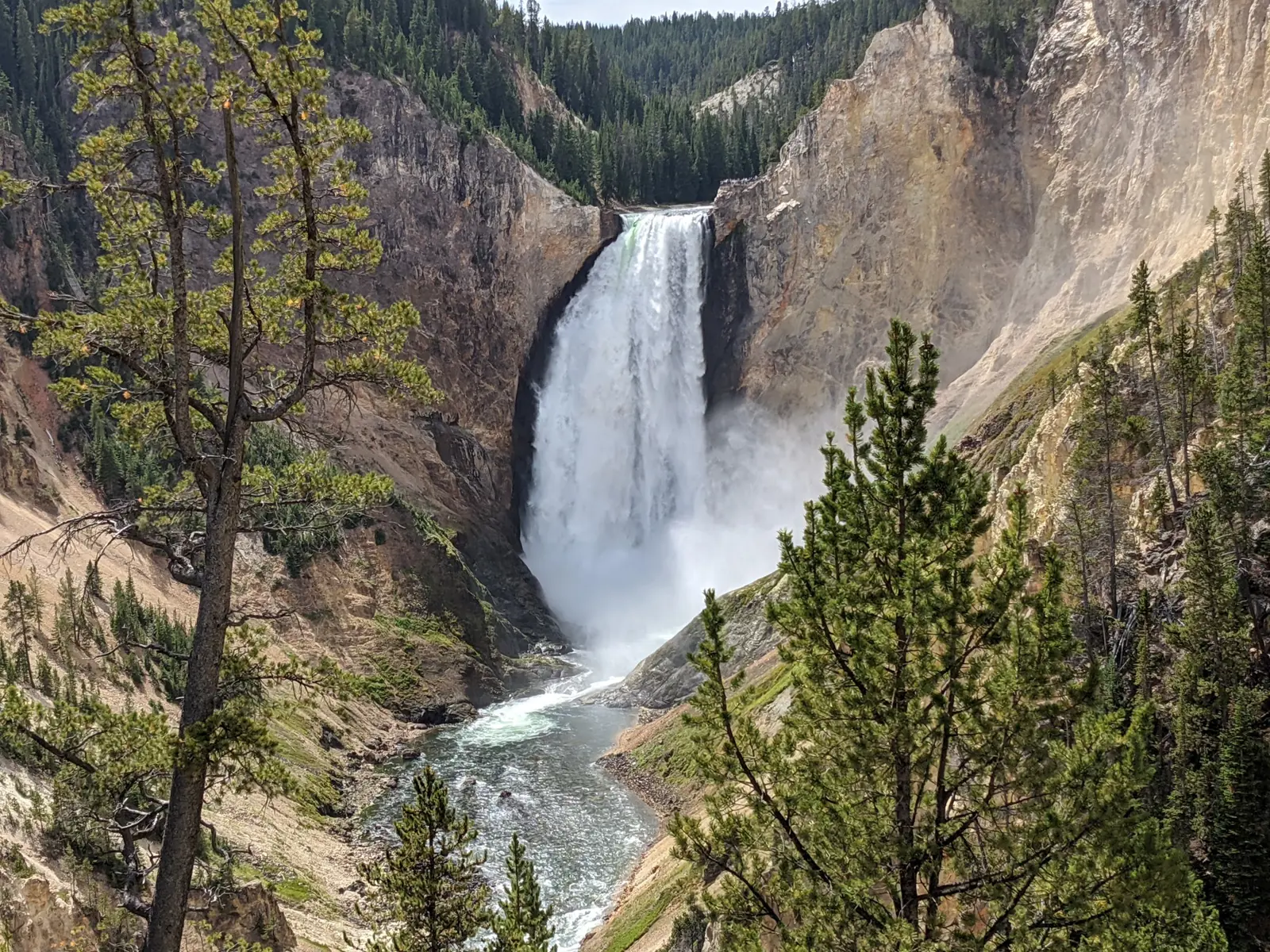
The Grand Canyon of the Yellowstone earns its borrowed name. The river drops 94 meters over the Lower Falls into a gorge of chemically-painted yellow and pink rock — the 'yellow stone' itself. Artist Point on the South Rim is the classic full-frontal view and deserves its fame, but pair it with the Brink of the Lower Falls trail on the North Rim: a steep switchback descent to a railing directly over the lip, where the entire river accelerates past your feet and disappears. Climbing back up is slow at 2,400 meters of elevation. Treat that as permission to stop at every bend.
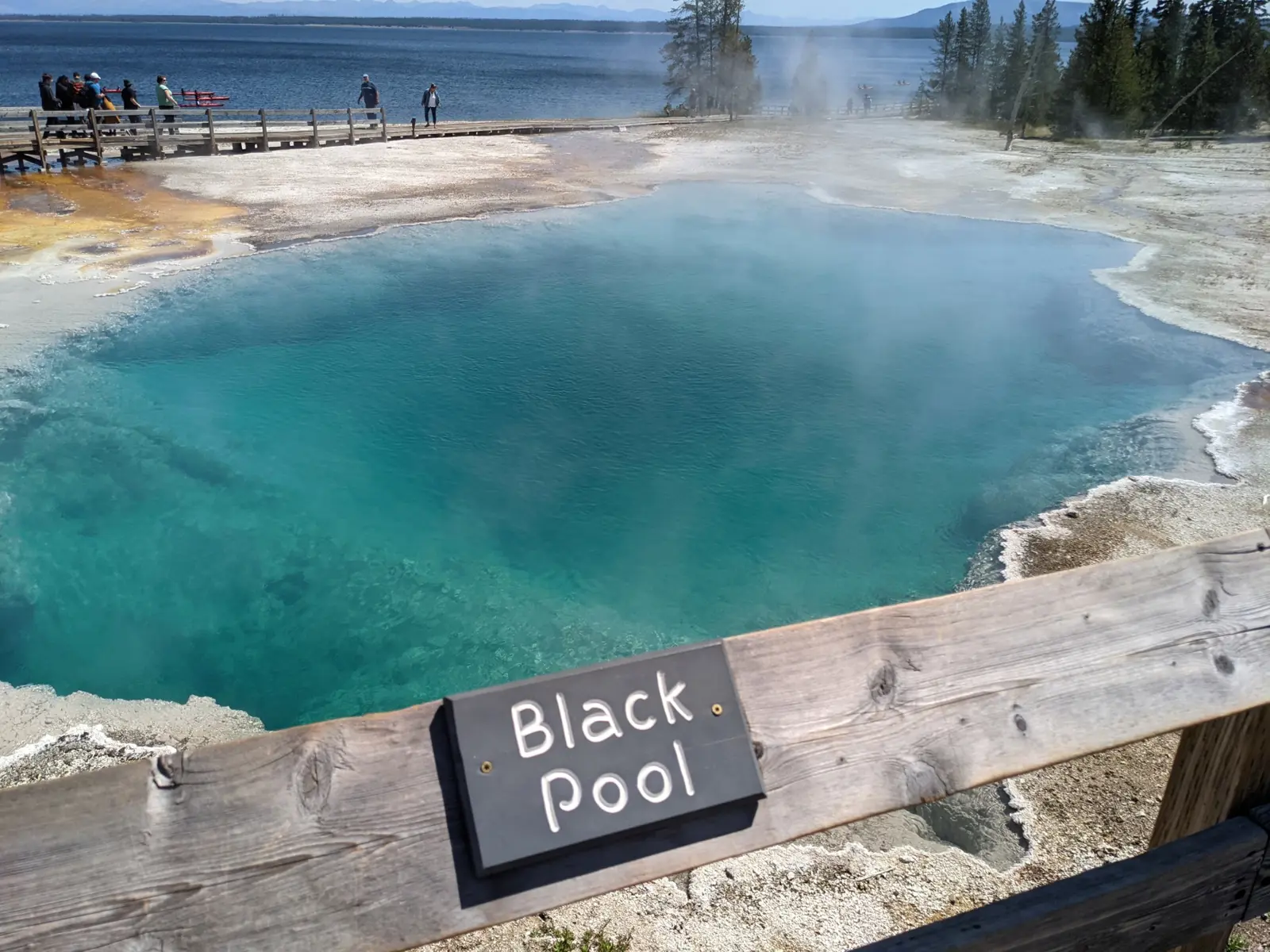
End your days at West Thumb, where the volcano meets the lake. The West Thumb Geyser Basin is a small caldera-within-the-caldera on the shore of Yellowstone Lake, and its boardwalk is the park's most contemplative: hot springs steaming a few steps from cold alpine water, with the Absarokas floating on the far shore. Black Pool — misnamed since a 1991 temperature shift killed its dark bacteria and turned it a luminous, bottomless teal — is the star. Come in the last hour before sunset when the tour buses are gone, the light goes sideways, and the only sounds are gulls and boiling water. It's the best free show in Wyoming.
Practical notes: stay on the boardwalks, every time, no exceptions — the crust over thermal features is thin and the water beneath it is deadly. Keep 25 meters from bison and elk and 100 from bears and wolves; a bison jam is a parking brake moment, not a photo-op walk. Book in-park lodging (or West Yellowstone and Gardiner rooms) many months out. Cell service is nearly nonexistent — download offline maps, then enjoy the silence; it's doing you a favor. And if wildlife is your priority, set one alarm for the dark hours and drive the northeast to Lamar Valley, the 'American Serengeti,' where the wolf-watchers with their spotting scopes set up before first light. Ask them what they're seeing. They always share. That's the whole park in one gesture: the good stuff comes to those who stand still.
About the author
Kristian Ranstrom
I built Get Busy Exploring because I kept losing track of where I'd been. I chase lists — fourteeners, highpoints, Munros — and I'm just as happy getting lost in a city on foot. I write up the trips here: routes, itineraries, and what I'd do differently.