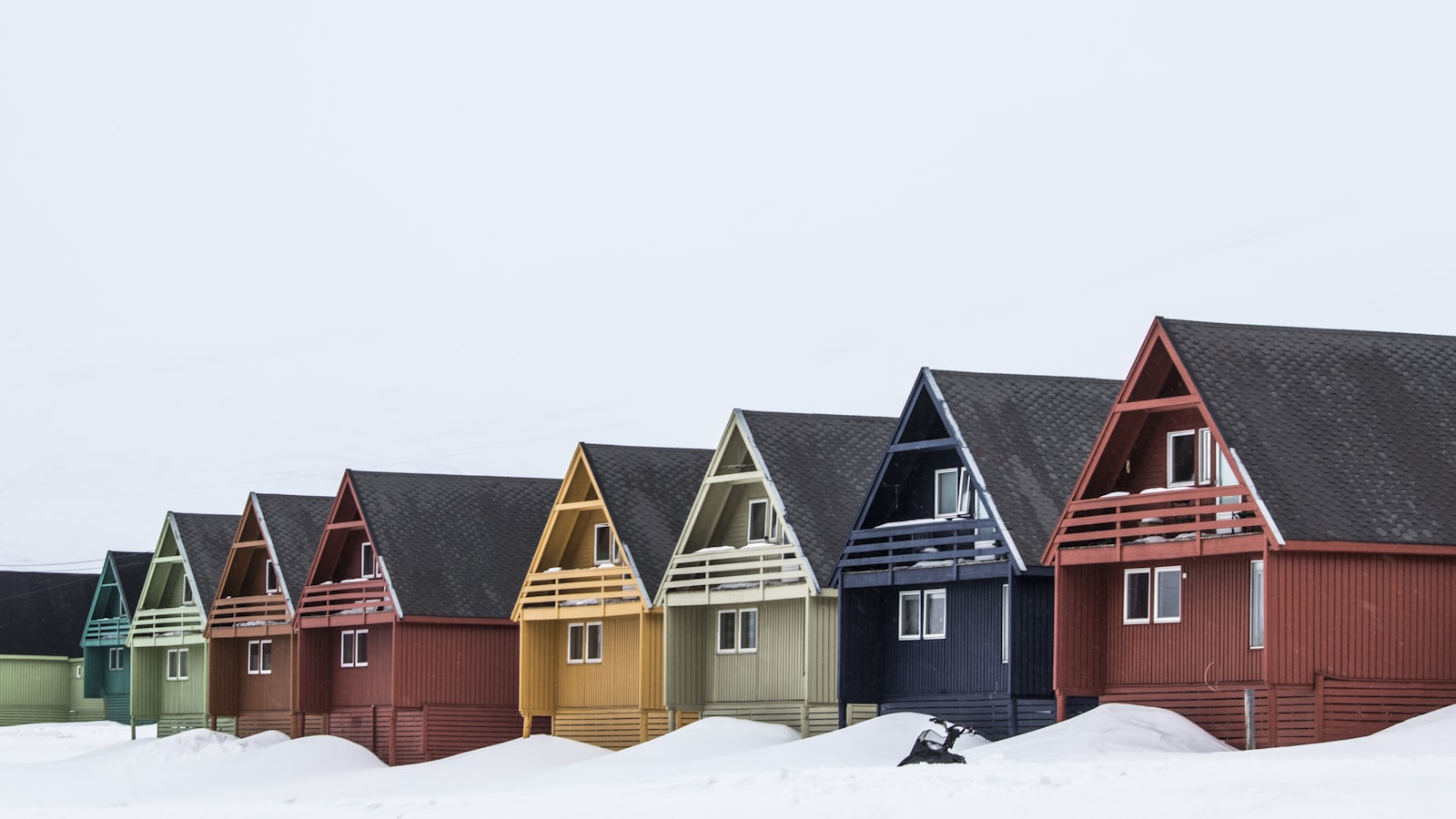
🗺 View the 19 places in this post on a map
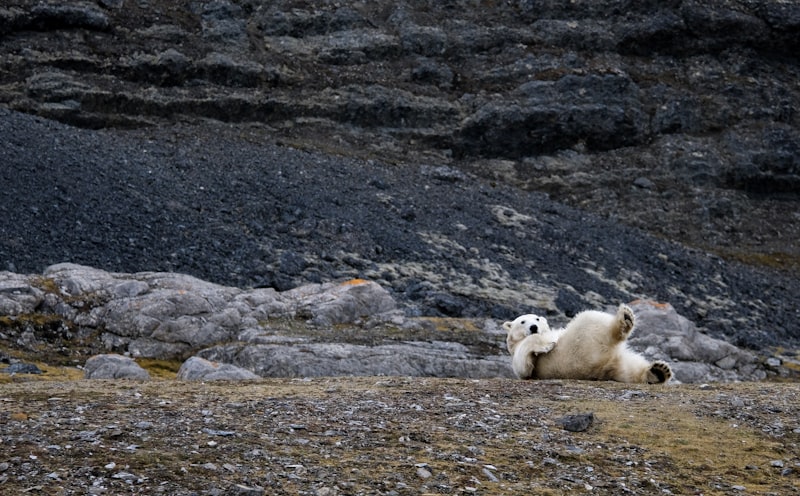
Halfway between the top of mainland Norway and the North Pole, Svalbard is the most accessible piece of the high Arctic on the planet. Its only real town, Longyearbyen, sits at 78° north with about 2,400 residents, a university center, a brewery, some surprisingly serious restaurants — and signs at the edge of town warning that beyond this point you need a rifle, because polar bears roam the whole archipelago. Getting there is strangely easy: SAS and Norwegian fly year-round from Oslo in about three hours (often with a stop in Tromsø), and thanks to the 1920 Svalbard Treaty the islands are visa-free — though you clear Schengen border control on the way up through Norway. One local custom to know before you land: a holdover from coal-mining days means you take your shoes off at the door of most hotels, museums, and guesthouses.
Svalbard really has three seasons, and they are three different trips. The polar night, from late October to mid-February, is the strangest: the sun never comes up at all, and Longyearbyen is one of the only inhabited places on Earth where you can watch the northern lights at lunchtime. March through mid-May is what locals call the sunny winter — the light returns while the fjords and valleys are still frozen, and it is the prime window for snowmobiling and dog sledding. From late April to late August the midnight sun takes over, the snow retreats, and the trip shifts to boats: fjord safaris, glacier fronts, walrus haul-outs, and day trips to the Russian settlements. If you want the classic postcard combination of daylight plus deep snow, book March or April; if you want wildlife and open water, come in July.
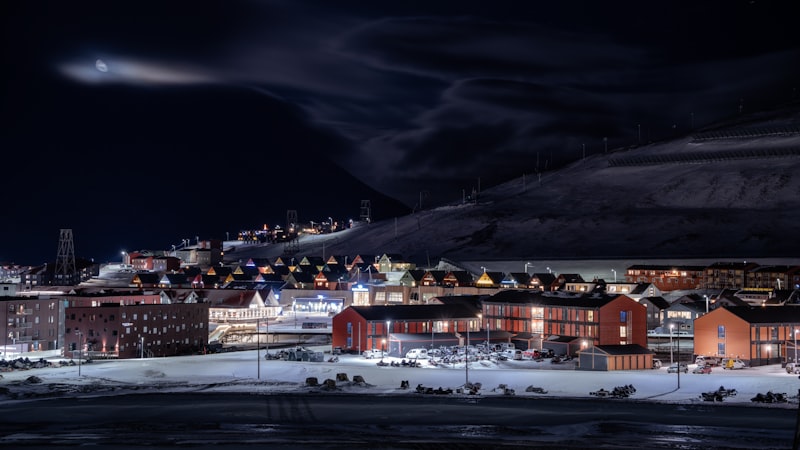
Longyearbyen itself deserves a full day. The Svalbard Museum, in the science center by the shore, is the best primer on the archipelago — whalers, trappers, miners, and polar bears in one thoughtfully built hall. Two minutes away, the North Pole Expedition Museum tells the stranger story: the airship and balloon expeditions that launched from Svalbard for the pole, including Amundsen's Norge flight of 1926, with original newsreels running by a fireplace. Up the hill, Svalbard Kirke is the world's northernmost church and keeps its doors open around the clock — locals drop in for coffee in the lounge, and it is one of the coziest rooms on the island. Out by the airport you can stand at the viewpoint below the Svalbard Global Seed Vault, the doomsday backup for the world's crops (there is no public entry, but the glowing portal in the mountainside is worth the stop), and next door Gruve 3 runs excellent tours into a coal mine that closed in 1996, crawl-through seams and all. Back in town, Svalbard Bryggeri — the world's northernmost brewery, which needed a change in Norwegian law to exist — pours tastings of beer brewed with glacier meltwater.
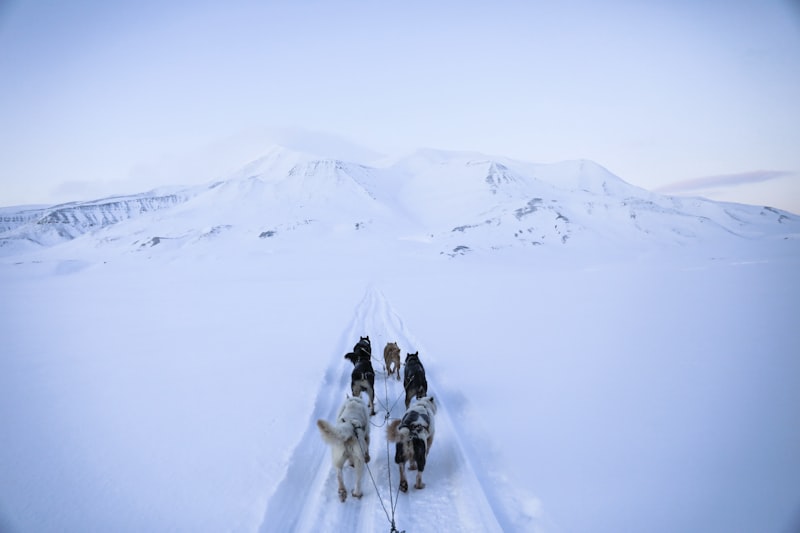
Everything beyond the polar-bear signs happens with a guide, and the good operators make that the point rather than the fine print. Svalbard Villmarkssenter, a family-run kennel of about a hundred Alaskan huskies in Bolterdalen, is the dog-sledding outfit locals recommend first — half-day mushing trips in winter, dog-carting and puppy visits in summer. Ten kilometers up Adventdalen, Camp Barentz hosts evening gatherings in a replica of Willem Barentsz's 1596 expedition cabin: a fire in the middle of the room, reindeer stew, and — in the dark season — northern lights straight overhead, away from the town's glow. Snowmobile day trips run east toward Tempelfjorden and the ice caves under the glaciers. In summer, the fjord opens up: Better Moments runs small-boat safaris across Isfjorden, and full-day cruises head north up Billefjorden to Pyramiden, the Soviet mining town abandoned in 1998 and left almost perfectly intact — Lenin bust, grand piano, and all — with the two-mile-wide front of the Nordenskiöld Glacier calving across the water. The other settlement day trip is Barentsburg, the still-working Russian mining town 35 kilometers west, reachable by boat in summer and snowmobile in winter.
Longyearbyen eats far better than a town of 2,400 has any right to. Huset, in a 1951 landmark building up the valley, is the special-occasion table — a Nordic tasting menu built on reindeer, king crab, and ptarmigan, backed by one of Scandinavia's most storied wine cellars. Even better hidden is Gruvelageret, a candlelit dining room inside a 1930s mine storehouse in Sverdrupbyen at the very top of town; it seats a handful of tables, does one seasonal Arctic menu, and books out days ahead. In the center, Kroa is the everyday local: hearty portions, whale and reindeer alongside burgers, timber walls salvaged from Russian Barentsburg. For the afternoon, Fruene in the Lompensenteret mall is the world's northernmost chocolatier, hand-making polar-bear pralines behind the coffee counter, and a few doors down Karlsberger Pub keeps close to a thousand bottles of whisky and cognac glowing behind a bar where miners still drink next to tourists.
For sleeping, Funken Lodge is the polished option, a 1947 miners' officers' quarters turned boutique hotel with the best cocktail bar on the island; Basecamp Hotel in the town center is built like a trapper's cabin out of driftwood and sealskin and is far more charming than that sounds; and Coal Miners' Cabins up in Nybyen puts you in the miners' old barracks at the foot of the mountains for the lowest prices in town. Give Svalbard three or four nights minimum — one for town, one or two for guided trips, one spare for weather, which always gets a vote. Book activities before you fly, pack windproof layers even in July (summer hovers around 40°F), carry a credit card rather than cash, and leave your itinerary looser than usual. The Arctic does not run on schedule, and that is most of why you came.