The Most Scenic Munros in Scotland: 7 Peaks Worth the Climb
🗺 View the 17 places in this post on a map
A Munro is any Scottish summit over 3,000 feet (914.4 m) — 282 of them on the Scottish Mountaineering Club's list — and "bagging" them is a national pastime that turns into a life's project for a surprising number of people. Height is a poor guide to beauty in Scotland: Ben Nevis is the tallest and, by the standard path, one of the dullest. The peaks below were chosen for what you see from them and how the climb feels — sea lochs, sandstone pinnacles, whole island ranges laid out at your feet — and they run from a first-timer's afternoon to a full day of hands-on-rock scrambling. All are walkable in a long summer day without ropes, though two involve exposure you should take seriously.
When you go matters more than in most ranges. May and June bring the longest days, the driest weather Scotland manages, and no midges; September and early October give autumn color and clear, cool air. July and August are warmest but wettest and buzzing with midges at every glen-floor car park. In winter every one of these is a mountaineering objective — ice axe, crampons, and the skills to use them — not a walk.
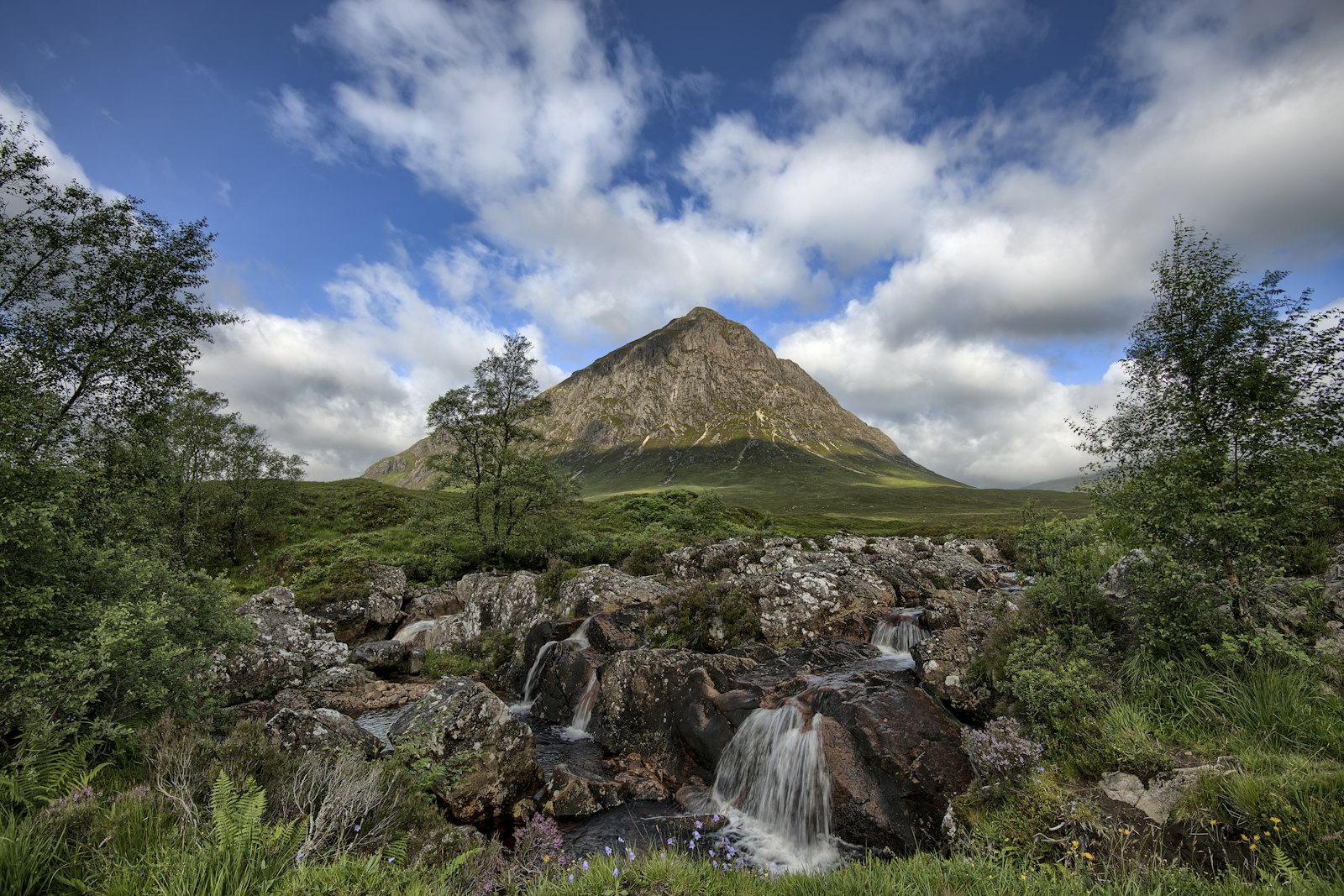
1. Buachaille Etive Mòr (Stob Dearg, 1,022 m) — Glen Coe. The pyramid at the head of Glen Coe is the most photographed mountain in Scotland, and the walk up is better than its fame suggests. From the Altnafeadh lay-by on the A82, cross the River Coupall to the little white Lagangarbh cottage and follow the path into Coire na Tulaich, a steep, rocky corrie that deposits you on the summit ridge in about two hours. The top of Stob Dearg looks straight down Glen Etive and across the empty brown expanse of Rannoch Moor — the whole reason to be there. Strong walkers continue along the ridge to Stob na Bròige, a second Munro, and descend by Coire Altruim. Afterward, drive ten minutes down the glen to the Clachaig Inn and go round the back to the Boots Bar: a stone-floored, wood-stove climbers' bar with two dozen whiskies on the wall and no objection to muddy gaiters.
2. Ben Lomond (974 m) — Loch Lomond. The most southerly Munro is the right first one: an hour from Glasgow, a clear path from the Rowardennan car park, and a summit that looks down the whole 24-mile length of Loch Lomond with its islands scattered across the water like a map. Go up the tourist path and come down the rockier Ptarmigan ridge for a loop of about 12 km and 950 m of climbing, then swim off the pier at Rowardennan if the sun is out. If you're heading north afterward, the Real Food Café in Tyndrum on the A82 does the fish and chips every West Highland Way walker talks about, made from a rescued Little Chef.
3. Schiehallion (1,083 m) — Perthshire. Seen from the west, Schiehallion is a perfect cone, and it has a claim on history to match: in 1774 the Astronomer Royal, Nevil Maskelyne, used its regular shape to measure the mass of the Earth, and the surveyor Charles Hutton invented contour lines while working up the data. The John Muir Trust's path from the Braes of Foss car park makes the east ridge a straightforward half day, ending in a bouldery ridge with Loch Rannoch and Loch Tummel spread out below and, on a clear day, the Cairngorms and Glen Coe hills both in view.
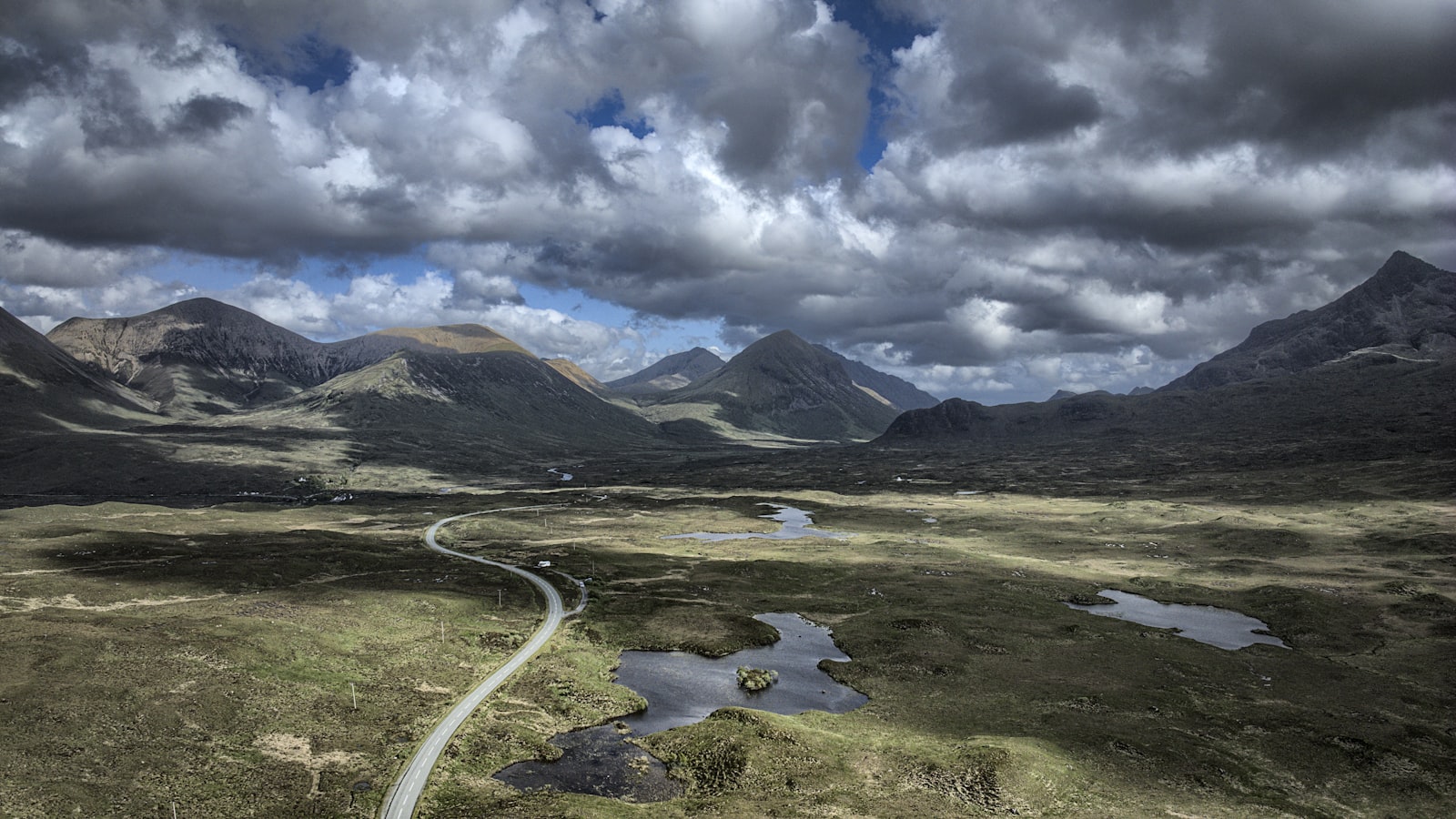
4. Blà Bheinn (928 m) — Isle of Skye. The Black Cuillin ridge is the hardest ground in Britain, and most of its eleven Munros need a rope or a guide. Blà Bheinn is the exception: a great wedge of gabbro standing apart from the main ridge across Glen Sligachan, climbable by walkers on a stiff, rocky path from the Loch Slapin car park in about five hours round trip. What you get from the top is the whole Cuillin panorama — Sgùrr nan Gillean to Gars-bheinn — laid out across the glen like a saw blade, with the sea on three sides. Save the drive to Sligachan for the way home: Seumas' Bar at the Sligachan Hotel sits under the mountains you've just been looking at, with the Cuillin Brewery's ales on tap and a garden that catches the evening light on Sgùrr nan Gillean.
5. Liathach (Spidean a' Choire Lèith, 1,055 m) — Torridon. Torridon's mountains are older than almost anything else on Earth's surface — Torridonian sandstone, banded and terraced, sitting on rock three billion years old — and Liathach is the fiercest of them, a 7-km wall rising straight from the road. The traverse from Glen Torridon takes in two Munros and the Am Fasarinen pinnacles between them; a bypass path skirts the pinnacles on the south side for anyone who doesn't fancy the exposure, but even that is a serious, hands-on day. If you'd rather ease in, Beinn Alligin across the glen has the same view for less terror, including the famous Horns. Either way, finish in Lower Diabaig, twelve miles down a dead-end road: Gille Brighde, a café-restaurant in the old village schoolhouse, serves west-coast langoustines and Torridon venison with the loch at the end of the garden — the best meal on this coast.
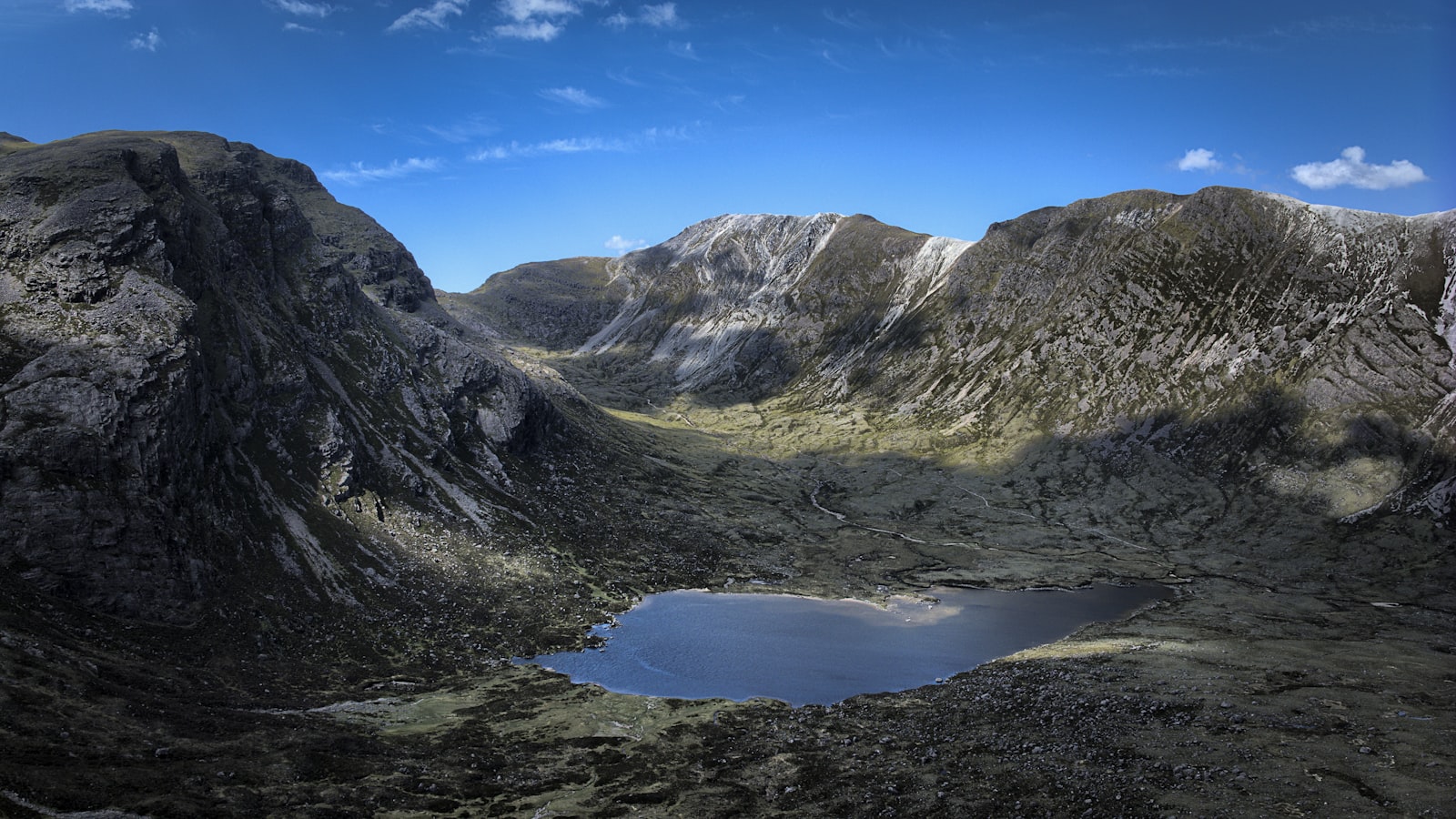
6. An Teallach (Bidein a' Ghlas Thuill, 1,062 m) — Wester Ross. Ask Scottish hillwalkers to name the finest mountain in the country and An Teallach — "the forge" — wins more votes than anything else. It is a horseshoe of Torridonian sandstone above Dundonnell, with the pinnacled Corrag Bhuidhe ridge along one arm and, at its heart, Loch Toll an Lochain, one of the great mountain corries. The two Munros can be reached from Dundonnell without touching the pinnacles, though the full traverse is one of the best scrambles in Britain for those with the head for it. Views run west over Little Loch Broom to the Summer Isles and south into the Fisherfield Forest, the emptiest country in Scotland. Stop at Corrieshalloch Gorge on the drive in.
7. Ladhar Bheinn (1,020 m) — Knoydart. The most westerly Munro on the mainland has no road to it. You reach it by the passenger boat from Mallaig to Inverie, on the Knoydart peninsula, then walk in along Loch Hourn to Barrisdale or up from Inverie itself, and the ridge over Coire Dhorrcail is as fine as any in Scotland — sea loch on one side, the hills of Skye across the water, and no cars for a day in any direction. Inverie is also home to The Old Forge, the remotest pub in mainland Britain, bought by the Knoydart community in 2022 after a £320,000 share offer, and there is no better place to be after a Munro. Give Knoydart two nights — one for the mountain, one to recover — before the sailing back to Mallaig.
Practical notes. Scotland's right to roam covers all of these hills, so there are no permits — but the weather is the real gatekeeper. Check the Mountain Weather Information Service (mwis.org.uk) the night before and be prepared to swap a scramble for a walk when the cloud is down; the Torridon and Skye ridges in mist are no place to be finding your route. Carry a map (OS Explorer or Harvey) and a compass and know how to use them, because phone signal vanishes in every glen listed here. Route descriptions on Walkhighlands are the standard, and if you want to keep score, our Scottish Munros map lets you tick off all 282 and see them by area. Start with Ben Lomond or Schiehallion, work up to Buachaille and Blà Bheinn, and save Liathach and An Teallach for a settled, dry day when you've got a few Munros in your legs — they are worth waiting for.