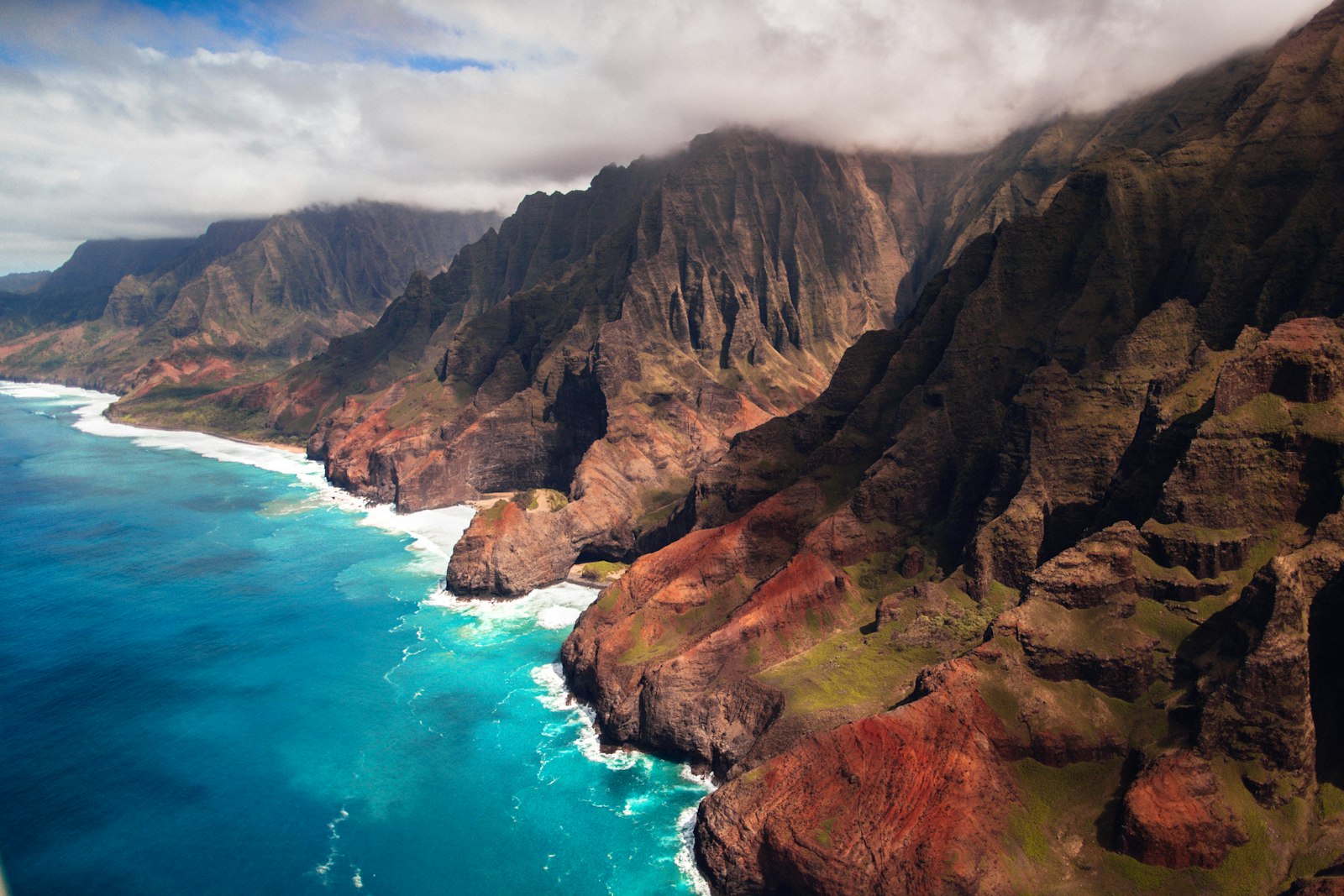
Hawaii Island Hopping Guide: All Six Main Islands
🗺 View the 47 places in this post on a map
Hawaii is not one destination, it is six very different ones, and the quickest way to waste a trip is trying to see them all. Each main island has a personality: Oahu is the city island, Maui the resort-and-volcano island, Kauai the wild green one, Hawaii Island a geology lesson you can drive through, and Molokai and Lanai the quiet outliers most visitors never reach. Interisland flights are short, 25 to 50 minutes, but every hop costs you half a day once you add rental-car returns and airport time. A week is one island, comfortably two. Three islands in seven days is a mistake people make exactly once.
The weather barely argues with you: highs sit in the low 80s all year. What changes is rain and swell. Winter, December through March, brings enormous north-shore surf, humpback whales offshore, and valleys at their greenest. Summer means calmer water, better south-shore swimming, and July prices. The shoulder months, late April into early June and September into early November, are the sweet spot for both crowds and rates. One planning rule now matters more than any other: Hawaii has put timed-entry reservation systems on most of its famous places, and they sell out. Book those before you book dinner.
Oahu packs three-quarters of the state's population onto 600 square miles, which is why first-timers either love it or write it off. Give it three days and it wins. Diamond Head State Monument, Leahi to locals, is a short, hot, thoroughly worthwhile 1.6-mile round trip up an extinct tuff cone to a World War I fire-control station with all of Waikiki laid out below; out-of-state visitors need a timed reservation released 30 days ahead. Pearl Harbor National Memorial is free and works the same way, with USS Arizona Memorial boat tickets dropping online and disappearing within minutes. For context on either side of it, Bishop Museum in Kalihi holds the world's finest collection of Hawaiian and Pacific material culture, including a feathered cloak gallery and a volcano hall that makes the Big Island make sense later.
Snorkeling on Oahu means Hanauma Bay Nature Preserve, a flooded crater with a living reef inside it, open Wednesday through Sunday with reservations released online two days ahead at 7 a.m. Hawaii time. Eat where the island eats. Helena's Hawaiian Food on North School Street has served pipikaula short ribs, kalua pig, and squid luau since 1946 and holds a James Beard America's Classics award; it opens weekday lunches only and the line forms before the door does. Then drive to Kapahulu Avenue for Leonard's Bakery and a bag of malasadas handed over too hot to hold.
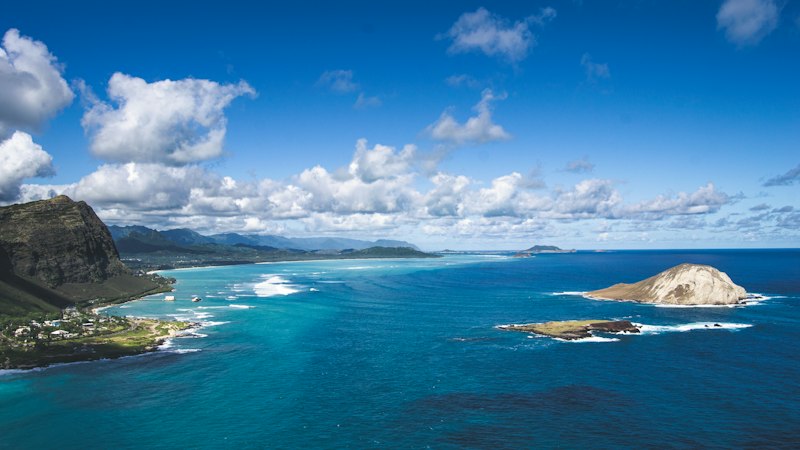
The windward side is the Oahu people picture. The paved Makapuu Point Lighthouse Trail climbs two miles round trip to a rail-side view over Manana (Rabbit) Island, and from December to April it is the best free whale-watching platform in the state. Ten minutes inland from Kaneohe, Hoomaluhia Botanical Garden gives you 400 free acres of public garden with the fluted Koolau cliffs rising straight off the lawn; walk the lake loop at the back and you will have the best view in it to yourself while everyone else queues for a photo on the entrance road. Up the coast, Kualoa Ranch runs ATV and film-location tours through the valley that stood in for Jurassic Park, but the better stop is a few minutes south. Waiahole Poi Factory is a tiny roadside kitchen pounding fresh kalo daily and serving kalua pig with poi, plus a dessert called Sweet Lady of Waiahole, warm haupia over ice cream. It is the best plate lunch on the island and almost nobody in Waikiki has heard of it.
The North Shore is a different country. In winter the surf at Waimea Bay and Banzai Pipeline runs twenty feet and the contests roll in; by summer the same water is a swimming pool. Waimea Valley behind the bay is a botanical garden and cultural site with a paved three-quarter-mile walk to a waterfall you can swim under, lifeguard on duty. Carry on to Kahuku for garlic shrimp from Giovanni's Shrimp Truck, the graffiti-covered original, and accept that you will smell like garlic until Tuesday.
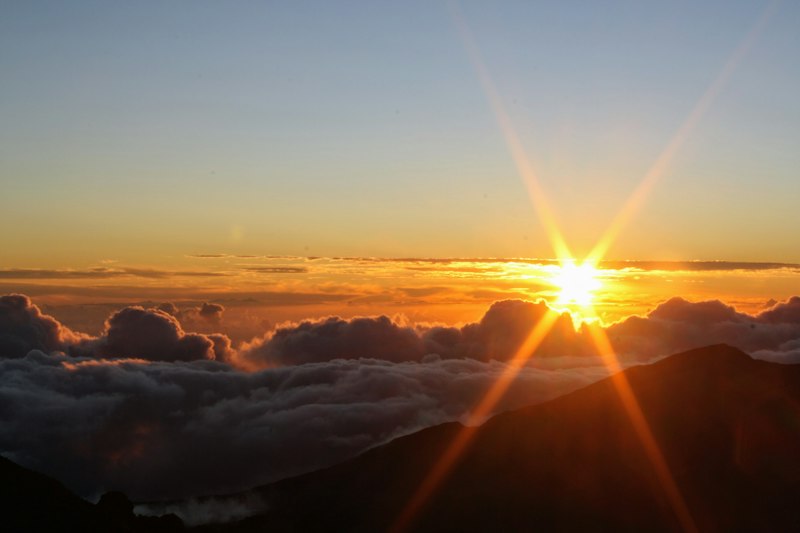
Maui's signature morning starts at 3 a.m. Sunrise from the 10,023-foot summit of Haleakala National Park needs a reservation released 60 days out, with a small second batch at 4 p.m. two days prior, and you want fleece, hat, and gloves because the summit often sits at 35 degrees. If you miss the lottery, drive up for sunset instead: same cinder desert, same sea of clouds below you, no reservation required, and the stargazing that follows is close to Maunakea quality. Give yourself the drive down through Upcountry afterward, where MauiWine pours pineapple and estate wines in a converted 1870s ranch cottage at Ulupalakua and the cowboy town of Makawao still has hitching-post energy.
The Road to Hana is Maui's other headline, 620 curves and 59 one-lane bridges through rainforest, and it works best treated as the destination rather than a drive to a town. Reserve timed entry for Waianapanapa State Park at mile 32, where a jet-black sand beach sits below lava-tube sea caves and a coastal trail runs along fresh black cliffs. Start before 7 a.m., pull over often, and let local drivers pass. Back on the leeward side, Iao Valley State Monument above Wailuku puts a 1,200-foot green spire at the head of a short paved walk, and Maui Ocean Center in Maalaea is the rare aquarium built entirely around one ocean's species, with a walk-through shark tunnel that keeps kids quiet for an hour.
South Maui is where the beach days happen: Makena State Park's Big Beach is a two-thirds-mile crescent of golden sand with a shorebreak that demands respect, and the boat fleet leaves Maalaea at dawn for Molokini, the submerged crescent crater 2.5 miles offshore where visibility routinely passes 100 feet. On the west side, Lahaina reopened Front Street to traffic in August 2026 after the 2023 wildfire and a growing handful of businesses have returned; go if you want to support the rebuild, stay out of fenced areas and off private lots, and read up first through the Lahaina Restoration Foundation. For eating, skip the resort strip. Tin Roof Maui, a counter in a Kahului industrial park run by chef Sheldon Simeon, does pork belly and mochiko chicken over rice and closes when it sells out, while Paia Fish Market grills whatever came in that morning and serves it at shared picnic tables for a third of Wailea prices.
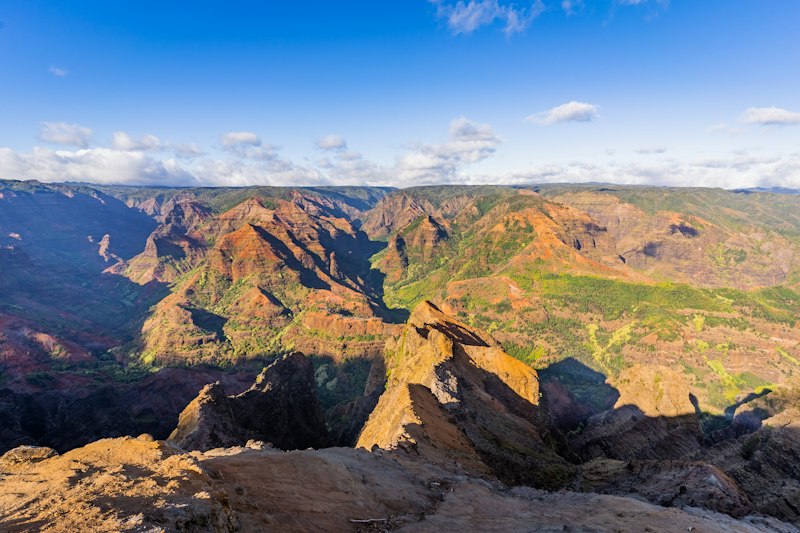
Kauai is the oldest main island, which is why it looks the way it does: erosion has had six million years to carve it. Waimea Canyon Lookout, at 3,400 feet on the dry west side, opens onto a ten-mile gash of rust-red and green that Mark Twain probably never actually called the Grand Canyon of the Pacific, though the comparison holds. Keep driving another 15 minutes to Kokee Natural History Museum, a volunteer-run one-room museum that hands you the thing you actually need: current trail conditions and a map for the ridge walks out to the Kalalau and Puu o Kila lookouts, where on a clear morning you stand on the rim of the Napali cliffs.
On the north shore, the highway simply ends at Haena State Park, gateway to Kee Beach and the Kalalau Trail along the Napali Coast; entry and parking are capped and booked 30 days ahead, and the North Shore Shuttle from Hanalei is the easier way in. Hanalei Bay itself is a two-mile arc of sand under waterfall-streaked mountains, and the pier at its east end is where the town swims. Twenty minutes east, Kilauea Point National Wildlife Refuge puts a 1913 lighthouse on a headland thick with red-footed boobies, frigatebirds, and nesting Laysan albatross from November to July. South-shore days belong to Poipu Beach Park, but walk the Mahaulepu Heritage Trail east from the coast road instead of lying on the sand: four miles of lithified dune cliffs, blowholes, sea turtles, and almost no one. Then drive west to JoJo's Shave Ice in Waimea town, where the syrups are made from real fruit and the line of work trucks out front tells you everything.
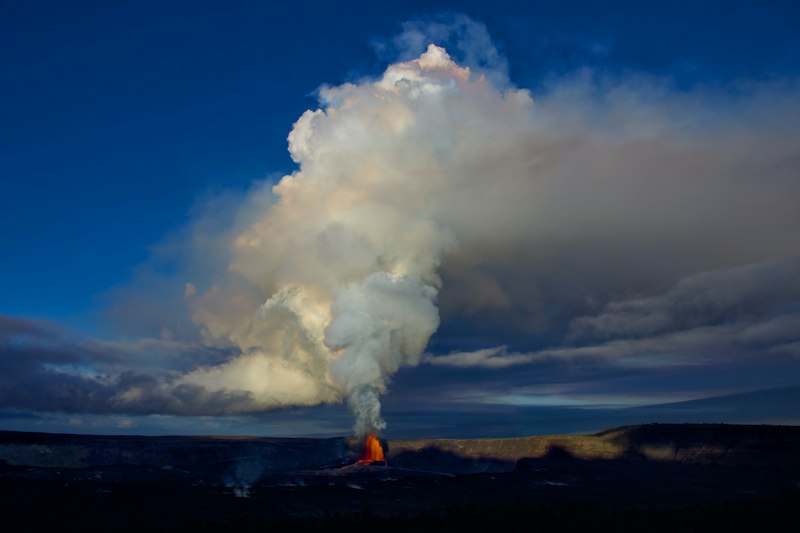
Hawaii Island is nearly twice the size of all the others combined and carries most of the world's climate zones on one landmass, so plan on two bases, Kona side and Hilo side. Hawaii Volcanoes National Park is the reason most people come: Crater Rim Drive circles the steaming Kilauea caldera, the Kilauea Iki Trail drops 400 feet through rainforest onto the crusted floor of a 1959 lava lake, and when an eruption is underway the glow after dark draws crowds at 2 a.m. Check the park's eruption updates the day you go, because the show moves and stops without notice. South of the park, Punaluu Black Sand Beach is the reliable place to see green sea turtles hauled out on jet-black sand.
The Kona coast is the cultural and coffee half. Puuhonua o Honaunau National Historical Park, the place of refuge, is a reconstructed royal compound of carved kii figures behind a 1,000-foot lava wall on a shoreline where turtles sleep in the tide pools, and it is genuinely moving at opening time before the tour vans arrive. Uphill, Greenwell Farms gives free walking tours of a working Kona coffee estate farmed by the same family since 1850. North near Kawaihae, Puukohola Heiau National Historic Site preserves the massive war temple Kamehameha I built in 1791 before unifying the islands; it takes twenty minutes to see and rearranges how you read the rest of the trip.
The Hilo side is wetter, cheaper, and far less polished. Start mornings at the Hilo Farmers Market on Mamo Street, biggest Wednesday and Saturday, then walk two blocks to Two Ladies Kitchen for strawberry mochi, which sells out by mid-morning and is worth calling ahead for. Imiloa Astronomy Center on the university campus tells the Maunakea story from both the astronomy and the Hawaiian navigation side, which is the right preparation for driving up to the Maunakea Visitor Information Station at 9,200 feet, where free nightly stargazing and thin dry air deliver some of the darkest skies on the planet; a 4WD and a permit are required above the station and most rental contracts forbid the drive. North along the Hamakua Coast, Akaka Falls State Park drops 442 feet at the end of a half-mile loop, the Waipio Valley Lookout still gives the postcard view over the Valley of the Kings even though the road below is closed to visitors and the Waipio Valley Shuttle runs the only permitted way down, and Tex Drive In in Honokaa has been frying malasadas since 1969.
Molokai and Lanai trade attractions for quiet. Molokai has no traffic light, one small town at Kaunakakai, and the three-mile emptiness of Papohaku Beach Park on its west end, often with nobody else on it. Its most significant site, Kalaupapa National Historical Park on the peninsula below the world's highest sea cliffs, preserves the settlement where more than 8,000 people with Hansen's disease were forcibly exiled from 1866; visitor access is tightly restricted and NPS tours have been paused and restarted more than once, so check the park's page before planning around it. Lanai, a 70-minute ferry ride from Maalaea on Maui since the Lahaina harbor service ended, is almost entirely owned by one person and has two luxury resorts, one small town, and a great deal of red dirt: Hulopoe Beach is a marine preserve where spinner dolphins gather most mornings, Keahiakawelo, the Garden of the Gods, is a wind-carved rock field best at sunset, and the Lanai Culture & Heritage Center in Lanai City is the free half-hour that explains the pineapple century behind all of it.
If you have one week, pick Oahu plus Kauai for variety, or Maui alone if you want a resort base and a volcano. With ten days, Hawaii Island plus one other island gives you the widest spread of landscapes in the state. Rent a car on every island except a short Waikiki-only stay, lock in Haleakala, Diamond Head, Haena, Hanauma Bay, and Waianapanapa the moment your dates are fixed, and pack mineral sunscreen because the reef-safe law is real. Take the signs seriously too: many of these places are wahi pana, storied and sacred ground, not scenery. Stay on the trail, do not stack rocks, keep your distance from monk seals and turtles, and the islands give back more than the brochure promised.