Guadalajara: Mariachi, Markets & the Home of Tequila
🗺 View the 12 places in this post on a map
Guadalajara is where the things the world calls 'Mexican' actually come from — mariachi, tequila, charrería, the wide-brimmed everything — and yet Mexico's second city still feels like a place that belongs to its own people rather than to tourism. It's a city of four million with a walkable colonial core, a food scene built on two dishes it refuses to apologize for, and the blue-agave heartland starting an hour beyond the last bus stop. Come between October and May for dry, warm days in the mid-20s°C; June through September brings dramatic afternoon thunderstorms that locals plan around and you can too. Three or four days does it, with one of them saved for Tequila.
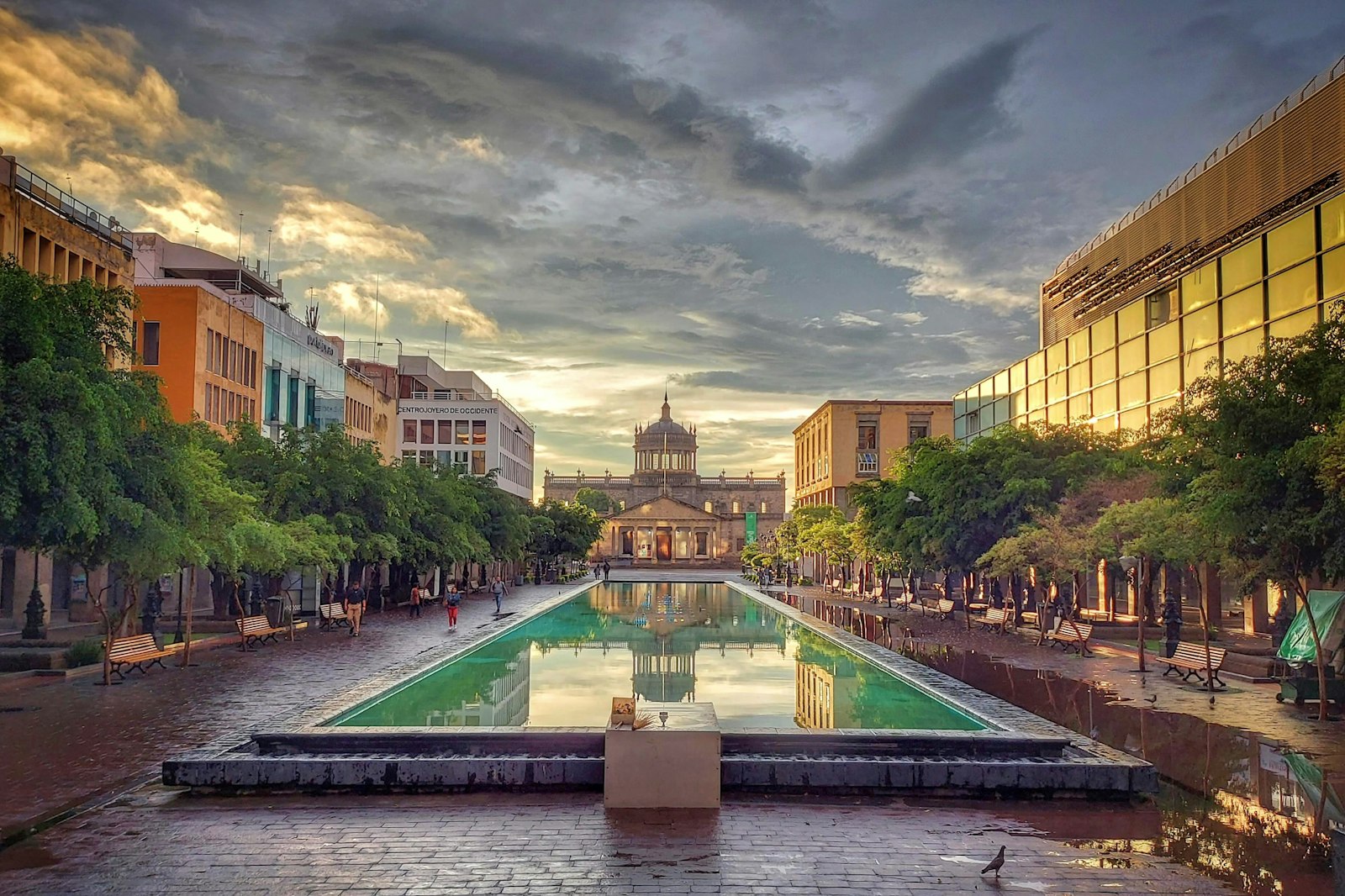
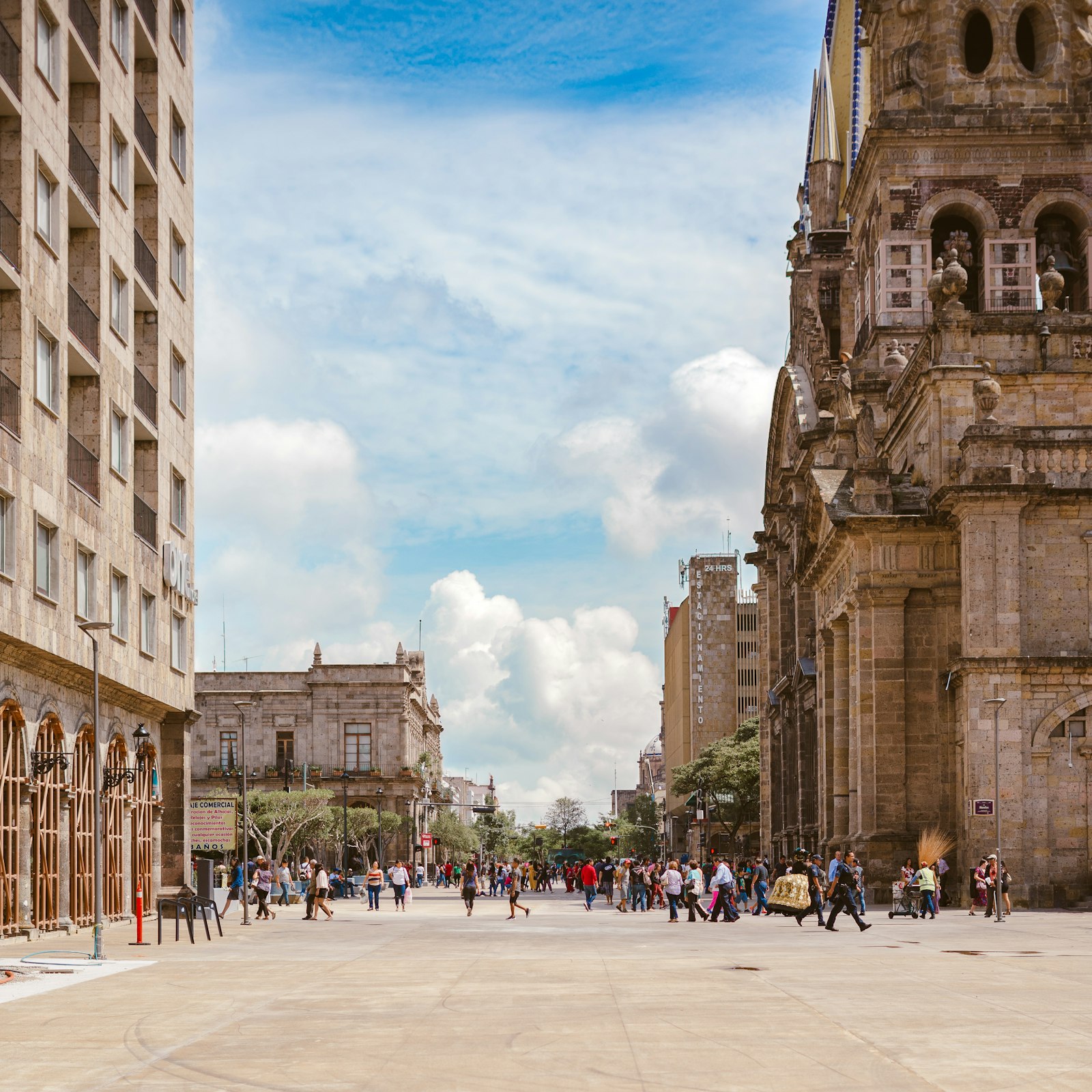
Start in the Centro Histórico. The twin neo-Gothic spires of the Guadalajara Cathedral anchor a chain of four plazas, each with its own mood — shoeshine stands and band kiosks on Plaza de Armas, the colonnaded Teatro Degollado behind it. Follow the long pedestrian sweep of Plaza Tapatía east and you arrive at the city's masterpiece: the Hospicio Cabañas, a 19th-century orphanage turned UNESCO-listed museum whose chapel ceiling holds José Clemente Orozco's 'Man of Fire' murals — lie back on the benches provided and look up; it's Mexico's answer to the Sistine Chapel, painted in smoke and revolution. Two blocks south, dive into the Mercado San Juan de Dios, reputedly Latin America's largest indoor market: three floors of birria stalls, leather, lucha libre masks, and controlled chaos. Watch your pockets, bring small bills, and eat at whichever counter has the most locals.
Eat the two dishes that define the city. The torta ahogada — a crusty birote roll stuffed with carnitas and then 'drowned' in tomato-chile sauce — is Guadalajara's breakfast, hangover cure, and civic religion; Tortas Toño runs the beloved assembly-line version, where you pick your bread, your meat, and your bravery level at the salsa counter. Birria, the slow-stewed goat that launched a thousand taco trends, is best at the source: the Birriería las 9 Esquinas, in the old Nine Corners quarter south of the center, has been ladling it with handmade tortillas and consommé since long before birria was a hashtag — open early, and a proper Sunday-morning scene. Neither meal will cost you more than a few dollars; both demand napkins in quantity.
Then see why Time Out crowned Colonia Americana the coolest neighborhood in the world. West of the center, the Americana's tree-lined blocks mix art-deco mansions with galleries, mezcal bars, and third-wave cafés, all orbiting Avenida Chapultepec — 'Chapu' to everyone — whose wide median fills with food stalls and buskers on weekend evenings. The architectural jewel on its edge is the Templo Expiatorio, a neo-Gothic church seventy years in the making with a golden mosaic façade and a clock tower whose apostles parade on the hour. This is the neighborhood to base yourself in: you'll walk to dinner every night and never repeat a bar.
Give an afternoon each to Tlaquepaque and Zapopan. Tlaquepaque, the artisan town swallowed by the city's southeast, is where Jalisco's blown glass, ceramics, and carved furniture fill gallery-shops along pedestrian Calle Independencia — and where El Parián, a full city block of cantinas around a bandstand, delivers mariachi the way it's meant to be heard: over a cazuela drink at sunset, played to an audience that knows the words. In the opposite corner of the metro area, the Basílica de Zapopan houses the tiny 16th-century Virgin that draws millions of pilgrims each October, with a fine museum of Huichol (Wixárika) art beside it.
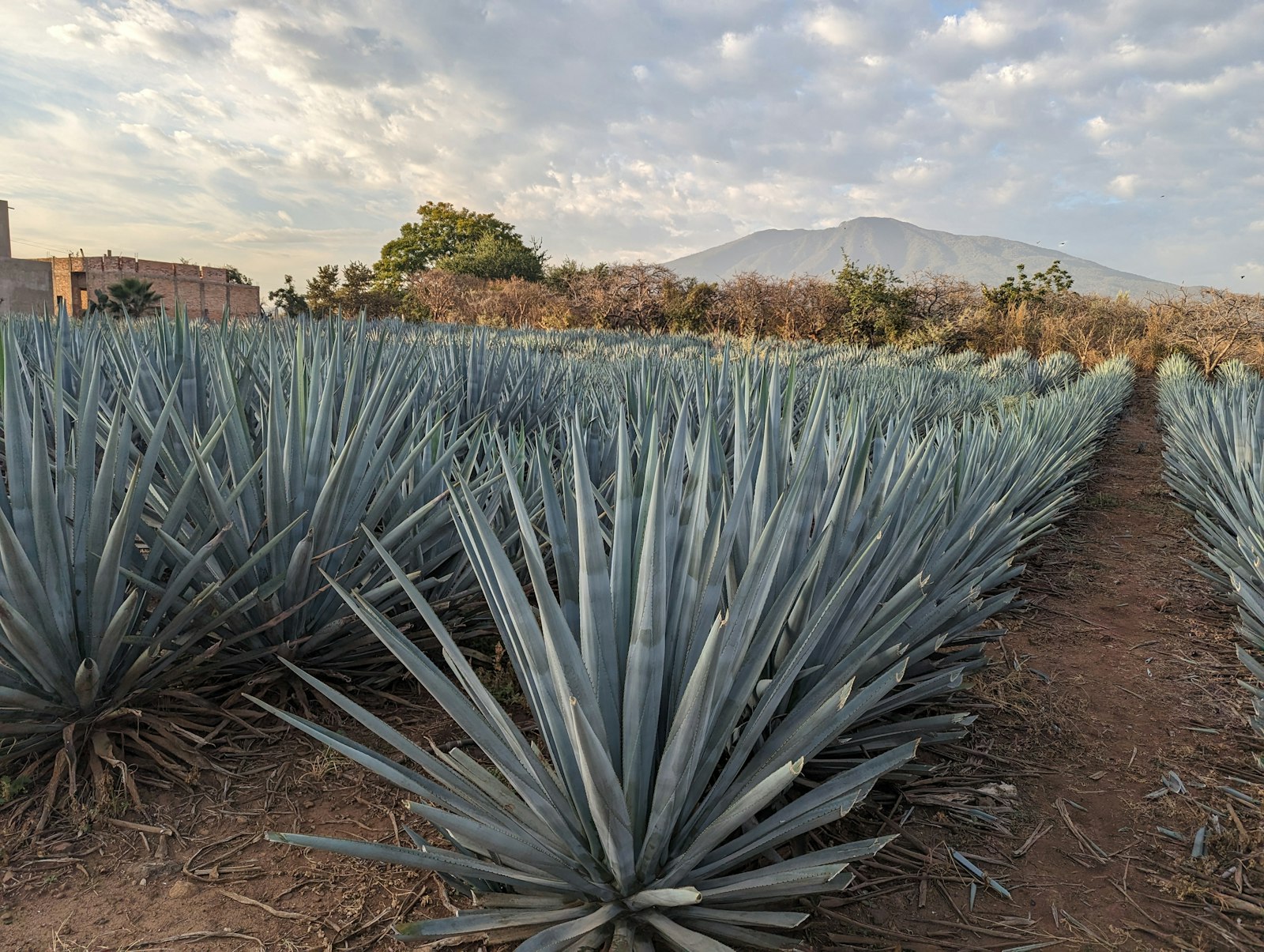
Save a full day for Tequila. The town that named the spirit sits an hour west, ringed by the UNESCO-listed blue-agave landscape that turns whole valleys silver-blue. The classic play is the Jose Cuervo Express, the Saturday tourist train from Guadalajara that rolls through the fields to a distillery tour, tastings, and a Mexican show — choose the morning 'Amanecer' run out or the evening 'Atardecer' return, and book ahead. Independent travelers can bus or drive instead and go straight to La Rojeña, Cuervo's working distillery in the town center and the oldest active distillery in Latin America (since 1795), where the agave ovens perfume the whole block. Either way, finish with a cantarito — citrus, tequila, and grapefruit soda in a clay cup — in the plaza of the Pueblo Mágico itself.
Practical notes: Guadalajara sits at 1,500 meters, so evenings cool off fast even in summer — bring a layer. Ubers are cheap, plentiful, and the sensible way to cross the metro area; the two light-rail lines cover the center well. Stay in Colonia Americana for walkability or near the Centro for the sights. Cards are widely accepted, but the market, the birria counter, and the torta line all run on cash. And schedule around Sunday morning: Vía RecreActiva closes major avenues to cars, the whole city comes out on bikes, and joining them — torta ahogada waiting at the far end — is the most tapatío thing a visitor can do.

About the author
Kristian Ranstrom
I built Get Busy Exploring because I kept losing track of where I'd been. I chase lists — fourteeners, highpoints, Munros — and I'm just as happy getting lost in a city on foot. I write up the trips here: routes, itineraries, and what I'd do differently.