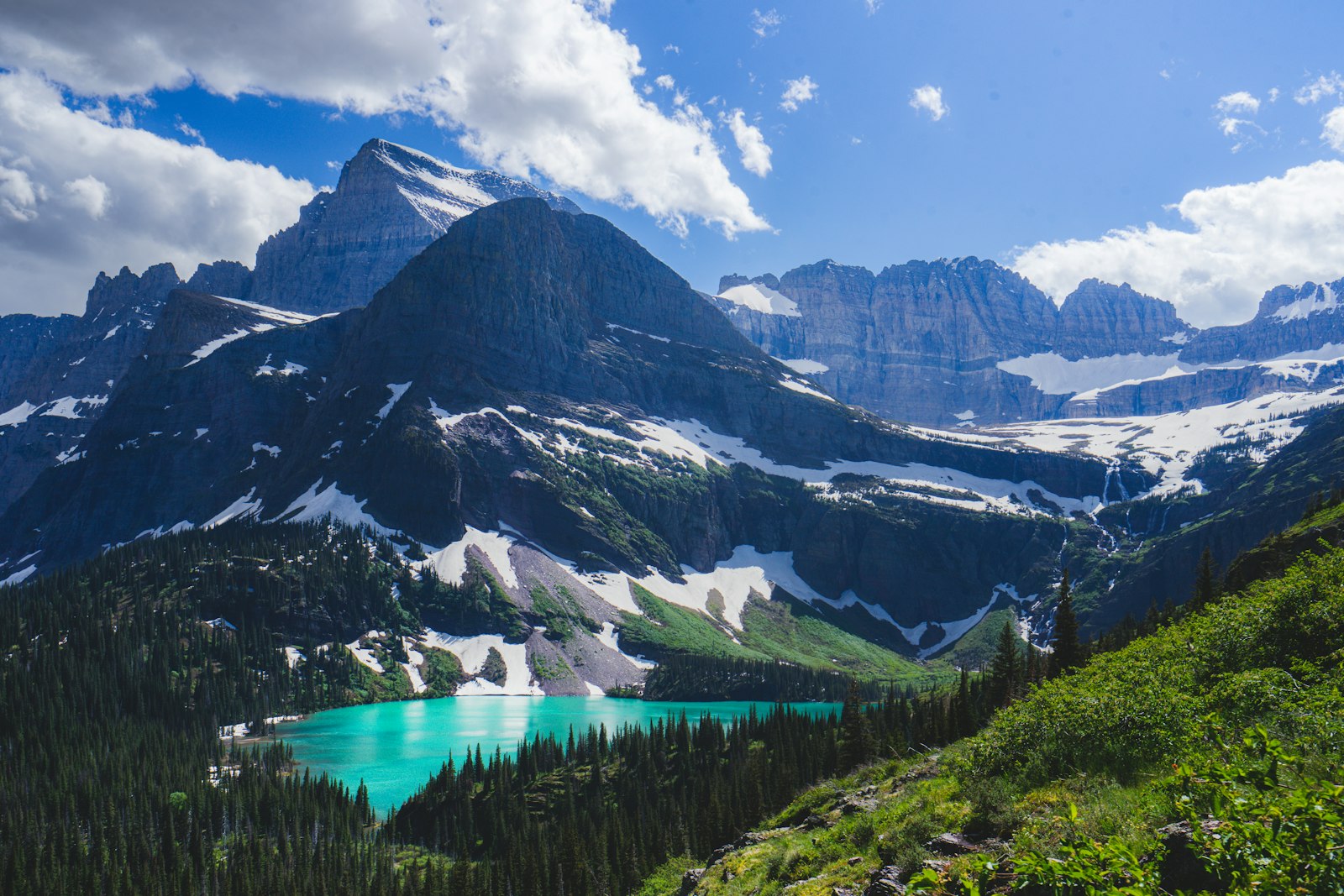
Glacier National Park: Crown of the Continent, 2026 Guide
🗺 View the 13 places in this post on a map
Glacier is the national park other national parks want to be when they grow up: a million acres of knife-edge ridges, turquoise lakes, and valleys carved deep by the ice that gave the place its name — the Crown of the Continent, where waters split for the Pacific, the Atlantic, and Hudson Bay. The two dozen glaciers still hanging on are a fraction of what greeted the park's first visitors, which is its own quiet argument for going sooner rather than later. And 2026 is a notably good year to do it: for the first time since 2021 there are no vehicle reservations — the timed-entry system is gone parkwide — replaced by simpler rules like a three-hour parking limit at Logan Pass and a reservation-only shuttle. The full Going-to-the-Sun Road opened June 22 this season; mid-July through mid-September is prime. Give the park four or five days.
Going-to-the-Sun Road is the main event — drive it like a hike, not a commute. Fifty miles of 1930s engineering cling to the Garden Wall between Lake McDonald and St. Mary, and the difference between transcendence and gridlock is your start time: be through the entrance by 7am and you'll have pullouts to yourself that are combat parking by ten. Climbing from the west, water pours straight onto the road at the Weeping Wall; over Logan Pass, drop to the east side and pull off at the Wild Goose Island Lookout, where the tiny island in St. Mary Lake anchors the park's most photographed view. At Logan Pass itself (6,646 feet), two of the park's best walks leave from one parking lot: the boardwalk climb to the Hidden Lake Overlook, where mountain goats treat the railings as furniture, and the Highline Trail, a spectacular ledge-cut traverse along the Garden Wall — walk even the first two miles and turn around; you'll understand the fuss. Mind the new three-hour parking clock at the pass, or beat it entirely with the shuttle (next-day seats release at 7pm on recreation.gov).
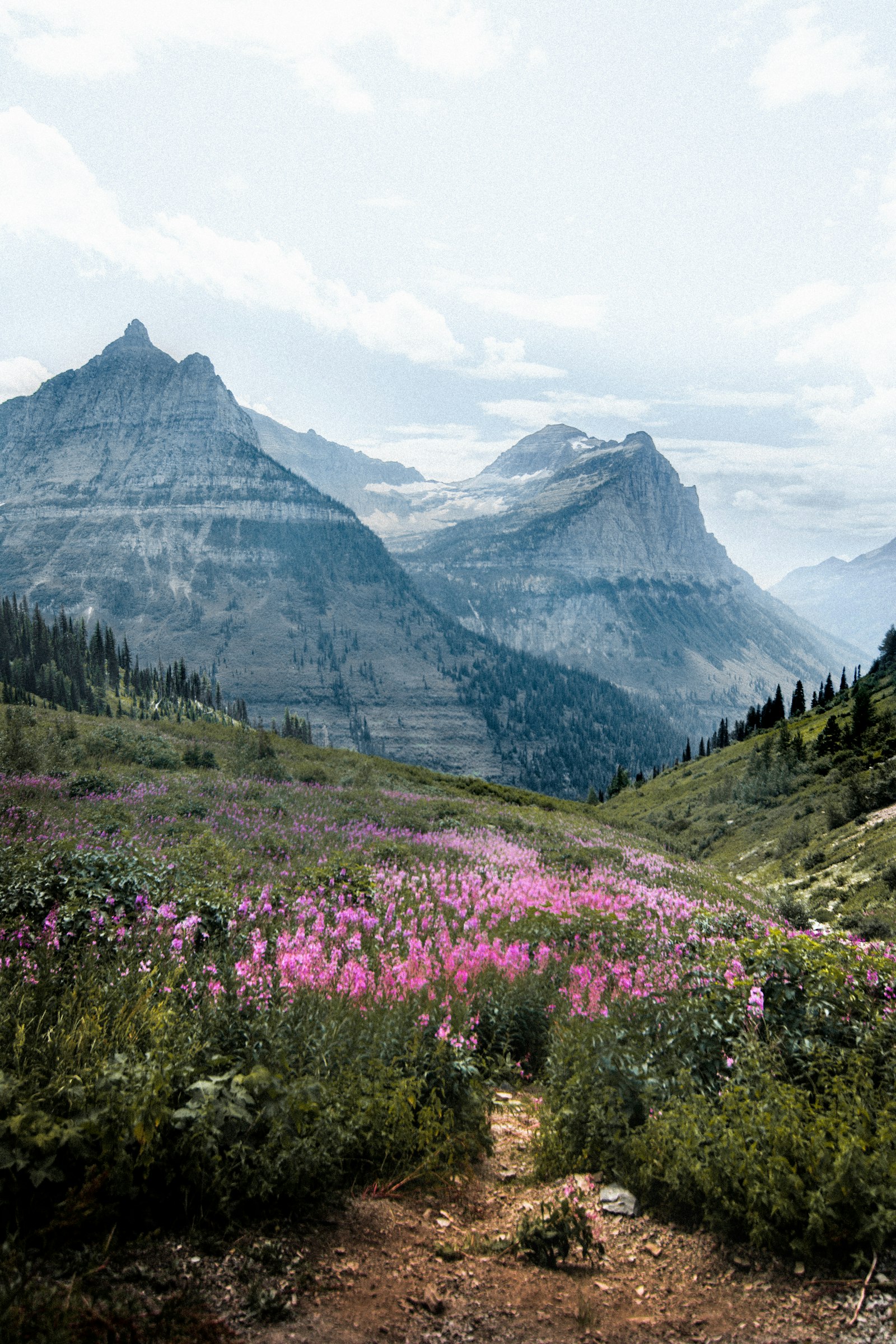
Give the west side a slow morning. The Trail of the Cedars, a wheelchair-accessible boardwalk through an improbable inland rainforest of centuries-old cedars and hemlocks, connects to the park's best value-for-effort hike: Avalanche Lake, about six miles round trip to a bowl where waterfalls thread down two thousand feet of headwall. Do it at 8am and it's serene; by noon it's a parade. Afterward, drift along Lake McDonald — ten miles long and famous for the rainbow-colored pebbles in its shallows — and put your feet up on the veranda of the 1913 Lake McDonald Lodge, a Swiss-chalet time capsule where the rocking chairs face the water and nobody hurries you.
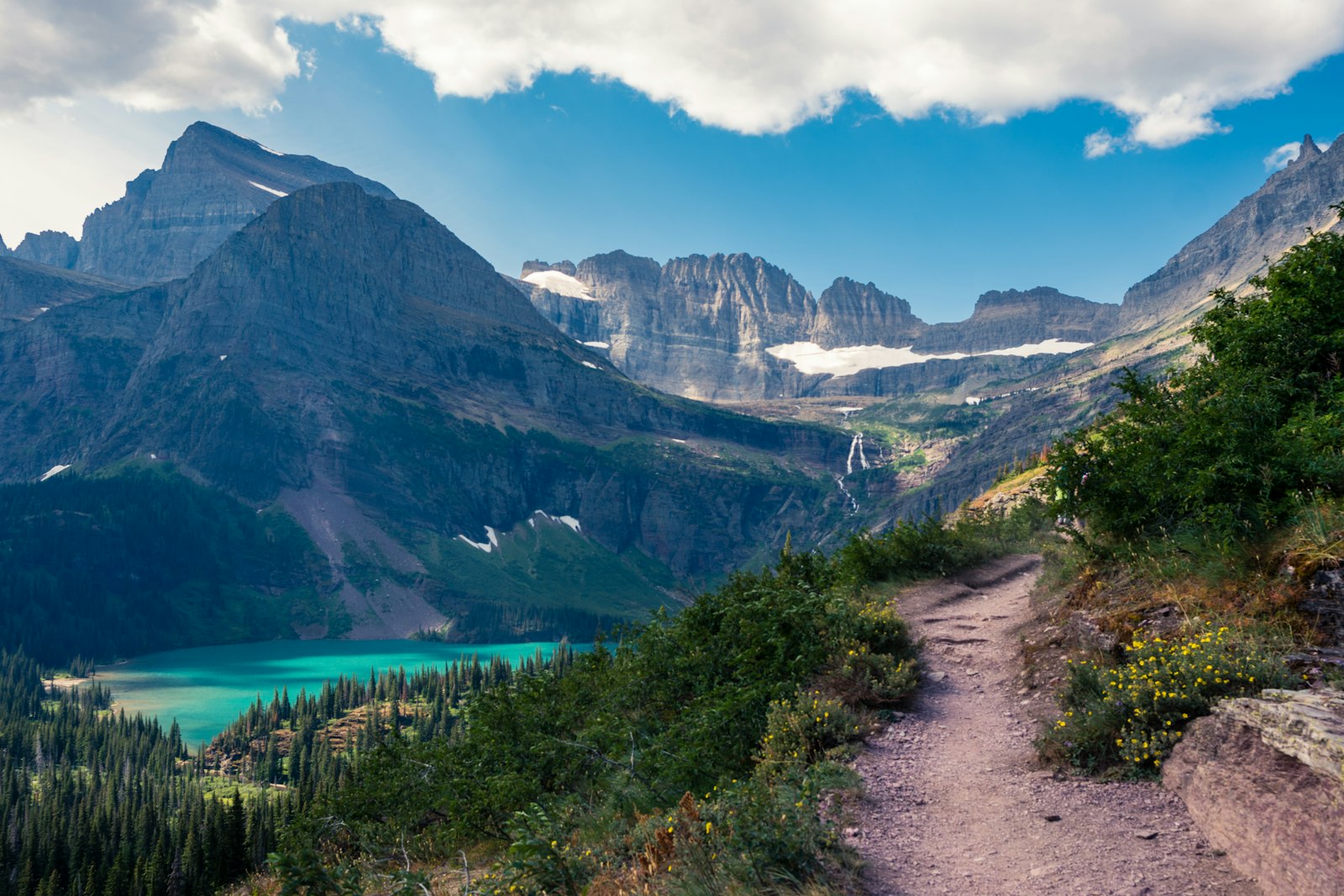
Many Glacier is the park's beating heart — and it's fully back. After two summers of construction detours, the Swiftcurrent work wrapped this spring and the valley is wide open for 2026. This is Glacier at maximum density: grizzlies on the slopes (bring binoculars, keep your distance), moose in the willow flats, and the park's signature day hike — Grinnell Glacier, roughly 10.6 miles round trip beneath a wall of hanging ice and milky-teal lakes, or shorter if you catch the historic boats across Swiftcurrent Lake and Lake Josephine (book those weeks ahead; they sell out). Parking fills by mid-morning in August and rangers meter the road when the valley jams, so this is the earliest start of your trip. The reward for non-hikers is just as good: coffee on the back deck of the 1915 Many Glacier Hotel, watching light move across Grinnell Point like weather with opinions.
For the crowds' opposite, go where the pavement thins. Two Medicine, in the park's southeast corner, was the grand entrance in the railroad era and is now its best-kept open secret: the same scale of scenery as the famous valleys at a fraction of the traffic, a wooden tour boat across the lake, and the stiff climb to Scenic Point for a view over the plains. Better still, take the washboard gravel of the North Fork to Polebridge, a handful of off-grid buildings 27 bumpy miles up the park's western edge. The 1914 Polebridge Mercantile bakes the huckleberry bear claws that justify the drive by themselves (they sell out on summer days — arrive before noon), and dinner next door at the Northern Lights Saloon, at picnic tables under the trees with live music some nights, is the most Montana evening available for money. Continue the six final miles to Bowman Lake and you get a blue mirror under peaks with a campground whisper-quiet by design.
Practical notes: carry bear spray and know how to use it — every trailhead sells or rents it, and this is genuine grizzly country where hikers make noise on blind corners. Layers beat forecasts; Logan Pass can serve four seasons in an afternoon. In-park lodges book out around thirteen months ahead, so most visitors base in West Glacier, Whitefish, or St. Mary — decide your side of the park first, because crossing takes half a day in traffic. The season is brutally short: the high country melts out in July and the larches turn gold by late September, which is also the quietest beautiful window. And order the huckleberry everything — shakes, pie, bear claws. It's not a tourist trap; it's the regional food group.

About the author
Kristian Ranstrom
I built Get Busy Exploring because I kept losing track of where I'd been. I chase lists — fourteeners, highpoints, Munros — and I'm just as happy getting lost in a city on foot. I write up the trips here: routes, itineraries, and what I'd do differently.