Scuba Diving the Cayman Islands: Walls, Wrecks & Stingrays
🗺 View the 13 places in this post on a map
The Cayman Islands are three limestone specks on the Caribbean's deepest trench, and that geology is the whole story. There's no river runoff to cloud the water, the islands drop off within a few hundred yards of shore into walls that fall thousands of feet, and the Cayman government has protected its reefs with marine parks since 1986 — longer than almost anywhere else in the region. The result is 100-foot visibility as a normal Tuesday, water that sits between 78 and 84°F all year, and more than 360 moored dive sites across Grand Cayman, Little Cayman, and Cayman Brac. If you learned to dive somewhere cold and green, this is the trip that shows you what the fuss is about.
When to go. Diving is year-round, but the calendar matters. December through April is peak season: calm seas, the best visibility, and the highest prices. May and early June are the sweet spot — water warming into the 80s, flat conditions, and hotels discounting before hurricane season. June to November is hurricane season; September and October are the quietest months on the islands and often the best diving, but you're gambling on a storm, so buy travel insurance and book refundable. Whatever month you pick, the north and west sides of Grand Cayman are sheltered from the prevailing easterlies, which is why most of the dive operators live there.
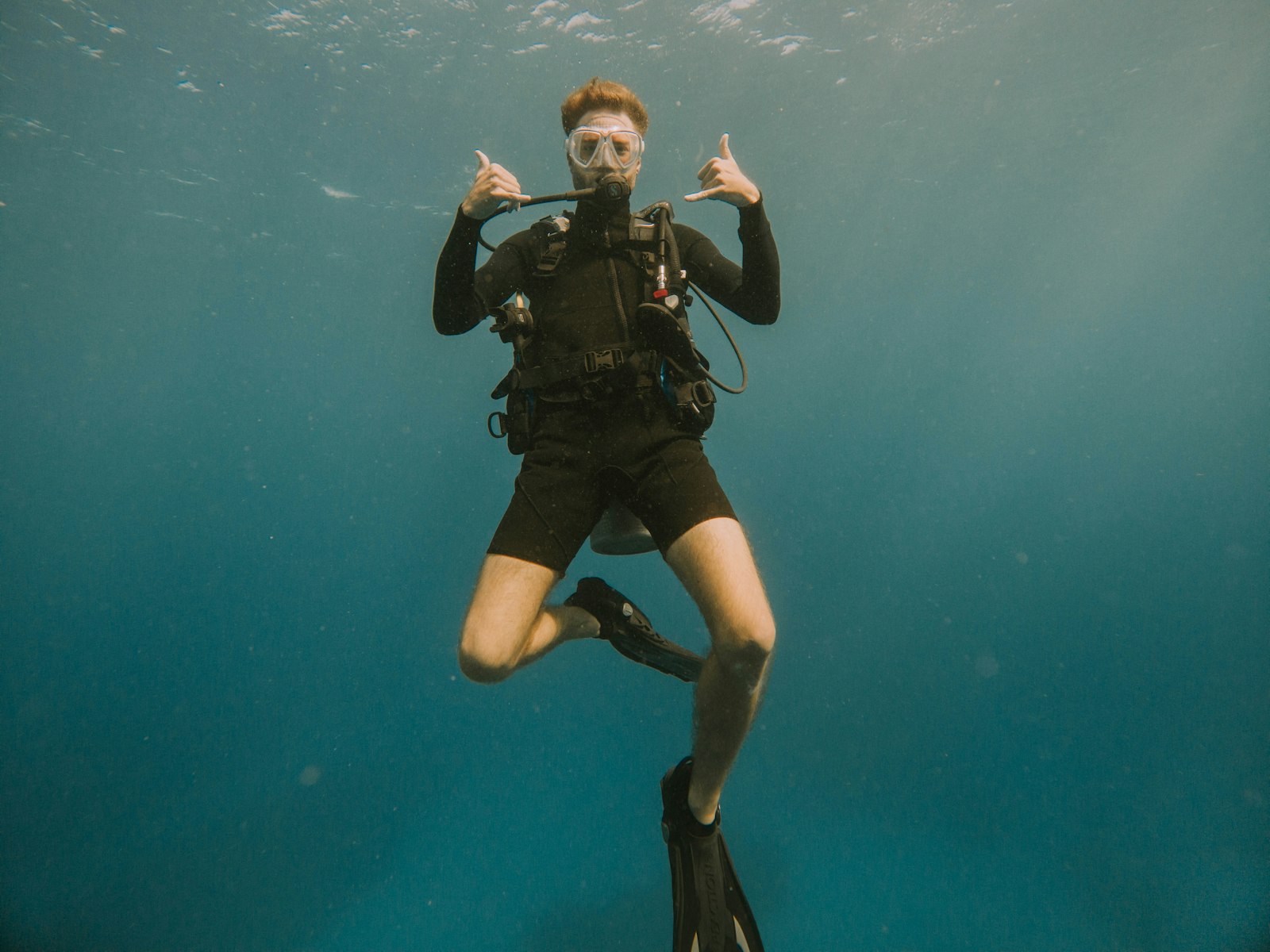
Grand Cayman: start in town, not on a boat. Most visitors don't realize that some of the island's best diving is a shore entry in the middle of George Town. Eden Rock and Devil's Grotto sit a hundred yards off South Church Street, a short swim from the dive shop's ladder: a maze of coral tunnels and swim-throughs in 30 to 50 feet of water, packed with silversides in summer and patrolled by tarpon the size of your leg. Rent a tank and go at 8 a.m. before the cruise ships tender in, and you'll have it to yourself. A quarter-mile south, Sunset House is a dive resort with its own shore entry, a bronze mermaid statue at 50 feet, and My Bar on the waterfront — the place divers from every operator on the island end up at sunset, whether or not they're staying there.
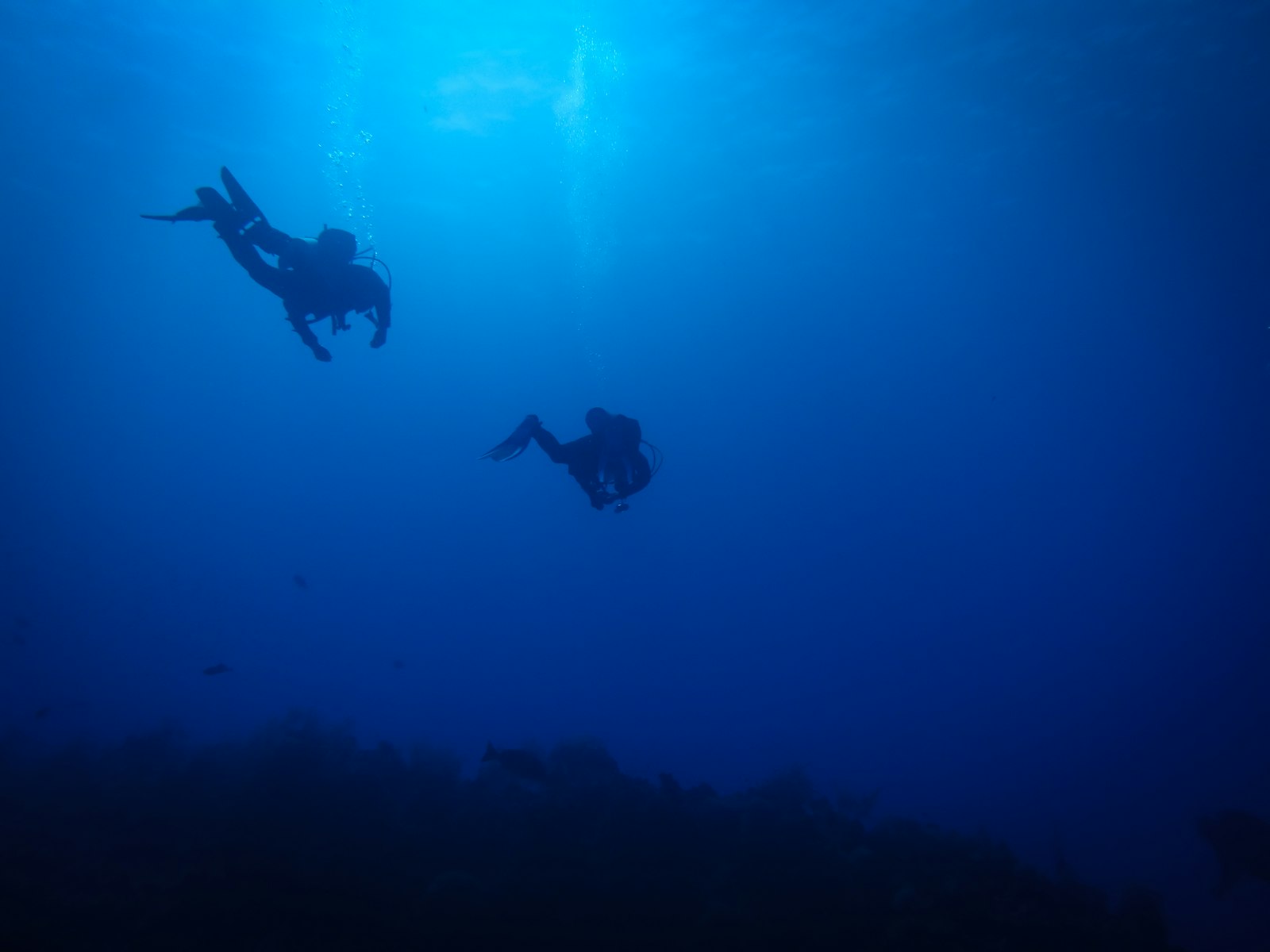
The wreck and the wall. The USS Kittiwake is Grand Cayman's headline boat dive: a 251-foot submarine rescue ship sunk deliberately off Seven Mile Beach in 2011, then rolled onto its side by Hurricane Nate in 2017, which only made it more interesting. The deck sits around 60 feet, so it's an easy, bright dive with huge openings into the hospital bay and the decompression chamber, and it pairs with a second tank on the nearby Doc Poulson wreck or the Trinity Caves swim-throughs. For the real Cayman experience, ask for a wall dive: the West Bay and North Wall sites drop from a sand shelf at 50 feet straight into blue nothing, with eagle rays cruising the edge. Lighthouse Point in West Bay, home to Divetech, is the spot to do it from shore — a mini-wall right off the dock, and a well-run tech and rebreather outfit if you're looking to go deeper.
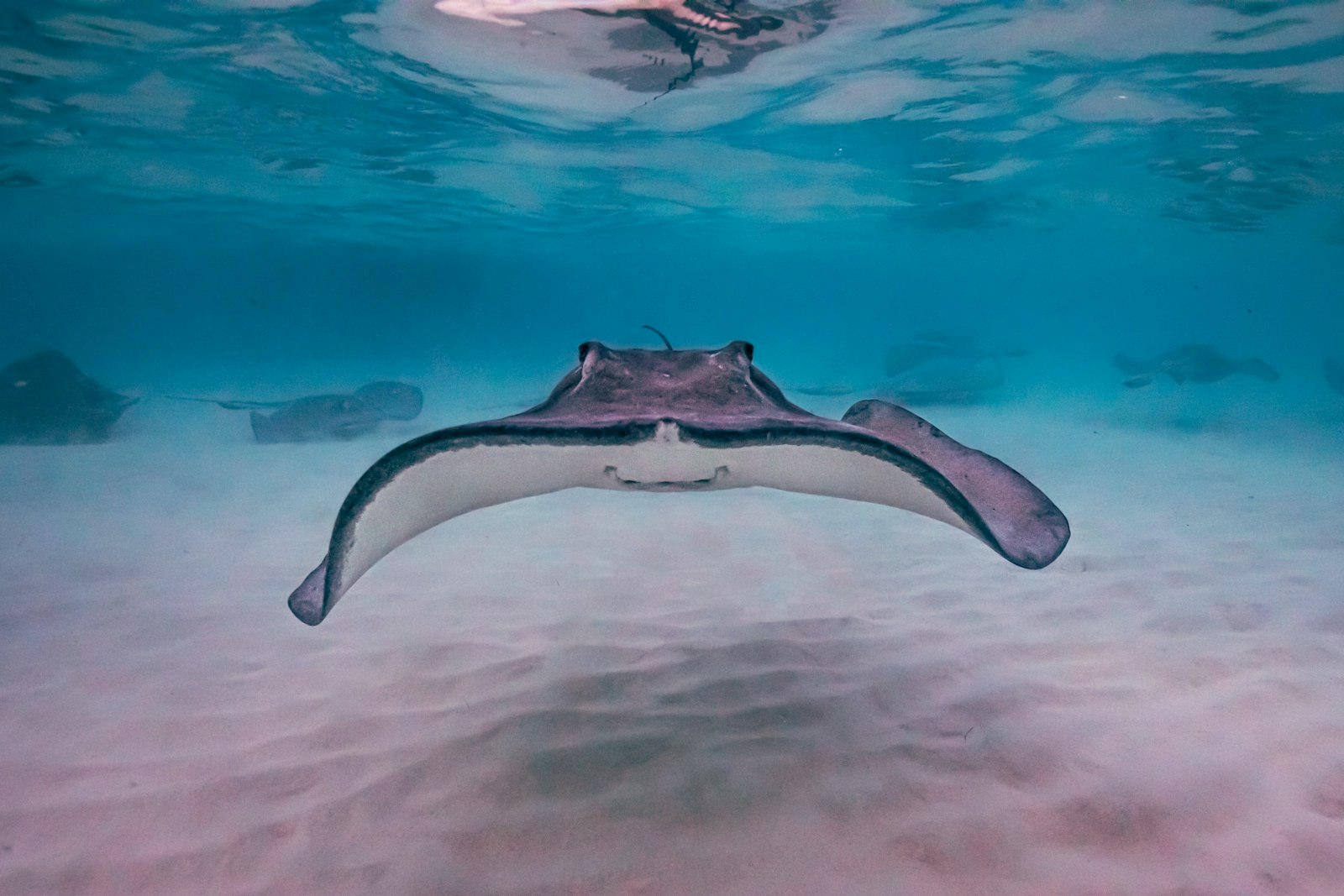
Stingray City, done right. Yes, it's the most famous thing in the Caymans, and yes, the sandbar in North Sound gets mobbed by cruise-ship catamarans from 10 a.m. on. The way around that is to book the earliest boat from Rum Point or the Kaibo dock on the north side — 7:30 or 8 a.m. — and stand in waist-deep water with a few dozen southern stingrays brushing past your legs before anyone else arrives. Divers get a better version: the original Stingray City dive site is a separate spot in 12 feet of water where the rays were first fed by fishermen cleaning their catch in the 1980s, and it's a calm, kneeling-on-the-sand dive that's as close as you'll get to large animals anywhere. Afterward, stay on the north side. Rum Point has the hammocks and the mudslides; the Kaibo beach bar next door has better food and fewer people.
Where to eat and swim like a local. Skip the Seven Mile Beach hotel restaurants at least once. Heritage Kitchen in West Bay is a wooden shack on Boggy Sand Road where a local family fries fish and serves conch stew and fritters at picnic tables on the sand; it's cash, it's lunch hours only, and it's the best meal on the island under twenty dollars. For a swim, locals use Smith's Barcadere — Smith Cove — a small limestone-framed beach in South Sound with a shady grass lawn and good snorkeling right off the rocks, five minutes from George Town and ignored by the cruise crowds. And on Seven Mile Beach itself, the north end at Cemetery Beach has a reef in snorkeling depth a short swim out, with far fewer people than the stretch in front of the resorts.
Little Cayman: the wall you came for. Serious divers fly the 40-minute hop to Little Cayman for one reason — Bloody Bay Wall. The reef top sits at 20 to 25 feet and then the bottom simply disappears, a vertical face dropping more than 6,000 feet, with the best stretches (Great Wall West, Randy's Gazebo, Marilyn's Cut) inside the Bloody Bay Marine Park where nothing has been touched in four decades. You hang in blue water with the wall at your shoulder, grouper that follow you like dogs, and reef sharks and eagle rays in the deep. The island has about 150 residents, a couple of dive resorts, one grocery store, and no traffic light; three nights with two boat dives a day is the standard trip, and it's the one people come back for.
Cayman Brac: the frigate. The Brac, a few miles further east, is a bluff-topped island with good wall diving of its own and one genuine oddity: the MV Captain Keith Tibbetts, a 330-foot Russian-built Cuban navy frigate bought and sunk in 1996 as an artificial reef. It's broken in two now, the bow twisted off in a storm, which makes it a more atmospheric dive than most intact wrecks — gun turrets furred with sponge, a deck you can cruise at 60 feet, and the bow section deeper for those who want it. Combine the sister islands in a week: three nights on Little Cayman, two or three on the Brac, with the short inter-island flight between them.
Practical notes. You'll need a certification card and logbook; most operators want a checkout dive if you haven't been in the water for a year. Cayman's marine park rules are strictly enforced — no gloves, no touching, no collecting, and a fine for standing on coral — and the operators take it seriously, which is why the reefs look the way they do. Nitrox is cheap and worth it for the repetitive wall profiles. The Cayman dollar is pegged at 1.25 US and US dollars are accepted everywhere, though change comes back in CI. And build a day of no diving before your flight home: the bluff on the Brac, the Cayman Crystal Caves near Old Man Bay, or simply a hammock at Rum Point all count as decompression.